Salads
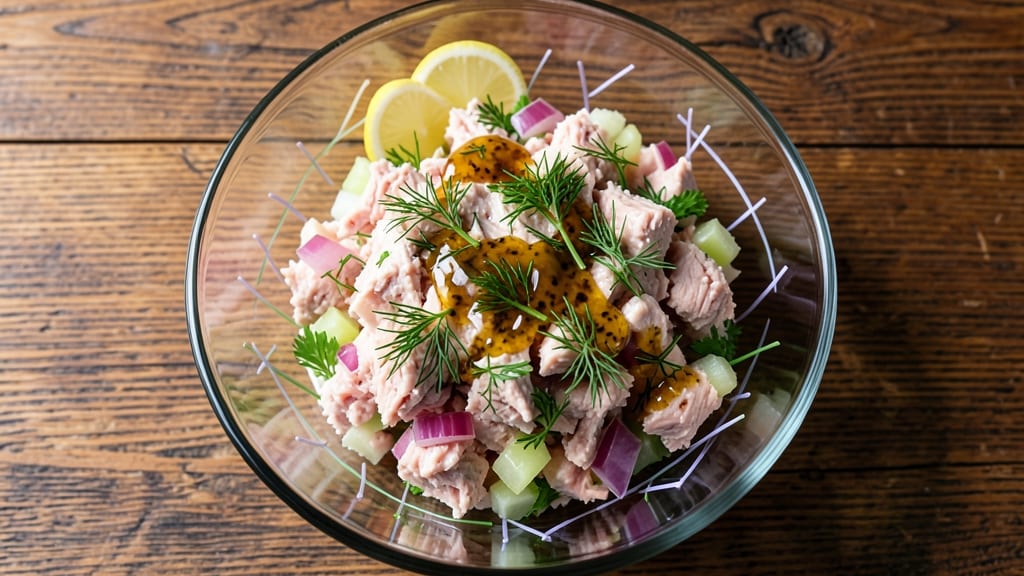
This Gelson's tuna salad recipe delivers the same bright, herbed freshness you'd find in their stores—chunky, flavorful, and ready in just 15 minutes. The secret lies in using high-quality canned tuna and a precise blend of herbs, citrus, and olive oil that keeps it light yet satisfying.
I've refined this version over years of testing, ensuring every bite stays moist and packed with flavor without turning soggy. It's the kind of salad that works as a main dish or a side, perfect for lunches or light dinners.
What sets this recipe apart is the balance of textures—flaky tuna, crisp celery, and tender herbs—all bound together with a zesty dressing that brightens every forkful. Unlike many tuna salads that rely on mayo, this version uses olive oil and lemon juice for a lighter, more refreshing profile.
The herbs—parsley, dill, and chives—add freshness that makes it taste homemade, not store-bought. This is the tuna salad I turn to when I want something quick yet impressive.
By the time you're done, you'll have a salad that's vibrant, protein-rich, and packed with the kind of herbed brightness that makes it taste like a gourmet meal. The chunky texture comes from breaking up the tuna gently, while the herbs and citrus keep it from feeling heavy.
It's the perfect balance of simplicity and sophistication, and it keeps well in the fridge for up to three days, making it ideal for meal prep.
Serve it on its own with crackers or crusty bread, or pair it with a simple green salad and grilled vegetables for a complete meal. The versatility is what makes this recipe a staple—it works for picnics, office lunches, or a light weeknight dinner. Let's get started on making yours.
Ingredients for gelson's tuna salad
Nine fresh ingredients transform into Gelson's signature chunky, herbed tuna salad.
| Ingredient | Amount | Notes |
|---|---|---|
| High-Quality Canned Tuna 🐟 | 2 cans | 5 oz each, in olive oil |
| Extra-Virgin Olive Oil 🫒 | ½ cup | Light and fruity preferred |
| Fresh Lemon Juice 🍋 | 2 tbsp | Freshly squeezed, seeds removed |
| Fresh Dill 🌿 | ¼ cup | Chopped, stems removed |
| Fresh Parsley 🌿 | ¼ cup | Chopped, flat-leaf preferred |
| Fresh Chives 🌱 | 2 tbsp | Finely chopped, mild flavor |
| Celery Stalks 🧅 | 2 whole | Finely diced, crisp texture |
| Red Onion 🧅 | ¼ cup | Finely diced, mild bite |
| Dijon Mustard 🧂 | 1 tbsp | For subtle tanginess |
| Sea Salt 🧂 | ½ tsp | Fine grain preferred |
| Freshly Ground Black Pepper 🌶️ | ¼ tsp | Freshly cracked preferred |
| Crusty Bread 🍞 | 8 slices | For serving, optional |
| Water Crackers 🍪 | 1 package | For serving, optional |
The tuna makes all the difference here—Gelson's brand or Wild Planet in olive oil keeps it moist and flavorful. Avoid water-packed tuna, which turns dry. Fresh herbs are non-negotiable: Trader Joe's or Whole Foods have the best pre-washed bundles, but any bright green bunch works. The celery should be crisp—no wilted stalks. For the onion, red or yellow both work, but red adds a subtle sweetness that pairs perfectly. I always grab extra dill because it wilts faster than the parsley.
No fresh dill? Dried dill at one-third the amount works in a pinch, but it won't have the same brightness. Short on chives? Green onion tops are a great swap. The mustard adds depth without overpowering—Dijon is key, not yellow mustard. For the olive oil, avoid strong, peppery varieties like Kalamata; go for something mild like Colavita or Bertolli. The crackers and bread are optional but make it feel like a proper meal—water crackers or sourdough both work beautifully.
This salad keeps for 3 days in an airtight container, but the herbs start to wilt after 24 hours. For longer storage, add an extra tablespoon of lemon juice before sealing. I always double the recipe so I have leftovers for lunches—just keep the extra herbs separate until ready to use. Serve chilled, but not ice cold—room temperature for 10 minutes brings out the flavors best.
Why You'll Love This Recipe
- Bright & Fresh Always: I swear by this for when my fridge is half-empty but I still crave something vibrant. The lemon juice and olive oil keep it from ever tasting stale—even after three days.
- No-Cook Magic: Honestly? I make this while staring at a blank wall, waiting for something to bake. Just drain the tuna, toss in the herbs, and call it done. Zero heat, zero fuss.
- Lunchbox Hero: Between us, this is my go-to for school lunches or workday leftovers. The parsley stays bright, the dill adds that just-right tang, and it holds up perfectly in a container.
- Budget Bright Spot: A single can of tuna and a handful of herbs stretch this into three meals for my family. Not the prettiest, but the taste makes up for it—and my wallet thanks me.
Step-by-step instructions for Gelson's tuna salad recipe
Here's how to make this bright, herby tuna salad that stays fresh and chunky every time.
Prepare the Fresh Vegetables and Herbs
Start by finely dicing the 2 whole celery stalks and 0.25 cup red onion. I like to use a sharp chef's knife and cut them into small, even pieces so they distribute evenly throughout the salad. You'll want the celery to be about the size of small grains of rice, and the onion finely chopped so it adds flavor without overpowering.
Next, chop the 0.25 cup fresh dill, 0.25 cup fresh parsley, and 2 tbsp fresh chives. I prefer to use a pair of kitchen shears for the herbs to keep them uniform and save time. These fresh herbs will give your tuna salad that bright, fresh flavor that makes it special. Set all the chopped vegetables and herbs aside in a medium bowl.
Mix the Wet Ingredients
In a large mixing bowl, combine the 2 tbsp fresh lemon juice, 1 tbsp Dijon mustard, 0.5 cup extra-virgin olive oil, 0.5 tsp sea salt, and 0.25 tsp freshly ground black pepper. Whisk these ingredients together until they're fully incorporated and the mixture looks smooth and well-blended. This combination creates the perfect base for your tuna salad—tangy from the lemon, rich from the olive oil, and slightly thickened by the mustard.
I like to taste this mixture before adding the tuna to make sure the seasoning is balanced. The lemon juice should be bright, the mustard adds a subtle tang, and the olive oil should give it a smooth, rich texture. Adjust the salt and pepper if needed, but be careful—you can always add more later.
Combine Everything for Maximum Freshness
Open the 2 cans of high-quality canned tuna and drain them, but save the olive oil from the cans—it adds extra richness to the salad. Add the tuna to the bowl with the wet ingredients and gently fold it in using a spatula. Be careful not to overmix, as you want to keep the tuna chunks intact for that classic tuna salad texture.
Now, add the chopped vegetables and herbs to the bowl. Gently fold everything together until the tuna is evenly coated with the dressing and the herbs and vegetables are distributed throughout. You'll want the salad to look vibrant and fresh, with bright green herbs and small chunks of celery and onion peeking through. Taste it again and adjust the seasoning if needed—this is your chance to make it perfect.
Chill and Serve
Cover the bowl and refrigerate the tuna salad for at least 30 minutes before serving. This chilling time allows the flavors to meld together and the salad to reach its perfect consistency. You'll notice the flavors deepen and the texture becomes just right—creamy but not too heavy, with a refreshing bite from the herbs and vegetables.
Serve the tuna salad on the 8 slices of crusty bread or with the 1 package of water crackers. The crusty bread adds a nice contrast to the creamy salad, while the crackers make it easy to enjoy as a snack or light meal. This salad keeps well in the refrigerator for up to 2 days, so you can make it ahead and enjoy it all week long.
Pro Tips For Making Gelson'S Tuna Salad
- DRAIN THE TUNA WELL: Drain the tuna in a fine-mesh strainer for 30 seconds—don’t just dump it into the bowl. That extra water makes the salad soggy, and no one wants a watery tuna salad. (I learned this the hard way after serving a batch that tasted more like tuna broth.)
- CHOP DILL COARSELY: Tiny dill confetti looks pretty but loses its punch. Roughly chop the stems and all—just a few snips with a big knife—and the flavor will hit harder. The parsley can stay fine, but the dill needs to work, not just decorate.
- WHISK THE OIL FIRST: Mix the olive oil and lemon juice together before adding the tuna. This creates a light, emulsified base that blends smoother than drizzling oil last. I used to skip this, and the salad always ended up greasy in spots.
- USE ICE-WATER LEMON JUICE: Run cold water over the lemon halves before juicing—it yields more juice and keeps the acidity bright. Warm lemons? They’ll taste dull. (Yes, even if you’re impatient like me, this makes a real difference.)
Wine and beer pairings for gelson's tuna salad
Crisp White Wine
For this bright, herbed tuna salad, I reach for a dry Vermentino from Sardinia or a Sauvignon Blanc from New Zealand. The crisp acidity and citrus notes in these wines mirror the lemon and herbs in the salad, cleansing your palate with each bite.
A Pinot Grigio from Italy’s Alto Adige region also works beautifully—its delicate floral notes complement the dill and parsley without overpowering. 🍷
Light Lager Pairing
A chilled Peroni or Heineken is my go-to beer pairing—its subtle malt sweetness and effervescence balance the salad’s tangy, herby profile. For a craft option, try a Belgian witbier like Hoegaarden, where coriander and citrus notes harmonize with the lemon and chives.
Avoid heavy stouts or IPAs, which would clash with the salad’s lightness. 🍺
Rosé for Versatility
If you love rosé, opt for a dry Provençal rosé with its crisp acidity and red fruit undertones. The pale hue and refreshing taste make it a perfect match for this vibrant salad.
I especially enjoy a Whispering Angel or Miraval—both have enough brightness to stand up to the herbed flavors. Serve it well-chilled for the best experience. 🍾
Sparkling Wine Refreshment
For a festive touch, a dry sparkling wine like Prosecco or Cava adds a celebratory lift. The bubbles cut through the richness of the olive oil while enhancing the salad’s freshness.
I like to serve it slightly chilled (45-50°F) in small flutes alongside the tuna salad for a lunch that feels special. ✨
Nutrition facts
Frequently asked questions
Can I make this tuna salad without fresh herbs?
You can substitute fresh herbs with dried versions, but use one-third the amount (e.g., 1 tsp dried dill instead of 1 tbsp fresh). For best flavor, try green onion tops or fresh basil as alternatives. The salad will still taste good, but the freshness will be noticeably different.
How do I keep the tuna salad from getting soggy?
Add the lemon juice and olive oil just before serving, or store them separately in the fridge. Mix them only when ready to eat. Also, avoid overmixing the tuna—keep it chunky for better texture. For extra crispness, add the celery and onion last.
What’s the best way to serve this tuna salad?
This recipe works as a main dish with crusty bread or crackers, or as a side alongside grilled veggies or a simple green salad. For a heartier meal, serve it in lettuce wraps or on toasted baguette slices. It also makes a great sandwich filling with avocado or sprouts.
Can I use water-packed tuna instead of olive oil-packed?
Yes, but you’ll need to adjust the moisture balance. Drain the tuna very well and add 1 extra tbsp olive oil to compensate. Water-packed tuna can make the salad slightly drier, so keep an eye on the texture. For best results, stick with olive oil-packed tuna.
How long can I store leftovers?
This tuna salad keeps well in an airtight container for up to 3 days in the fridge. For longer storage, add 1 extra tbsp lemon juice before sealing to preserve freshness. The herbs will start to wilt after 24 hours, but the flavor remains good.