Soups & Stews
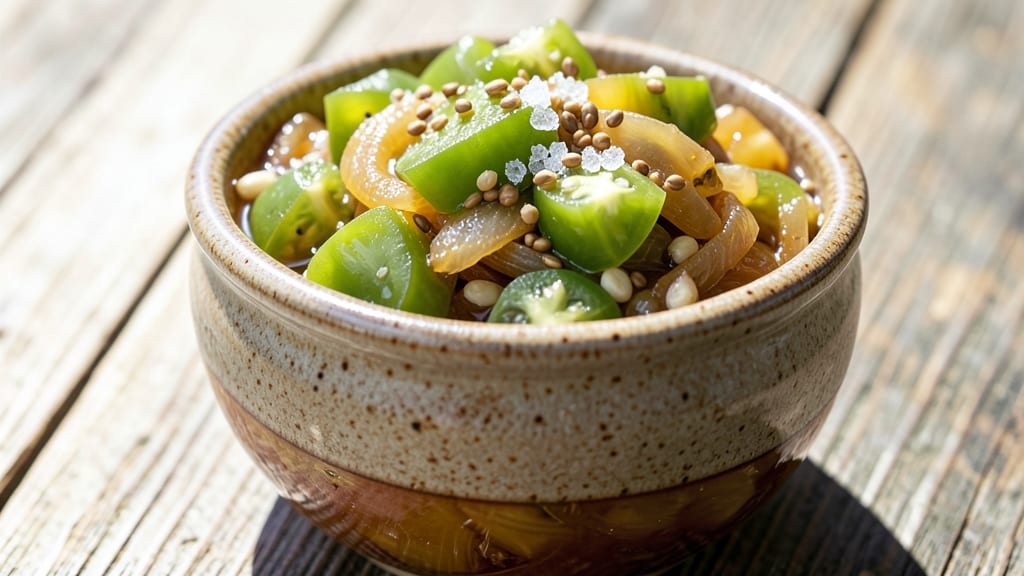
This grandma’s old-fashioned green tomato chutney recipe turns tart, unripe tomatoes into a vinegar-bright condiment perfect for sandwiches, meats, and more. This recipe relies on pantry staples and a slow-cooked method that develops rich, complex flavors over time—no fancy ingredients required.
The key is balancing vinegar and spices to preserve while enhancing the tomatoes' natural acidity, creating a chutney that tastes like summer in a jar.
What sets this chutney apart is its simplicity and versatility—just chopped green tomatoes, onions, garlic, and a blend of vinegar, sugar, and spices simmered until thick and glossy. The process is hands-off after initial prep, making it perfect for batch cooking and gifting.
Unlike store-bought versions, this chutney develops deeper flavor the longer it sits, rewarding patience with every bite.
By the time you're done, you'll have a glossy, tangy-sweet condiment that pairs beautifully with grilled chicken, fried fish, or even as a dip for chips. The vinegar preserves the tomatoes while mellowing their tartness, creating a balanced flavor that's both bold and approachable.
This is the kind of recipe that gets better with age—ideal for making ahead and storing for months.
Use it to elevate simple meals or serve it as a centerpiece at gatherings. The method is foolproof, and the results are undeniably nostalgic—just like Grandma used to make. Here's everything you need to bring this classic back to your kitchen.
Ingredients for grandma's old fashioned green tomato chutney
Pantry staples transform into nostalgic, vinegar-bright chutney with just ten simple ingredients.
| Ingredient | Amount | Notes |
|---|---|---|
| Green Tomatoes 🍅 | 4 cups | Chopped into small pieces |
| Yellow Onions 🧅 | 1 whole | Medium size, finely chopped |
| Garlic Cloves 🧄 | 4 cloves | Minced for aromatic base |
| White Vinegar 💧 | 1 cup | Distilled for tangy brightness |
| Granulated Sugar 🍚 | 1 cup | White sugar preferred |
| Mustard Seeds 🌶️ | 1 tbsp | Whole seeds, toasted |
| Ground Black Peppercorns 🌶️ | 1 tsp | Freshly cracked preferred |
| Ground Cumin Seeds 🌿 | 1 tsp | Toasted for depth |
| Turmeric Powder 🌿 | ½ tsp | For vibrant color |
| Salt 🧂 | 1 tsp | Diamond Crystal preferred |
The tomatoes are the heart of this chutney, so choose firm, tart green varieties—unripe is ideal, but slightly ripe ones work too. Local farmers markets often have perfect specimens in late summer. For onions, yellow or white work best, and chopping them finely ensures even distribution. The garlic should be fresh; peeled and minced just before adding to preserve its pungency. White vinegar is standard, but apple cider vinegar adds subtle complexity if you prefer. Store-bought vinegar is fine, but homemade or high-quality brands like Heinz elevate the final product.
No mustard seeds? Ground mustard at half the amount works in a pinch, though texture will differ. Substituting apple cider vinegar for white vinegar creates a slightly sweeter profile. For sugar, brown sugar adds molasses notes, though white sugar maintains the classic tang. The spices are non-negotiable—toast whole cumin and peppercorns in a dry pan for 30 seconds before grinding to deepen their flavors. If you lack turmeric, a pinch of paprika provides similar color, though the earthy notes differ. For the salt, Diamond Crystal dissolves more cleanly than table salt, but any kosher salt will suffice.
This chutney thickens as it cools, so strain through a fine-mesh sieve before storing to achieve that signature glossy texture. It keeps for up to 6 months in the refrigerator, with flavor intensifying over time. Glass jars with airtight lids preserve quality best—label each jar with the date. For gifting, portion into small mason jars tied with twine. The chutney also freezes well for up to 1 year, though texture may soften slightly upon thawing.
Why You'll Love This Recipe
- No-Chop Nightmare: I swear, this chutney only needs you to dice the onions—that’s it. No peeling garlic cloves (just smash them), no fancy prep. The green tomatoes go in whole if you’re lazy (I often am), and the vinegar does all the work while you sip your coffee.
- Sweet-Sour Magic: That first bite? Chef’s kiss. The sugar and vinegar balance turns the green tomatoes into something tangy, almost jam-like, but with a sharp kick from the garlic. Honestly, it’s the kind of flavor that makes you reach for seconds without thinking—especially when spread on toast or stirred into fried rice.
- Pantry Superhero: Between us, this recipe uses stuff you already have. Green tomatoes? Use the unripe ones from your garden or the store’s discount bin. Vinegar and sugar? You’re not spending extra. It’s my go-to when I’ve got nothing but basics and suddenly need something ridiculously good.
- Lasts Like a Champ: Make a big batch—it keeps for months in the fridge. I’ve had jars of this chutney sitting since summer, pulling it out for sandwiches, eggs, or even as a quick dip. Not the prettiest, but the taste makes up for it every time. (Yes, even on a Tuesday night.)
Step-by-step instructions for grandma's old-fashioned green tomato chutney
This chutney delivers a perfect balance of sweet, tangy, and spiced flavors using only pantry staples.
Prepare the Vegetable Base
In a large, heavy-bottomed pot, combine the 4 cups chopped green tomatoes, 1 whole medium yellow onion (finely chopped), and 4 cloves minced garlic. Cook over medium heat for 8-10 minutes, stirring occasionally, until the onions soften and the tomatoes begin to release their juices. You'll notice the mixture darkening slightly as the vegetables break down—this builds the chutney's rich foundation.
Add the 1 tablespoon whole mustard seeds and toast them for 1-2 minutes until they begin to pop and turn golden. This step is crucial—it releases their aromatic oils, which give the chutney its signature depth. Keep the heat at medium to prevent burning, and stir constantly to ensure even toasting.
Add Spices and Vinegar
Lower the heat to medium-low and stir in the 1 teaspoon ground black peppercorns, 1 teaspoon ground cumin seeds, 0.5 teaspoon turmeric powder, and 1 teaspoon salt. Cook for 2-3 minutes, allowing the spices to bloom and infuse their flavors into the vegetable base. You'll see the mixture darken further and smell a warm, earthy aroma—this is when the chutney truly begins to come together.
Pour in the 1 cup white vinegar and bring the mixture to a gentle simmer. The vinegar will help preserve the chutney while adding the signature tang. Let it simmer uncovered for 5 minutes, stirring occasionally, until the liquid reduces slightly and the mixture thickens. You're aiming for a consistency that coats the back of a spoon but still flows freely.
Sweeten and Simmer to Perfection
Add the 1 cup granulated sugar and stir until fully dissolved. Increase the heat to medium-high and bring the chutney to a rolling boil. Once boiling, reduce the heat to medium-low and let it simmer vigorously for 20-25 minutes. During this time, stir frequently to prevent sticking and ensure even cooking.
You'll know it's ready when the chutney thickens to a glossy, jam-like consistency. The vegetables should be tender, and the flavors should meld into a harmonious blend of sweet, tangy, and spiced notes. If it thickens too quickly, add 1-2 tablespoons water to maintain the desired texture. The chutney should coat a spoon but still be spreadable.
Cool and Store for Maximum Flavor Development
Remove the pot from heat and let the chutney cool to room temperature. This step is essential—it allows the flavors to fully develop and the mixture to thicken further as it cools. Transfer the chutney to clean, sterilized jars, leaving about ½ inch of headspace at the top. Seal the jars tightly and let them cool completely before refrigerating.
The chutney will continue to improve in flavor over the next 24-48 hours as the spices and vinegar mellow. Store it in the refrigerator for up to 2 weeks or process it in a water bath for 15 minutes to extend its shelf life to 6 months. Serve it as a condiment for sandwiches, a topping for grilled meats, or a tangy accompaniment to cheese boards.
Pro Tips For Making Grandma'S Old Fashioned Green Tomato Chutney
- CHOP TOMATOES UNIFORM: Cut them into ¼-inch dice—any larger and they’ll stay chunky, any smaller and they’ll turn to mush faster than you can say "vinegar burn." I learned this the hard way when my first batch looked like a salad instead of chutney.
- SWEAT ONIONS LOW AND SLOW: Don’t rush the onions—cook them on medium-low for 8-10 minutes until they’re translucent and just starting to caramelize. Skimp here, and the chutney will taste raw and sharp, like someone dumped vinegar in your coffee.
- MEASURE VINEGAR BY WEIGHT: Use a scale for the vinegar—50g for every 100g of tomatoes, not "a splash." I used to eyeball it, and the flavor swung wildly between "tangy perfection" and "pickle factory." A kitchen scale costs $15 and saves you from second-guessing.
- STIR CONSTANTLY AFTER SUGAR: Once you add the sugar, keep the pot moving over medium heat for 3-4 minutes—this prevents scorching and helps the sugar dissolve evenly. I stopped stirring once, and half the batch turned into caramelized sludge. (Yes, I ate it anyway.)
Troubleshooting this dish
Chutney Too Thin?
If your chutney isn't thickening enough during simmering, I’ve found that adding 1-2 tablespoons of cornstarch or potato starch mixed with 2 tablespoons cold water creates a slurry that works like magic.
Stir it into the simmering chutney and cook for an additional 5-7 minutes until it reaches the desired consistency. For a more traditional approach, simmer uncovered for 10-15 extra minutes—the vinegar and sugar will naturally reduce and thicken the mixture over time. 💡
Sour or Underseasoned?
If your chutney tastes too tart or lacks depth, balance the acidity by adding 1-2 tablespoons of honey or maple syrup while still warm. For extra complexity, stir in ½ teaspoon smoked paprika or a pinch of ground coriander to enhance the spice profile.
Taste as you go—this chutney should have a bright tang, not an overwhelming sourness. Let it rest overnight before final adjustments, as flavors mellow significantly. ✨
Vegetables Not Soft Enough
If your tomatoes and onions remain firm after simmering, your heat might be too low. Increase to medium-high heat and cook uncovered for an additional 10-15 minutes, stirring frequently to prevent burning. Alternatively, add ¼ cup water or vinegar to the pot and simmer until the vegetables break down.
The goal is tender, not mushy—think of it like a jammy texture, not a chunky relish. 🍅
Mold or Fermentation Issues
If your chutney develops mold or an off smell, it’s likely due to improper storage or contamination. Always use sterilized jars and ensure the chutney reaches a 160°F internal temperature during the final simmer to kill bacteria.
For extended shelf life, process in a water bath for 15 minutes (even if refrigerating). If mold appears, discard the batch—never taste-test for safety. Prevention is key: store in a cool, dark place and refrigerate after opening. 🚫
Spices Too Strong?
If the spices overpower the chutney, dilute the flavor by adding 1-2 tablespoons of apple cider vinegar or a splash of tomato paste to mellow the heat. For a smoother texture, strain the chutney through a fine-mesh sieve to remove whole spices.
If you prefer a milder version next time, reduce the cumin or pepper by ½ teaspoon and add ¼ teaspoon ground ginger for warmth instead. 🌶️
Chutney Separating?
Separation happens when the vinegar and sugar don’t fully integrate. To fix it, whisk in 1 tablespoon of cornstarch slurry (mix 1 tbsp cornstarch + 2 tbsp cold water) and reheat gently until smooth. For future batches, ensure the sugar dissolves completely before adding the vinegar.
If the separation is minor, a quick stir with a fork often blends it back together. The chutney should be glossy and cohesive, not streaky. 💫
Nutrition facts
Frequently asked questions
Can I use ripe tomatoes instead of green ones?
The recipe is designed for green tomatoes to capture their natural tartness and firm texture. Using ripe tomatoes will make the chutney sweeter and softer—more like a salsa than a traditional chutney. If you prefer ripe tomatoes, reduce the sugar to ½ cup and add 1 extra tablespoon of vinegar to maintain balance.
How long does homemade chutney last without canning?
When stored in sterilized glass jars in the refrigerator, this chutney stays fresh for 2-3 weeks. For longer storage, process the jars in a water bath for 15 minutes to extend shelf life to 6 months in a cool, dark pantry. Always check for mold or off smells before eating.
What’s the best way to serve this chutney?
This versatile chutney pairs perfectly with grilled meats, fried fish, or as a tangy spread for sandwiches and charcuterie boards. Try it with corned beef hash, fried chicken, or even as a dip for pita chips. The vinegar brightness cuts through rich, fatty foods beautifully.
Can I make this chutney spicier?
Add ½ teaspoon cayenne pepper or 1 chopped fresh chili during the simmering stage. For a smoky kick, stir in ½ teaspoon smoked paprika at the end. Always taste as you go—spices intensify as the chutney cools.
Why did my chutney turn out too sweet?
This happens if the vinegar didn’t fully mellow the sugar. Next time, let the chutney rest 24 hours before tasting. If it’s already made, balance the sweetness by adding 1 extra tablespoon of vinegar or a splash of lemon juice before serving.