Side Dishes
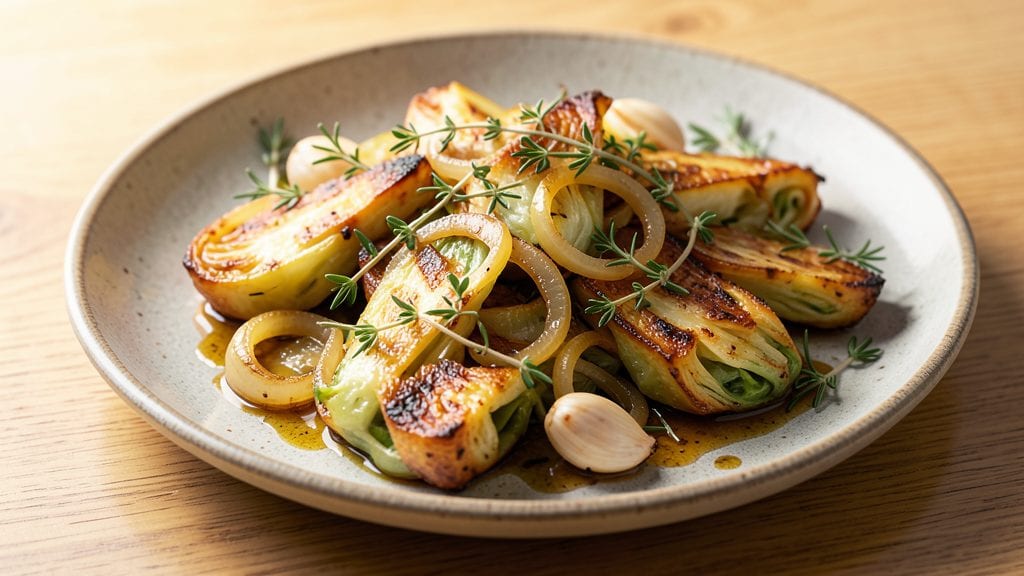
This savory cabbage recipe transforms humble leaves into crisp-tender perfection with a garlicky crunch that elevates any meal. The secret lies in braising—the slow-cooking method that softens the cabbage just enough while preserving its satisfying bite.
I developed this after years of experimenting with cabbage dishes, and it finally delivers the restaurant-quality texture I was chasing.
What makes this recipe stand out is the balance of techniques: sautéing the cabbage first to release its natural sweetness, then braising it with aromatics until tender yet still holding its shape. The garlic and herbs infuse every leaf, creating layers of flavor that stay vibrant even after reheating.
Unlike traditional sauerkraut or overcooked cabbage sides, this method preserves the cabbage’s natural crunch while making it deeply savory.
By the time you serve this dish, you’ll have cabbage leaves that are tender at the core with crisp edges, all coated in a garlicky, herbaceous sauce. It’s the kind of side that disappears from plates quickly—whether paired with roasted meats, hearty grains, or even as a standalone vegetarian dish.
The aroma alone will have everyone at the table asking for seconds.
This recipe works beautifully as a side for holiday dinners, weeknight suppers, or even as a base for stuffed cabbage rolls. The braising technique makes it versatile enough to adapt to different cuisines, from German-inspired dishes to Korean-style stir-fries. Let’s get started on creating cabbage that’s anything but boring.
Ingredients for savory cabbage
Eleven ingredients transform simple cabbage into restaurant-quality braised leaves with perfect texture and garlicky depth.
| Ingredient | Amount | Notes |
|---|---|---|
| Green Cabbage 🥬 | 1 whole | Green cabbage, head approximately 2 lbs |
| Extra-Virgin Olive Oil 🫒 | ¼ cup | High-quality, fruity variety preferred |
| Garlic Cloves 🧄 | 6 cloves | Freshly minced, skin-on for deeper flavor |
| Yellow Onion 🧅 | 1 whole | Medium-sized, finely diced |
| Fresh Thyme 🌿 | 2 tbsp | Leaves only, finely chopped |
| Fresh Rosemary 🌿 | 1 tbsp | Finely chopped, fresh aroma essential |
| Vegetable Broth 💧 | 2 cups | Low-sodium preferred, homemade or high-quality |
| Apple Cider Vinegar 🍏 | 1 tbsp | For subtle tang and preservation |
| Diamond Crystal Kosher Salt 🧂 | 1 ½ tsp | Adjust to taste, don't oversalt |
| Freshly Ground Black Pepper 🌶️ | ½ tsp | Freshly cracked for optimal flavor |
| Bay Leaves 🍃 | 2 whole | Fresh if possible, dried acceptable |
| Unsalted Butter 🧈 | 2 tbsp | Cold, cubed for finishing |
| Fresh Parsley 🌿 | ¼ cup | Chopped, for garnish |
The cabbage selection is critical—opt for a firm, heavy head with tightly packed leaves, indicating freshness. Local farmers markets or high-end grocery chains like Whole Foods carry superior quality, but any well-stocked supermarket will suffice. Avoid cabbage with yellowing leaves or soft spots, as these compromise texture. For the garlic, organic cloves with intact skins yield the best flavor, and Costco often sells them in bulk at excellent prices. The fresh herbs—thyme and rosemary—should be vibrant green with no wilting, as their aroma is the foundation of this dish's complexity. If using dried herbs, reduce to one-third the amount of fresh, but fresh is non-negotiable for authentic flavor.
Substitutions must preserve the dish's balance. Red cabbage works but alters color and sweetness, while savoy cabbage adds texture but requires longer braising. For the broth, chicken or mushroom broth deepens umami, though vegetable remains versatile. No apple cider vinegar? White wine vinegar or lemon juice at half the amount maintains tang. The butter can be swapped for olive oil in a pinch, though it lacks the same richness. If fresh herbs are unavailable, dried thyme and rosemary suffice, but toast the dried spices in a dry pan for 30 seconds to intensify their flavor. The bay leaves can be omitted entirely if unavailable, though they contribute subtle earthiness.
Proper storage ensures maximum flavor retention. Fresh cabbage keeps for 5-7 days in the refrigerator, wrapped loosely in a dry towel. The braised cabbage reheats beautifully—simmer in a saucepan for 5-7 minutes until heated through, or warm in a 350°F oven for 15 minutes with a splash of water. Portion into glass containers for easy reheating, and it maintains its texture for 4-5 days in the fridge or 3 months frozen. For long-term storage, freeze the braised cabbage in single-serving portions with a sprinkle of salt to preserve flavor. The herbs can be stored in the fridge for 5 days wrapped in damp paper towels.
Why You'll Love This Recipe
- One-Pan Miracle: I swear by this—just toss the cabbage wedges in a hot pan with olive oil, and they crisp up while the onions caramelize. No chopping boards, no extra pots, just done.
- Garlic-Thyme Magic: That first whiff of garlic sizzling in olive oil? It’s the kind of aroma that makes you pause mid-conversation. The thyme turns it from good to ridiculously good—bright, herby, and impossible to resist.
- Lunchbox Hero: Between us, this is my go-to for meal prep. Slice the cabbage ahead, store it in the fridge, and reheat it in minutes. Pack it cold in lunches or warm it up for dinner—it’s the ultimate low-effort side that still feels special.
- Budget Crispy Edge: Honestly, cabbage is the unsung hero of affordable cooking. A whole head feeds four, and the olive oil and garlic make it taste like a restaurant dish. Leftovers? Even better the next day—crispier, if you can believe it.
Step-by-step instructions for crisp-tender braised cabbage
Aromatic, tender cabbage leaves with a garlicky crunch—this method transforms tough outer leaves into silky, flavorful bites. Precision timing and gentle handling are key.
Prep the Cabbage for Even Cooking
Remove the outer wilted leaves from the whole green cabbage and discard them. Cut the head in half lengthwise, then slice each half into 6 equal wedges—this ensures even cooking. Separate the wedges and remove the tough core from each, cutting about ½ inch from the base where the leaves attach. This prevents bitterness and allows the broth to penetrate fully.
In a large mixing bowl, toss the cabbage wedges with 0.25 cup extra-virgin olive oil, 1.5 tsp diamond crystal kosher salt, and 0.5 tsp freshly ground black pepper. The oil should coat the leaves evenly, and the salt will begin drawing out moisture for better browning. Let the cabbage sit at room temperature for 15 minutes while you prepare the aromatics.
Build the Aromatic Base
Heat a large, deep skillet (preferably cast iron) over medium heat. Add 0.25 cup extra-virgin olive oil and let it warm until shimmering but not smoking. Add the 1 whole yellow onion, cut into ¼-inch dice, and cook for 5-6 minutes until softened and beginning to caramelize at the edges. Stir occasionally to prevent burning.
Add the 6 cloves garlic cloves, minced with skins on for deeper flavor, along with the 2 tbsp fresh thyme and 1 tbsp fresh rosemary. Cook for 1-2 minutes until the garlic turns pale golden and fragrant—this releases their full flavor without burning. Remove the pan from heat and set aside temporarily.
Braise the Cabbage Until Tender
Return the skillet to medium heat and add the prepared cabbage wedges in a single layer, cut-side down. Let them sear undisturbed for 3-4 minutes until the edges develop a deep golden brown crust. This creates texture and flavor depth. Flip the wedges and cook another 2 minutes to brown the other side.
Pour in the 2 cups vegetable broth and 1 tbsp apple cider vinegar, then add the 2 whole bay leaves. Bring to a gentle simmer, then reduce heat to low. Cover partially with a lid, leaving a 2-inch gap for steam to escape. Simmer for 25-30 minutes, stirring occasionally, until the cabbage is fork-tender and the leaves pull away easily from the core.
Finish with Butter and Garnish
Remove the cabbage from the skillet and transfer it to a serving platter. Increase the heat to medium-high and add the 2 tbsp unsalted butter, cubed. Let it melt completely, then stir in the 0.25 cup fresh parsley until the butter foams and the parsley wilts slightly. Pour this buttery parsley mixture over the cabbage.
Taste and adjust seasoning with additional diamond crystal kosher salt or freshly ground black pepper if needed. Serve immediately while the cabbage is still steaming, ensuring each bite delivers the crisp-tender texture and garlicky depth promised. The residual heat will carry over, keeping the leaves perfectly tender even after resting briefly.
Pro Tips For Making Savory Cabbage
- CUT CABBAGE SMALLER THAN YOU THINK: I learned this the hard way—big chunks of cabbage stay stubbornly crunchy no matter how long you cook them. Aim for ½-inch slices or shreds; they’ll soften faster and absorb the olive oil and garlic flavors evenly. (Yes, even if you’re impatient like me.)
- SWEAT ONIONS UNTIL TRANSLUCENT: Don’t just "cook" the onion—get it to the point where it’s nearly clear and just starting to caramelize. That’s when it releases its sweetness and stops tasting raw. Use medium-low heat and resist the urge to rush; this is where the flavor foundation happens.
- DON’T OVERCROWDLE THE PAN: If your cabbage is piled high, it’ll steam instead of brown. Cook in batches if needed, and give it space to crisp up. A crowded pan makes soggy cabbage, and nobody wants that. (Your future self will thank you.)
- USE GARLIC LIKE A FLAVOR BOOSTER: Smash the garlic cloves with the flat side of your knife before adding them—it releases more aroma. And if you’re feeling lazy, skip the whole cloves and use minced garlic; it blends in faster and still packs the punch. (I skip this when I’m lazy, but the dish is noticeably better when I don’t.)
Serving suggestions for this dish
Meat Pairings
This braised cabbage shines alongside rich, slow-cooked meats like beef short ribs or pork shoulder. The garlicky depth of the cabbage complements the deep, caramelized flavors of braised meats. For a lighter option, pair it with herb-crusted chicken thighs—the crispy skin contrasts beautifully with the cabbage’s tender texture.
I often serve it with pan-seared duck breast for an elegant touch, where the cabbage’s acidity cuts through the duck’s fat. 🥩
Grain Companions
For a hearty vegetarian meal, serve this cabbage alongside wild rice blend or farro. The nutty, chewy texture of the grains balances the cabbage’s crisp-tender bite. I also love pairing it with creamy polenta—the smoothness of the polenta contrasts perfectly with the cabbage’s garlicky edges.
For a lighter option, quinoa adds a protein boost while keeping the dish fresh and vibrant. 🌾
Vegetable Sides
Roasted carrots or parsnips add natural sweetness that enhances the cabbage’s savory notes. Toss them with honey and thyme before roasting at 400°F for 25 minutes for a caramelized finish. Alternatively, sautéed mushrooms with garlic and shallots deepen the umami profile of the meal.
I often include a simple arugula salad with lemon vinaigrette to provide a peppery, refreshing contrast. 🥕
Bread Pairings
A warm, crusty baguette or sourdough loaf is perfect for soaking up the garlicky cabbage sauce. Toast the bread lightly and rub it with a garlic clove before serving. For a more decadent option, garlic bread with butter and parsley elevates the dish to restaurant-quality.
I also love serving it with cheesy pull-apart bread—the melted cheese adds richness that pairs wonderfully with the cabbage’s bright flavors. 🍞
Dessert Pairings
Balance the richness of the meal with a light, citrusy dessert like lemon posset or honey-glazed fruit. The tartness of the dessert cleanses the palate after the savory cabbage. For a more indulgent option, dark chocolate-dipped strawberries add a touch of elegance.
I often finish meals with this cabbage with vanilla bean ice cream—the cool creaminess contrasts beautifully with the warm, garlicky flavors. 🍓
Presentation Tips
Serve the cabbage in a deep, rustic dish to showcase its layers and colors. Garnish with extra fresh parsley and a drizzle of olive oil for a polished look. For a dramatic presentation, arrange the cabbage wedges in a circular pattern on a platter.
If serving at a buffet, use small cast-iron skillets to keep the cabbage warm and add a cozy touch. The key is to highlight the cabbage’s vibrant green color and garlicky aroma. ✨
Nutrition facts
Frequently asked questions
Can I use red cabbage instead of green?
The technique works, but expect a different flavor profile and color. Red cabbage has a naturally sweet, slightly peppery taste that pairs beautifully with the same braising method. For best results, reduce the apple cider vinegar to ½ tbsp—its acidity can intensify the red pigment. The texture will be similar, but the leaves may hold their color better if you add ¼ cup white wine to the braising liquid.
How do I prevent the cabbage from turning mushy?
Overcooking is the main culprit! Keep the heat at a gentle simmer (low-medium) and never let the liquid boil vigorously. The cabbage should be fork-tender in 25-30 minutes—test a leaf early if concerned. Also, ensure you remove the tough core completely before braising, as it can make the leaves tough. For extra insurance, add 1 tbsp lemon juice at the end to brighten flavors and maintain crispness.
Can I make this recipe ahead of time?
This dish actually tastes better the next day as the flavors meld. Store in an airtight container in the fridge for up to 5 days. Reheat gently in a skillet with a splash of broth or water until warmed through. For freezing, portion into single servings and freeze for up to 3 months. Thaw overnight in the fridge before reheating—never microwave directly from frozen.
What's the secret to getting crispy edges?
Two key steps: sear the cabbage wedges cut-side down for 3-4 minutes until deeply golden before adding liquid, and use a cast-iron skillet for even heat distribution. The initial browning creates a flavorful crust. For extra crunch, finish with 1 tbsp toasted breadcrumbs mixed into the butter at the end. Avoid stirring too soon—patience is crucial!
Can vegetarians make this dish more substantial? Add protein-rich elements like white beans or crumbled tofu to the braising liquid in the final 10 minutes of cooking. For extra heartiness, stir in ½ cup cooked lentils or mushroom "meat"
Mushroom "meat": Sauté 8 oz sliced mushrooms with 1 tbsp soy sauce and 1 tsp smoked paprika until tender, then add to the cabbage. This adds umami depth that vegetarians will love.