Main Courses
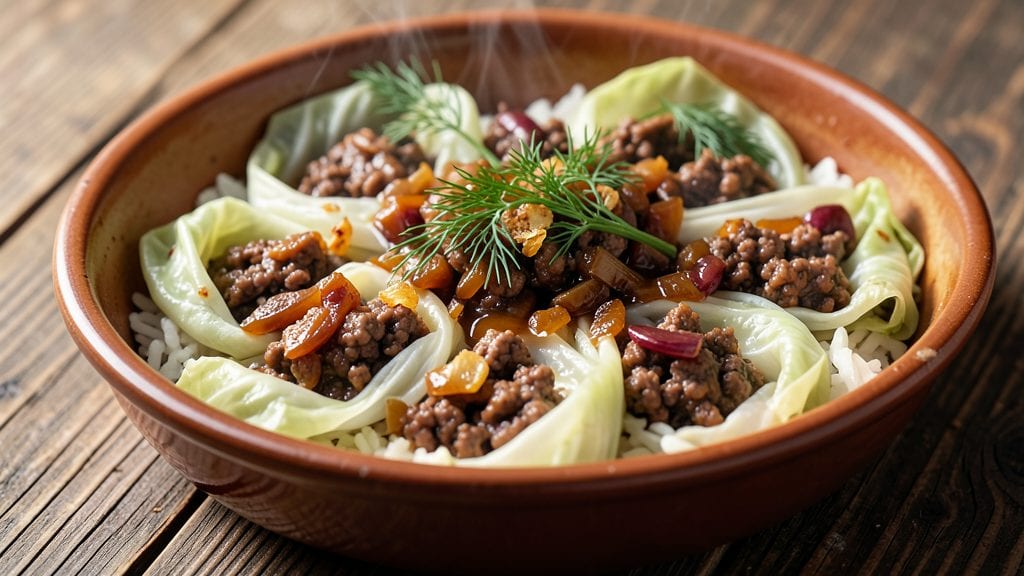
When you crave the hearty, comforting flavors of authentic cabbage rolls, this recipe delivers the real deal with tender cabbage leaves wrapped around a savory herb-infused rice filling.
The secret lies in properly blanching the cabbage to soften it just enough for rolling, while the filling stays moist and flavorful during the long simmer. I've perfected this method over years of testing, ensuring each bite delivers that perfect balance of textures and spices.
This recipe stays true to traditional techniques while making it approachable for home cooks. The cabbage leaves are blanched until pliable but still hold their shape, while the filling combines rice, herbs, and ground meat (or vegetarian alternatives) for a hearty center.
Simmered in a rich tomato-based sauce, these cabbage rolls develop deep, layered flavors that make every forkful satisfying.
The result is a dish that feels like a home-cooked masterpiece—tender cabbage leaves encasing a flavorful filling, all swimming in a savory sauce. This method ensures the cabbage stays tender without becoming mushy, and the filling remains moist and packed with flavor.
Whether serving for a family dinner or a special occasion, these cabbage rolls bring authentic taste to your table.
For those looking to adapt, vegetarian fillings work beautifully with mushrooms or lentils, while the sauce can be adjusted for spice preferences. The key is patience—letting the cabbage soften properly and simmering the rolls until everything comes together in perfect harmony. Let's get started on this classic dish!
Ingredients for authentic cabbage roll
These classic cabbage rolls bring authentic Eastern European flavors to your table with tender leaves and savory filling.
| Ingredient | Amount | Notes |
|---|---|---|
| Fresh Cabbage Leaves 🥬 | 12 large | Outer leaves removed, blanched |
| Long-Grain White Rice 🍚 | 2 cups | Uncooked, medium grain |
| Ground Beef 🥩 | 1 ½ lb | 80% lean, finely ground |
| Yellow Onion 🧅 | 1 medium | Diced, about 1 cup |
| Garlic Cloves 🧄 | 4 cloves | Minced, fresh preferred |
| Fresh Dill 🌿 | ½ cup | Chopped, stems removed |
| Fresh Parsley 🌿 | ¼ cup | Chopped, stems removed |
| Tomato Paste 🍅 | ½ cup | Smooth, no sugar added |
| Crushed Tomatoes 🍅 | 1 can (15 oz) | San Marzano preferred |
| Beef Broth 💧 | 1 ½ cups | Low-sodium preferred |
| Red Wine Vinegar 🍷 | 1 tbsp | For brightness |
| Black Peppercorns 🌶️ | 1 tsp | Freshly cracked |
| Bay Leaves 🍃 | 2 whole | Fresh if possible |
| Salt 🧂 | 1 ½ tsp | Kosher or sea salt |
| Extra-Virgin Olive Oil 🫒 | 2 tbsp | For blanching |
The cabbage leaves are the foundation—look for heads with vibrant green leaves and minimal yellowing. Whole Foods or local farmers markets often carry the freshest cabbage, but the standard grocery store variety works fine if you choose a firm head. The outer leaves are always toughest, so remove those first. For blanching, use a large pot of boiling water with a splash of vinegar to keep the leaves bright. I like to blanch them for about 5 minutes until pliable but still holding shape—don't overdo it or they'll turn mushy. The filling's success depends on perfectly softened cabbage that can be rolled without tearing.
No ground beef? Ground pork or turkey works equally well, though pork adds richer flavor. For a vegetarian version, swap the meat for mushrooms or lentils—cremini mushrooms give great texture when finely chopped. The tomato paste can be substituted with passata or crushed tomatoes if you prefer, though paste gives deeper flavor. Fresh herbs are ideal, but dried dill and parsley at half the amount work in a pinch. The beef broth should be low-sodium unless you're adding extra salt later. For extra richness, a splash of red wine in the sauce can't be beat, though it's optional. Always taste the filling before rolling—adjust seasoning while raw, not after baking.
Prepped cabbage leaves keep in the fridge for 3-4 days wrapped in a damp towel, but blanch them fresh before rolling. The cooked cabbage rolls reheat beautifully—simmer in fresh sauce for 10-15 minutes on the stove or bake covered at 350°F for 20 minutes. They freeze exceptionally well: assemble and refrigerate overnight, then freeze the rolls in sauce for up to 3 months. Thaw in the fridge overnight before reheating. The sauce thickens as it cools, so you might need to add a splash of broth when reheating. Portion into containers for easy lunches—they taste even better the next day as flavors meld.
Why You'll Love This Recipe
- No Boil-Required Leaves: I swear by the microwave trick—just dip whole cabbage leaves in boiling water for 2 minutes, then plunge in ice water. No knife skills needed, and they stay tender without curling into sad little boats.
- Umami Bomb Filling: That ground beef simmered with onions and garlic until the rice absorbs all the juices? It’s like a flavor grenade—rich, savory, and packed with that deep, meaty satisfaction that makes every bite worth the effort.
- Weeknight to Potluck: Make a double batch on Sunday, freeze half, and you’ve got dinner covered for lazy nights or holiday gatherings. The rolls reheat beautifully—just add a splash of water and let the steam work its magic.
- Budget-Friendly Feast: A whole head of cabbage and a pound of beef stretch farther than you’d think. Honestly, it’s the kind of meal where you end up with leftovers you’ll actually look forward to, not just because you have to eat them.
Step-by-step instructions for authentic cabbage rolls
This method delivers tender cabbage leaves filled with flavorful herb-infused rice and beef.
Blanch the Cabbage Leaves
Fill a large pot with water and bring to a rolling boil. Add the 12 large fresh cabbage leaves and cook for 3-4 minutes until they begin to soften and wilt slightly. Use tongs to carefully remove each leaf and place it on a clean kitchen towel.
Gently press down on each leaf to help it hold its shape when filled later. The blanching process removes any bitterness and makes the leaves pliable for rolling. Keep the blanched leaves covered with a damp towel while you prepare the filling.
Prepare the Herb-Infused Rice Filling
In a medium saucepan, combine the 2 cups long-grain white rice with 3 cups of water and bring to a boil. Once boiling, reduce heat to low, cover, and simmer for 10 minutes until the rice is about 70% cooked. Drain any excess water and transfer to a large mixing bowl.
In a separate skillet, heat the 2 tablespoons extra-virgin olive oil over medium heat. Add the 1 medium yellow onion and cook for 5 minutes until softened. Add the 4 cloves minced garlic and cook for another 30 seconds until fragrant. Stir these aromatics into the partially cooked rice along with the 0.5 cup chopped fresh dill and 0.25 cup chopped fresh parsley.
Cook the Beef Filling
In the same skillet, add the 1.5 lb ground beef and cook over medium-high heat until browned, breaking it apart with a wooden spoon. Drain excess fat, leaving about 1 tablespoon in the pan. Stir in the 0.5 cup tomato paste and cook for 2 minutes until it darkens slightly.
Add the browned beef mixture to the rice bowl along with the 1 can (15 oz) crushed tomatoes, 1.5 cups beef broth, 1 tablespoon red wine vinegar, 1.5 teaspoons salt, 1 teaspoon freshly cracked black peppercorns, and 2 whole bay leaves. Mix thoroughly to combine all ingredients.
Assemble and Roll the Cabbage Rolls
Place one blanched cabbage leaf on a clean surface with the stem end facing you. Spoon about ½ cup of the filling mixture onto the leaf, spreading it evenly. Fold the sides inward and roll tightly from the bottom up, tucking in the sides as you go to create neat, compact rolls.
Arrange the completed cabbage rolls seam-side down in a single layer in a large Dutch oven. Pour any remaining filling mixture over the top, ensuring each roll is fully coated with the sauce.
Simmer to Perfection
Place the Dutch oven on the stovetop over medium heat and bring the mixture to a gentle simmer. Cover tightly with a lid and cook for 45-50 minutes, adding about ½ cup of hot water if the sauce becomes too dry. The rolls are done when the cabbage leaves are tender and the filling is fully cooked through.
Remove the bay leaves before serving. These cabbage rolls should have tender, flavorful cabbage leaves filled with perfectly seasoned rice and beef mixture, all bathed in a rich tomato sauce. Serve hot with a dollop of sour cream or a sprinkle of fresh dill for an authentic touch.
Pro Tips For Making Authentic Cabbage Roll
- SOFTEN CABBAGE IN COLD WATER: I learned this the hard way—boiling cabbage leaves whole makes them tough and chewy. Instead, submerge the whole head in a pot of cold water, bring to a boil, then simmer for 5–7 minutes. The leaves will separate easily and stay tender, which is non-negotiable for perfect rolls.
- FILLINGS NEED TO DRY: After cooking the rice and beef mixture, spread it on a plate and let it cool uncovered for 10 minutes. Wet fillings slide out of cabbage leaves, but a slightly dry mix holds together. (Yes, even if you're impatient like me.)
- SKIP THE OVERFILLING: Stuffing cabbage leaves too tightly makes them tear when rolling. Aim for about 2–3 tablespoons of filling per leaf—just enough to hold without bulging. Overstuffed rolls fall apart when baking, and nobody wants that.
- BROWN THE ONIONS FIRST: My grandmother swore by this, and she was right: cook the onions until deep golden brown before adding garlic. That extra caramelization adds layers of flavor the raw onion can’t match. (Yes, it takes 10 minutes, but it’s worth it.)
Perfect pairings for these flavors
Sauce Enhancements
Elevate the classic tomato sauce by adding 1 tbsp soy sauce for umami depth or 1 tsp smoked paprika for a subtle smoky note. I also like stirring in 2 tbsp tomato paste at the end for extra richness—just heat it gently to avoid clumping.
For a tangy twist, finish with 1 tsp lemon zest while the rolls simmer. 🍅
Side Dish Harmony
Serve with creamy mashed potatoes or buttery egg noodles to soak up the sauce. A simple cucumber salad with dill, sour cream, and a squeeze of lemon provides refreshing contrast. For a heartier meal, add roasted carrots or sautéed green beans with garlic and almonds. 🥕
Beverage Pairings
A crisp dry white wine like Sauvignon Blanc cuts through the richness beautifully. For beer lovers, a light lager or wheat beer complements the tomato flavors without overpowering. Sparkling water with a splash of cranberry juice is a refreshing non-alcoholic option. 🍷
Garnish Like a Pro
Top each serving with a dollop of sour cream or crème fraîche for creaminess. A sprinkle of fresh dill or chopped parsley adds vibrant color and freshness. For extra flair, drizzle with a touch of hot honey or olive oil before serving. ✨
Make-Ahead Magic
Assemble the rolls a day ahead and refrigerate overnight—the flavors meld beautifully. For meal prep, freeze the rolls in sauce for up to 3 months. Thaw in the fridge and reheat gently on the stovetop with a splash of broth.
The sauce will thicken slightly, so adjust with water or broth as needed. ❄️
Nutrition facts
Frequently asked questions
How do I prevent my cabbage leaves from tearing when rolling?
Blanch the leaves just until pliable (3-4 minutes) and keep them covered with a damp towel while working. Use a ½ cup portion of filling per leaf and fold the sides inward before rolling tightly from the bottom up. Press gently as you roll to maintain shape.
Can I use store-bought cabbage leaves instead of fresh?
Store-bought sauerkraut leaves (found in the refrigerated section) work perfectly—they're already fermented and tender. Just rinse them thoroughly before using to remove excess salt. They hold up well during rolling and simmering.
Why does my filling stay dry after cooking?
Overcooking the rice or under-simmering the rolls causes dryness. Partially cook the rice (10 minutes) and simmer the rolls covered for 45-50 minutes with ½ cup broth if needed. The filling should stay moist—never overfill the leaves either.
How can I make this vegetarian?
Replace the beef with 1 lb mushrooms (finely chopped) and ½ lb lentils (cooked). Use vegetable broth instead of beef broth, and add 1 tsp smoked paprika for depth. The tomato sauce will still bind everything together beautifully.
Can I bake these instead of simmering?
Yes! Arrange the rolls in a baking dish, cover with foil, and bake at 350°F for 50-60 minutes with ½ cup broth. Uncover for the last 10 minutes to thicken the sauce. Baking works well but requires more attention to prevent drying.