Main Courses
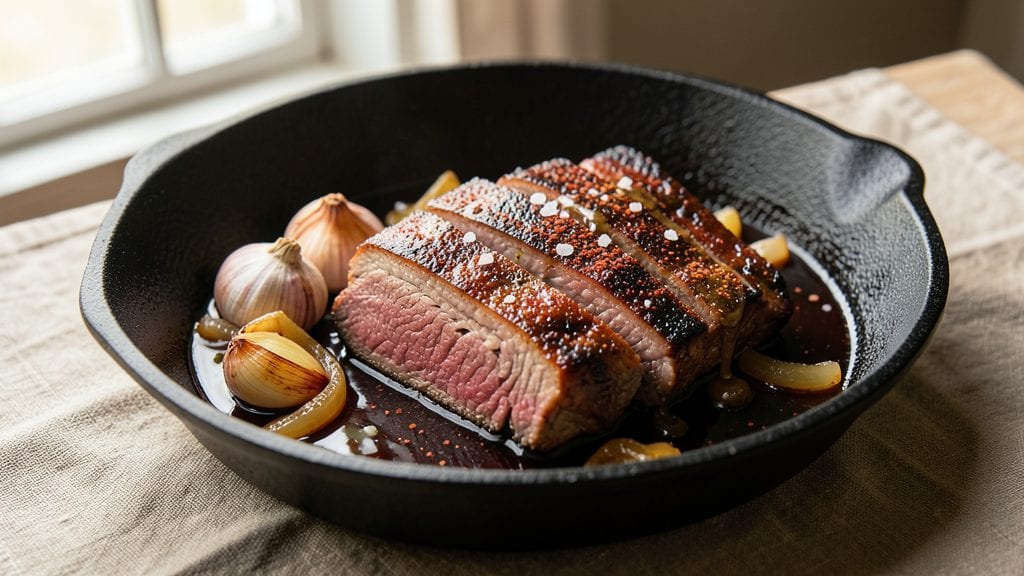
Creating easy stovetop brisket that rivals slow-smoked perfection doesn’t require a smoker or hours of tending—just a heavy pot and patience. This method transforms tough brisket into fork-tender, flavorful slices using simple braising techniques that work on any stovetop.
I developed it after years of experimenting with shortcuts that still deliver restaurant-quality results, and it’s become my go-to for weeknight dinners that impress without the fuss.
The secret lies in the combination of slow cooking and liquid-based tenderizing—beef broth, spices, and a splash of beer or vinegar break down the meat while infusing it with deep, smoky flavors.
Unlike traditional smoking, this approach requires minimal attention: just sear the meat, add your liquid and seasonings, then let it simmer for 3-4 hours until the brisket falls apart. No special equipment, no cross-contamination risks, and no need to monitor a grill all day.
What you’ll end up with is brisket that’s tender enough to shred with a fork, with a rich, caramelized surface and a sauce so flavorful it coats every bite.
The aroma alone will have everyone gathered around the table, and the process is simple enough for beginners but refined enough to satisfy seasoned cooks. This is the kind of meal that turns a simple weeknight into a memorable feast—without the stress.
Serve it on buns for sandwiches, over mashed potatoes, or with crusty bread to soak up every last bit of that smoky, savory sauce. The best part? Leftovers reheat beautifully, making this the ultimate make-ahead dish for busy families. Let’s get started on a brisket that’s easier than you think.
Ingredients for easy stovetop brisket
Fourteen ingredients. One heavy pot. Brisket so tender it melts like butter.
| Ingredient | Amount | Notes |
|---|---|---|
| Beef Brisket 🥩 | 2 lb | Flat cut, about 1-inch thick |
| Beef Broth 💧 | 2 cups | Low-sodium preferred, homemade or store-bought |
| Dark Beer 🍺 | 1 cup | Stout or porter for depth, chilled |
| Apple Cider Vinegar 🍎 | ¼ cup | Or red wine vinegar for tang |
| Brown Sugar 🍯 | ½ cup | Light or dark, packed |
| Smoked Paprika 🌶️ | 1 tbsp | For authentic smokiness |
| Ground Black Pepper 🌶️ | 1 tsp | Freshly cracked for heat |
| Garlic Cloves 🧄 | 4 cloves | Smashed, not minced |
| Yellow Onion 🧅 | 1 whole | Cut into 1-inch chunks |
| Bay Leaves 🌿 | 2 whole | Fresh preferred, dried works |
| Olive Oil 🫒 | 2 tbsp | High smoke point for searing |
| Salt 🧂 | 1 ½ tsp | Diamond Crystal kosher preferred |
| Fresh Thyme 🌿 | ½ tsp | Leaves only, chopped |
The brisket is non-negotiable here—flat cut is your best bet for even cooking. I always grab mine from Costco or the butcher section at Whole Foods, where they can trim it to about 1-inch thickness for perfect stovetop braising. Look for good marbling and avoid anything with too much fat trim. If you're buying a whole packer, ask for the flat half—it's leaner and cooks faster. For the beer, Guinness or a local craft stout adds depth, but any dark beer works. The vinegar? Bragg's apple cider is my go-to, but red wine vinegar keeps it classic.
No dark beer? Substitute extra beef broth—just add 1/2 cup more. Fresh thyme missing? Dried works at one-third the amount, but it lacks that bright aroma. Smoked paprika gives the smoky flavor without a smoker—Penzeys or McCormick have great options. For the brown sugar, muscovado adds molasses notes, but light brown is fine. The garlic and onion are flavor anchors—don't skip smashing those cloves (it releases more flavor). And if you're worried about the vinegar being too sharp, reduce it to 2 tbsp—the beer's bitterness balances it.
This reheats like a dream—better the next day once flavors meld. Store in the sauce, tightly covered, for 4-5 days in the fridge. For freezing, portion into containers with sauce—3 months max. I always make a double batch because leftovers disappear fast. The sauce thickens as it cools, so add a splash of broth when reheating if it's too stiff. And save those bay leaves—they're good for 3-4 uses if stored in a dry spice jar.
Why You'll Love This Recipe
- One-Pot Magic: I swear by this—just toss the brisket, beer, and broth into one pot, and walk away while it simmers. No flipping, no basting, no stress. That dark beer cuts through the richness, and the vinegar keeps it bright.
- Deep, Caramelized Love: The brown sugar isn’t just sweet—it melts into a sticky, glossy crust while the brisket tenderizes. Between us, that first bite? The kind of satisfaction that makes you forget takeout exists.
- Weeknight or Weekend Star: Slap this on the stove for a quick family dinner, or let it slow-cook all day for a Sunday feast. It’s the same recipe, just different timing—no rules, just results.
- Budget-Friendly Powerhouse: A single brisket feeds my crew for days, and the leftovers? Even better the next day. Dark beer and vinegar stretch the flavor, so you’re not sacrificing taste for savings. Win-win.
Step-by-step instructions for easy stovetop brisket
Here's how to transform tough brisket into fork-tender perfection using just your stovetop.
Sear the Brisket for Maximum Flavor
Heat a heavy-bottomed pot over medium-high heat and add the 2 tablespoons olive oil. Once shimmering, place the 2 lb beef brisket fat-side down and sear undisturbed for 8-10 minutes until a deep golden crust forms. This initial sear locks in juices and builds flavor through the Maillard reaction.
Flip the brisket and sear the other side for another 6-8 minutes. You'll notice the fat will begin to render and sizzle—this is exactly what we want. Remove the brisket and set it aside on a plate, leaving all that beautiful browned meat behind in the pot.
Build the Flavorful Braising Liquid
In the same pot, add the 1 whole yellow onion cut into 1-inch chunks and the 4 smashed garlic cloves. Cook for 3-4 minutes until the onions soften and become translucent. You should smell that sweet, caramelized aroma developing—this is where the foundation of your sauce begins.
Stir in the 1 tablespoon smoked paprika, 1 teaspoon ground black pepper, and 0.5 teaspoon chopped fresh thyme. Cook for 30 seconds to toast the spices slightly—this releases their essential oils and deepens their flavor. Immediately pour in the 1 cup dark beer and 0.25 cup apple cider vinegar, scraping up all those delicious browned bits from the bottom of the pot.
Braise Until Fork-Tender
Return the brisket to the pot, fat-side up. Add the 2 cups beef broth and 0.5 cup brown sugar, then bring everything to a gentle simmer. The liquid should just barely bubble—if it's boiling vigorously, reduce the heat. Add the 2 whole bay leaves and 1.5 teaspoons salt.
Cover the pot and simmer gently for 2.5-3 hours until the brisket is fork-tender. You'll know it's ready when a fork slides in and out with minimal resistance. The braising liquid should have reduced significantly, creating a thick, flavorful sauce that coats the brisket beautifully.
Rest and Serve with Confidence
Remove the brisket from the pot and transfer it to a cutting board. Tent loosely with aluminum foil and let it rest for 15-20 minutes. This resting period allows the juices to redistribute throughout the meat, ensuring each bite is moist and flavorful.
While the brisket rests, skim any excess fat from the braising liquid and adjust the seasoning if needed. Slice the brisket against the grain into ¼-inch thick slices and serve with the reduced braising sauce spooned generously over the top. The result is tender, smoky brisket that falls apart at the touch, perfect for quick weeknight dinners.
Pro Tips For Making Easy Stovetop Brisket
- SEAR THE BRISKET FIRST: I used to skip this step and wondered why my brisket tasted flat—high heat for 3-4 minutes on each side until it’s deep brown. That crust locks in flavor when the beer and vinegar hit it later.
- USE STOUT BEER: Dark beer is great, but stout’s maltiness cuts through the brisket’s richness better. If you don’t have it, swap in a splash of soy sauce for depth—just don’t skip it entirely.
- SIMMER COVERED, UNCOVERED: Start with the lid on to build steam, then crack it open halfway. The beer evaporates faster uncovered, intensifying the sauce—just add a splash of broth if it gets too dry.
- SALT THE BROTH: After 2 hours, sprinkle 1 teaspoon of salt directly into the pot. The brisket absorbs it better than pre-salting, and it balances the sweetness of the brown sugar and vinegar.
Flavor customization for these flavors
Smoky vs. Sweet
For a deeper smoky flavor, increase the smoked paprika to 2 tablespoons and add ½ teaspoon chipotle powder for heat. I also like toasting 1 teaspoon coriander seeds in the pot before adding the beer—it adds a nutty depth that pairs perfectly with the brisket’s richness. 🌶️
If you prefer sweetness, swap the apple cider vinegar for ½ cup molasses and reduce the brown sugar to ¼ cup. The molasses caramelizes beautifully during braising, creating a glossy, almost barbecue-like sauce. Trust me, this version is a crowd-pleaser for dessert lovers.
Spicy Kick
Crank up the heat by adding 1 tablespoon gochujang (Korean chili paste) or 1-2 slices of jalapeño to the braising liquid. For extra fire, sprinkle ½ teaspoon cayenne pepper directly on the brisket before searing.
I’ve found that Penzeys’ hot sauce mixed into the sauce at the end adds a tangy finish that balances the spice. 🔥
Herb-Infused Variations
Swap the thyme for 1 teaspoon rosemary and 1 teaspoon oregano for a Mediterranean twist. The rosemary adds a piney aroma that pairs surprisingly well with brisket, while oregano brings earthy warmth. Fresh herbs like cilantro or parsley can be stirred in at the end for brightness.
Umami Boost
For an umami-packed version, add 1 tablespoon soy sauce or 1 teaspoon fish sauce to the braising liquid. I also love adding 2 slices of bacon to the pot during the searing step—the rendered fat adds incredible depth.
For a vegetarian-friendly boost, stir in 1 tablespoon miso paste at the end. 💡
Citrus Zing
Brighten the dish with zest from 1 orange or lemon added to the braising liquid. The citrus cuts through the richness and adds a refreshing contrast. I also like adding 2 thin slices of orange peel during the simmer—they infuse the sauce with aroma without overpowering the meat.
Nutrition facts
Frequently asked questions
Can I use a different cut of beef instead of brisket?
This recipe is designed specifically for brisket's texture and flavor profile, but you could try chuck roast or short ribs in a pinch. The cooking time will vary—chuck roast needs about 2 hours while short ribs may take 3-4 hours to become tender. Never use lean cuts like sirloin or tenderloin, as they won't braise well.
Why does my stovetop brisket turn out dry?
Overcooking or skipping the rest time are the most common culprits. Always simmer gently (not boil) and check doneness with a fork. If it's still slightly firm, add ¼ cup broth and cover for 30 more minutes. The 15-20 minute rest is critical—cutting too soon lets juices escape. For extra moisture, add 1 tablespoon cornstarch to the braising liquid at the end.
Can I make this recipe in an Instant Pot or slow cooker?
Yes! For the Instant Pot, sear the brisket first, then add all ingredients and pressure cook on high for 60 minutes (natural release). In a slow cooker, use the same ingredients but cook on low for 6-7 hours. The stovetop version gives you more control over the sauce reduction, but these methods work beautifully for hands-off cooking.
What's the best way to reheat leftovers?
Reheat gently in the same braising liquid over low heat for 10-15 minutes, or cover with foil and warm in a 300°F oven for 20 minutes. Never microwave—it makes the meat tough. The sauce thickens when cooled, so add a splash of broth when reheating if needed. Leftovers actually taste better the next day as flavors meld!
How do I know when the brisket is done?
Use the fork test: When the brisket is fork-tender, it should slide in and out with minimal resistance. The internal temperature should reach 195-203°F in the thickest part. The sauce will also reduce significantly, coating the brisket beautifully. If you're unsure, let it cook 15 more minutes—it's better to undercook slightly than overcook.