Side Dishes
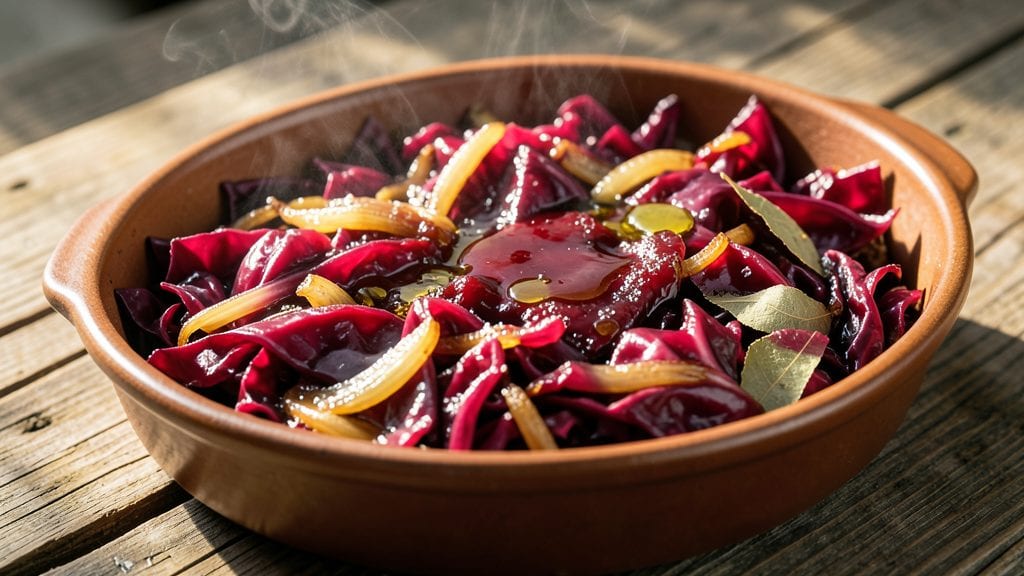
This traditional German red cabbage recipe delivers the sweet-sour vinegar braise that defines festive German tables—tender cabbage with just the right balance of tangy, caramelized sweetness. The slow simmering transforms simple ingredients into a dish so rich in flavor it deserves center stage, not just as a side.
I first tasted this version at a Bavarian Christmas market, where the aroma alone made me crave another bite.
What makes this recipe truly traditional is the careful combination of vinegar, sugar, and spices that create that signature German flavor profile. The cabbage cooks down until tender but still holds its shape, while the onions caramelize into a deep, aromatic base.
This isn't just a side dish—it's a flavor experience that pairs perfectly with sausages, roast pork, or even as a standalone meal with crusty bread.
The secret lies in the braising time—about 45 minutes of gentle simmering transforms tough cabbage into melt-in-your-mouth perfection. The vinegar cuts through the sweetness while the spices add warmth, creating a dish that's both comforting and sophisticated.
Once you try this version, you'll understand why it's a staple at German holiday feasts.
Serve it warm alongside your favorite German mains or enjoy it as part of a hearty Sunday dinner spread. The leftovers actually taste better the next day as the flavors meld even more. Here's how to make it the traditional way—every step matters for that authentic taste.
Ingredients for traditional german red cabbage
Sweet-sour braise magic starts with these 13 ingredients—where German tradition meets simple pantry staples.
| Ingredient | Amount | Notes |
|---|---|---|
| Red Cabbage 🥬 | 2 ½ lb | Fresh, firm, outer leaves removed |
| Yellow Onions 🧅 | 2 whole | Medium, thinly sliced |
| White Vinegar 💧 | ½ cup | White or apple cider vinegar |
| Granulated Sugar 🍚 | ½ cup | White or brown sugar |
| Vegetable Oil 🫒 | 3 tbsp | For caramelizing onions |
| Bay Leaves 🌿 | 2 whole | Fresh or dried |
| Ground Cloves 🌶️ | ½ tsp | Freshly ground for warmth |
| Ground Cinnamon 🌿 | ½ tsp | True Ceylon cinnamon preferred |
| Salt 🧂 | 1 ½ tsp | Diamond Crystal kosher salt |
| Black Peppercorns 🌶️ | ½ tsp | Freshly cracked |
| Fresh Thyme Leaves 🌿 | 1 tbsp | Or 1 tsp dried thyme |
| Water 💧 | 1 cup | For braising liquid |
| Fresh Parsley 🌿 | ¼ cup | Chopped, for garnish |
The cabbage is non-negotiable—firm, deep red heads with no wilt or yellowing. Whole Foods or local farmers markets usually carry the best quality, but any grocery store will have it. Look for heads that feel heavy for their size (that means moisture, not sliminess). The onions? Yellow, not red—they caramelize better. I always grab a few extra because they're the base flavor here. For vinegar, white or apple cider work perfectly—just avoid anything with added flavors. The spices? Penzeys or Spicewalla for cloves and cinnamon if you want to splurge, but the regular grocery store stuff is fine if it's fresh. Test by smelling: if your cinnamon smells like sawdust, toss it.
No white vinegar? Apple cider vinegar or red wine vinegar both work—they just give slightly different depth. Brown sugar instead of white? It'll add subtle molasses notes, which some people love. Running short on bay leaves? Dried thyme at double strength gets you close, but the aroma is different. The thyme should be fresh if possible—Italian markets often have better quality than the grocery store. For the parsley, if you're using it just for garnish, dried works, but fresh is better for that bright finish. The water can be replaced with vegetable or chicken broth for extra depth (just reduce the salt). And if you're feeling fancy, a splash of port wine at the end adds complexity—trust me, it's worth it.
This braise tastes even better the next day as the flavors meld. Store in an airtight container in the fridge for up to 5 days. For freezing, portion into 1-cup containers—it reheats perfectly for quick weeknight dinners. The cabbage will soften further when reheated, so don't overcook it initially. If you make a big batch (I always do), the leftovers pair perfectly with sausages or roasted meats. The caramelized onions keep well too—save them for sandwiches or salads. And if you're serving at a holiday gathering, make it the day before—the aroma alone will have guests lining up.
Why You'll Love This Recipe
- One-Pot Magic: I swear by this recipe because it’s literally one pot—no chopping boards overflowing, no pans to scrub later. Just toss in the shredded cabbage, sliced onions, and a splash of vinegar, then let it simmer until the sugar caramelizes that deep, tangy-sweet flavor. Honestly, my lazy Sundays thank me every time.
- Sweet-Tangy Balance: That vinegar and sugar combo? It’s what makes this dish ridiculously good. The cabbage softens into tender layers while the onions melt into a sticky glaze—like a cross between a salad and a dessert. I’ll be real: I’ve eaten it straight from the pot with a spoon.
- Holiday Side or Meal: Between us, this is my go-to for Thanksgiving leftovers and casual weeknight dinners. Pair it with roasted pork for a proper German feast, or serve it cold in sandwiches when I’m too tired to cook. My daughter picks out the crispest pieces first—proof it works for kids, too.
- Budget Stretch: A whole head of cabbage and a bag of onions won’t break the bank, and the sugar and vinegar are pantry staples. I make this twice a month, and it always disappears—whether reheated or eaten fresh. Plus, the leftovers keep for weeks in the fridge, so I’m never scrambling for a side dish.
Step-by-step instructions for sweet-sour vinegar braised red cabbage
This method delivers restaurant-quality German red cabbage with perfect sweet-sour balance every time.
👨🍳 Step 1: Prepare the Cabbage and Aromatics
Remove the tough outer leaves from the 2.5 lb red cabbage and cut it into 1-inch wedges, keeping the core intact. This shape maintains structure during braising. Thinly slice the 2 whole yellow onions—you should have about 3 cups of slices. The onions will caramelize beautifully and form the flavor base.
In a large Dutch oven, heat the 3 tbsp vegetable oil over medium heat. Add the sliced onions and cook for 10-12 minutes until they're golden brown and sweet-smelling. You'll know they're ready when they release their natural juices but still hold their shape. Remove the onions with a slotted spoon and set aside—they'll return to the pot later.
🍳 Step 2: Build the Braising Liquid
Return the Dutch oven to medium heat and add the 2 whole bay leaves, 0.5 tsp ground cloves, 0.5 tsp ground cinnamon, 1.5 tsp salt, and 0.5 tsp black peppercorns. Toast these spices for 30 seconds until fragrant—this awakens their flavors. Immediately pour in the 0.5 cup white vinegar and 0.5 cup granulated sugar, stirring constantly for 1 minute until the sugar dissolves completely.
Add the 1 cup water and bring the mixture to a gentle simmer. Here's the thing—you want the liquid to be just barely bubbling, not rolling. This gentle heat ensures even cooking without toughening the cabbage. The vinegar and sugar will create a beautiful sweet-sour sauce that tenderizes the cabbage perfectly.
🥘 Step 3: Braise the Cabbage Until Tender
Carefully nestle the cabbage wedges into the Dutch oven, packing them snugly but not forcing them. Pour the caramelized onions over the top, then add the 1 tbsp fresh thyme leaves. The thyme will infuse its earthy aroma into the dish as it cooks. Cover the pot with a tight-fitting lid and reduce heat to low.
Simmer for 45-50 minutes until the cabbage is fork-tender with just a slight bite remaining. You'll know it's ready when you can easily pierce a wedge with a fork and the edges begin to soften. The cabbage should absorb the sweet-sour liquid while maintaining its shape—overcooking will turn it mushy. Real talk: resist the urge to peek or stir during this time, as it disrupts the even cooking process.
⏰ Step 4: Finish and Garnish
Remove the lid and increase heat to medium-high. Let the cabbage cook uncovered for 5-7 minutes to allow the liquid to reduce slightly and develop deeper flavor. The sauce should coat the back of a spoon and have a glossy sheen. Taste and adjust seasoning if needed—you might want to add a pinch more salt or sugar to perfect the balance.
Garnish with the 0.25 cup chopped fresh parsley just before serving. The parsley adds a bright, fresh contrast to the rich, sweet-sour cabbage. This final step makes all the difference—it brightens the dish and adds that restaurant-quality presentation. Serve warm alongside roasted meats or as a stand-alone side dish with crusty bread.
Pro Tips For Making Traditional German Red Cabbage
- Shred Cabbage Thin: DESCRIPTION: A sharp knife and a little elbow grease make all the difference—aim for strips no wider than ¼ inch. Thinner shreds soften faster and soak up the vinegar-sugar glaze better. (I used to eyeball it and end up with uneven, tough pieces. Not worth the extra chewing.)
- Cook Onions Low: DESCRIPTION: After the initial sear, drop the heat to medium-low once onions turn golden. High heat burns them before the cabbage is ready, leaving a bitter aftertaste. (Yes, it takes longer, but the flavor pays off.)
- Add Vinegar Gradually: DESCRIPTION: Start with half the vinegar called for, taste, then add the rest. Too much upfront makes the cabbage sour before it softens. (I learned this after ruining a batch—now I adjust as I go.)
- Sweat, Don’t Sear: DESCRIPTION: Use just enough oil to coat the pan—about 2 tablespoons—and let onions release moisture before adding cabbage. Crowding the pan with oil leads to greasy, not caramelized, onions. (Your future self will notice the difference.)
Essential equipment for perfect results
Dutch Oven Essentials
A heavy-bottomed Dutch oven is non-negotiable for this recipe—it distributes heat evenly and prevents burning while braising. I swear by my Le Creuset 5.5-quart with the stoneware lid, but All-Clad Stainless or Lodge cast iron work just as well.
The deep sides help contain the cabbage wedges, and the tight-fitting lid traps steam for even cooking. If you don’t own one, a large enameled cast-iron pot with a lid will do in a pinch, though it may require slightly more attention to temperature control. 🔥
Precision Tools Matter
Invest in a sharp chef’s knife (I use my Wüsthof 8-inch) for cleanly slicing onions and cabbage—this prevents bruising, which can make the cabbage mushy. A fine-mesh strainer helps drain any excess liquid if you need to reduce the braising sauce further.
For measuring, a digital kitchen scale ensures accuracy with spices like cloves and cinnamon, where even 0.1 tsp can alter the flavor balance. A wooden spoon is ideal for stirring the onions without scratching your Dutch oven’s surface. 💡
Spice Grinders for Freshness
Freshly ground spices make all the difference in this dish. A high-quality spice grinder (like the Penzeys Spice Grinder) ensures your cloves and peppercorns retain their aromatic oils. Pre-ground spices lose potency quickly, so grinding them just before cooking maximizes flavor.
If you’re using whole spices, lightly toast them in a dry skillet for 30 seconds before adding to the Dutch oven—this step deepens their warmth and complexity. For cinnamon, Ceylon (true cinnamon) is preferable, but if you only have cassia, reduce to ¼ tsp to avoid overpowering the dish. ✨
Liquid Measurement Tools
Use a liquid measuring cup for the vinegar and water to ensure precise ratios—this balances the sweet-sour profile. A small saucepan comes in handy if you need to reduce the braising liquid before adding the cabbage (though the recipe doesn’t require it).
For garnishing, a microplane quickly chops fresh parsley into fine, even pieces that distribute beautifully over the dish. If you’re adding port wine as a finishing touch, a jigger or small measuring spoon ensures you don’t overdo it—1 tbsp is plenty for the entire batch. 🍷
Optional: Immersion Circulator
For those who love precision, an immersion circulator (like the Anova Nano) can help maintain a consistent 170°F during the braising phase, eliminating the need to monitor heat constantly. This is especially useful if you’re cooking on an induction burner or in a kitchen with temperature fluctuations.
While not essential, it’s a game-changer for achieving perfectly tender cabbage every time. If you don’t have one, a candy thermometer clamped to the side of the Dutch oven works just as well for monitoring internal temperature. 🌡️
Nutrition facts
Frequently asked questions
Can I use green cabbage instead of red?
While you can technically use green cabbage, it won't give you that signature deep purple color or the same sweet-tart flavor profile. Red cabbage's natural sugars caramelize beautifully during braising, creating the authentic German taste. If you must substitute, try a mix of red and green for some color, but the flavor will differ.
How do I adjust the recipe for fewer servings?
For 4 servings, halve all ingredients except the cabbage—reduce it to 1.25 lb and cut the braising liquid proportionally. The key is maintaining the same ratio of vinegar to sugar (1:1) and spices to cabbage. For 2 servings, use 0.6 lb cabbage and 0.25 cup each of vinegar and sugar. Always keep the cabbage wedges 1-inch thick for even cooking.
Why does my red cabbage turn mushy?
Overcooking is the #1 culprit! The cabbage should simmer 45-50 minutes max—any longer breaks down the texture. Also, check your heat: too high causes uneven cooking, while too low fails to tenderize properly. Use a tight lid to trap steam and never skip the 5-7 minute uncovered finish to reduce the liquid. If it's still mushy, try cutting the cabbage into slightly larger 1.5-inch wedges next time.
Can I make this dish ahead of time?
This braise actually improves overnight! Store in an airtight container in the fridge for up to 5 days. The flavors meld beautifully, and reheating (covered on low heat or in the microwave) restores the perfect texture. For freezing, portion into 1-cup servings—it reheats wonderfully for quick weeknight meals. Just add a splash of water if the sauce seems too thick when reheating.
What's the best way to serve it?
This dish shines as a side for German classics like bratwurst, roast pork, or pot roast. For a vegetarian meal, pair with mushroom risotto or crusty rye bread. The sweet-sour balance also works surprisingly well with grilled chicken or beef schnitzel. Serve warm with a sprinkle of fresh parsley and a dollop of sour cream for extra richness.