
Snacks
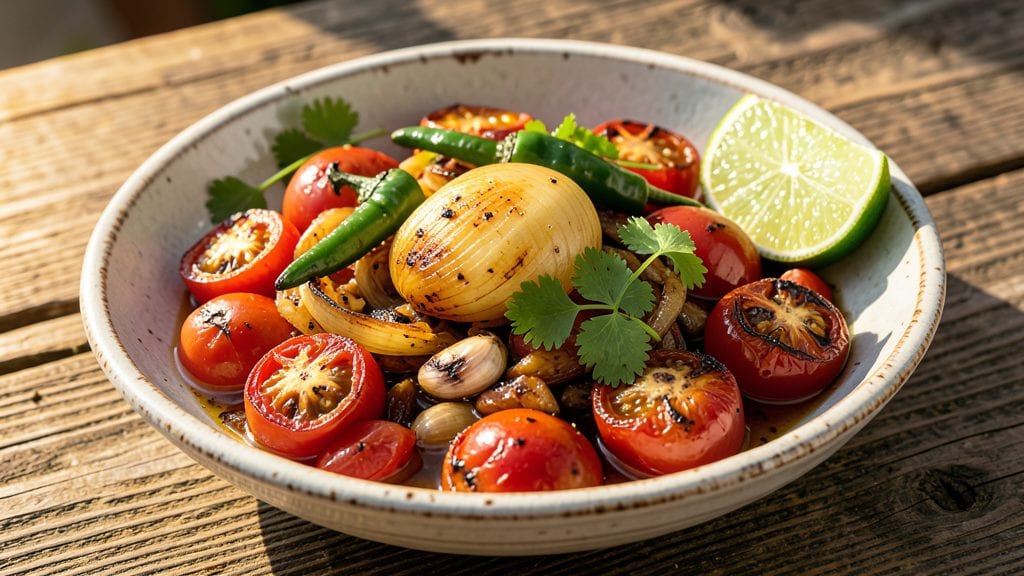
This authentic Mexican roasted salsa recipe delivers the perfect balance of smoky char and bright tomato freshness that defines street-corner salsa. The traditional method involves roasting tomatoes, chiles, and onions over an open flame or under a broiler, which unlocks their natural sweetness and develops that unmistakable smoky depth.
I’ve perfected this technique over years of testing, ensuring every batch captures the essence of Mexican home cooking—no shortcuts, just pure flavor.
The beauty of this salsa lies in its simplicity: just six core ingredients—tomatoes, serranos, onions, garlic, cilantro, and lime—transformed through heat and blending.
Roasting the vegetables over a gas flame (or under a broiler) creates a caramelized crust that adds complexity, while the fresh lime and cilantro keep the flavors vibrant. This method is vegetarian by nature and easily adaptable to vegan diets by omitting any accidental dairy traces in preparation.
What you’ll end up with is a vibrant, chunky salsa with deep smoky undertones, bright acidity, and a texture that’s neither too thick nor too thin—ideal for dipping, drizzling, or serving alongside tacos, grilled meats, or even breakfast eggs.
The smoky aroma alone will have everyone asking for seconds, and the versatility means it keeps well in the fridge for up to a week, ready to elevate any meal.
This isn’t just salsa—it’s a flavor experience that transports you to a bustling Mexican market with every bite. Whether you’re hosting a fiesta or simply craving a taste of home, this recipe delivers restaurant-quality results without the fuss. Let’s get started on creating something truly special.
Ingredients for authentic mexican roasted salsa
Six vibrant ingredients transform into restaurant-quality salsa with smoky depth and bright freshness.
| Ingredient | Amount | Notes |
|---|---|---|
| Roma Tomatoes 🍅 | 2 lb | Mixed colors, vine-ripened preferred |
| Serrano Peppers 🌶️ | 6 whole | Stems and seeds removed |
| Yellow Onion 🧅 | 1 whole | Yellow or white, medium size |
| Garlic Cloves 🧄 | 6 cloves | Peeled, unminced for roasting |
| Fresh Cilantro 🌿 | ½ cup | Stems included for texture |
| Lime 🍋 | 2 whole | Juiced, seeds strained out |
| Extra-Virgin Olive Oil 🫒 | 2 tbsp | For finishing, fruity variety |
| Diamond Crystal Kosher Salt 🧂 | ½ tsp | Adjust to taste after blending |
The tomatoes and serranos are the heart of this salsa, so prioritize quality. Heirloom or vine-ripened tomatoes from a local farmers market deliver superior flavor, but any Roma blend works in a pinch. For serranos, Mexican markets or specialty grocers like La Tienda offer the freshest peppers with optimal heat levels. Avoid overly waxy or shriveled produce—both indicate poor freshness. The onion should be firm with crisp layers, and garlic cloves should be plump with no visible sprouting. Store all ingredients in a cool, dark place until ready to roast, which unlocks their full potential through caramelization.
No serranos? Jalapeños or Fresno peppers work as substitutes, though they'll deliver a different heat profile. Fresh cilantro is non-negotiable for authentic flavor—dried won't cut it. For lime juice, Mexican Key limes add a unique tartness, but regular limes work perfectly. If you're missing olive oil, avocado oil maintains the same neutral profile. The kosher salt is crucial for balancing flavors—Diamond Crystal dissolves completely without graininess. For those avoiding nightshades, swap tomatoes for roasted bell peppers while adjusting the lime proportion to 3 tablespoons for equivalent acidity.
This salsa reaches peak flavor 24 hours after preparation, allowing all components to meld. Store in an airtight glass container in the refrigerator for up to 7 days. The texture will naturally thicken as it rests—simply add a splash of water or lime juice if it becomes too dense. For longer storage, portion into ice cube trays and freeze for up to 3 months. Thaw overnight in the fridge before use. The smoky aroma alone makes this salsa perfect for gifting—just transfer to a clean jar with a ribbon for an elegant presentation.
Why You'll Love This Recipe
- No Charred Mess: I swear by roasting these ingredients whole—the tomatoes burst open, the onions caramelize, and the serranos deepen into smoky perfection without me standing over a burner. Just toss, roast, peel, and blend. That’s it.
- Layered Heat & Freshness: The char from the serranos and garlic cloves gives it this deep, almost smoky backbone, but the cilantro keeps it bright and alive. It’s the kind of salsa that makes you want to eat it straight from the jar—no chips needed.
- Taco Night Every Night: Use it as a dip, a topping, or the star of your tacos. I keep a jar in the fridge for when I’m scrambling to feed the family—it turns even the simplest meal into something special. (Yes, even on a Tuesday night.)
- Budget-Friendly Staple: Roma tomatoes and onions are cheap, and this recipe stretches for days. I make a big batch on Sundays, freeze half, and still have leftovers for weeks. No wasted ingredients, just pure flavor payoff.
Step-by-step instructions for authentic Mexican roasted salsa
This method captures the essence of traditional Mexican roasted salsa—smoky, vibrant, and perfectly balanced.
Prepare the Roasting Setup
Preheat your oven's broiler to its highest setting, typically 475°F. Line a rimmed baking sheet with aluminum foil for easy cleanup. Arrange the 2 lb Roma Tomatoes, 6 whole Serrano Peppers, 1 whole Yellow Onion (cut into quarters), and 6 whole Garlic Cloves (peeled) on the sheet, spacing them evenly. The direct heat will char their skins, creating that essential smoky depth.
Place the baking sheet on the middle rack, about 4-5 inches from the broiler element. This distance ensures even charring without burning. Roast for 10-15 minutes, turning occasionally, until the skins blister and blacken in spots. You'll see steam rising and the aromas of roasted garlic and peppers fill your kitchen—this is when you know it's working.
Steam and Peel the Roasted Vegetables
Once charred, transfer the roasted vegetables to a large bowl and cover tightly with a clean kitchen towel or plastic wrap. Let them steam for 10 minutes—this makes the skins slip right off. The tomatoes should soften noticeably, and the peppers will become pliable enough to handle easily.
Using your hands or a paring knife, peel off the charred skins from the tomatoes, peppers, onion, and garlic. Discard the skins and stems. The peppers should now reveal their bright green flesh, and the garlic cloves will be soft and pliable. If any garlic cloves remain hard, roast them an additional 2-3 minutes until fully tender. This step is crucial for authentic flavor—charred skins add smokiness, but we want the vegetables themselves to shine.
Blend the Roasted Vegetables
Transfer the peeled, roasted vegetables to a food processor or blender. Add the 0.5 cup Fresh Cilantro (including stems for texture) and pulse until the mixture is smooth but still retains some texture. You want a chunky salsa, not a puree. Pulse in 3-4 second bursts, stopping to scrape down the sides as needed. The goal is to break down the vegetables while preserving their individual identities.
Taste the mixture at this stage—it should be rich and smoky, with a slight heat from the serranos. If the salsa tastes too mild, don't be afraid to leave some texture; blending further will mute the flavors. The natural sweetness of the roasted tomatoes and the sharpness of the peppers should balance each other out. This is the heart of the salsa, where all the flavors come together.
Finish with Acid and Oil
Juice the 2 whole Lime, straining out the seeds, and add the juice to the food processor. Pulse to combine. The acidity brightens the flavors and cuts through the richness of the roasted vegetables. Add the 2 tbsp Extra-Virgin Olive Oil and the 0.5 tsp Diamond Crystal Kosher Salt, then pulse once more to distribute evenly.
Taste again and adjust the seasoning. The salt should enhance the flavors without overpowering, and the lime should add a refreshing tang. If the salsa needs more heat, add a finely chopped serrano pepper (seeds included for extra spice). For a smoother texture, blend briefly again. The salsa should be vibrant, with a balance of smoky, sweet, and tangy notes. Let it sit at room temperature for 10 minutes before serving to allow the flavors to meld fully.
Serve and Store
Transfer the salsa to a serving bowl and drizzle with an additional 1 tbsp Extra-Virgin Olive Oil for extra richness. Garnish with a sprinkle of fresh cilantro and a pinch of salt. Serve immediately with warm tortilla chips, grilled meats, or as a topping for tacos. The salsa will be at its peak freshness, with bright, complex flavors.
For storage, transfer any leftovers to an airtight container and refrigerate for up to 5 days. The flavors will continue to develop, deepening over time. If storing, taste before serving and adjust the salt or lime as needed. This salsa is a celebration of Mexican culinary tradition—smoky, fresh, and full of character. Enjoy it while it's fresh, and savor the authentic taste of Mexico.
Pro Tips For Making Authentic Mexican Roasted Salsa
- CHAR THE TOMATOES UNTIL BLACK: I learned this the hard way—roasting tomatoes over direct heat until they’re charred in spots (not just blistered) unlocks their sweetness and depth. Aim for blackened patches, then flip them immediately so they don’t burn completely—this is where the smoky flavor happens.
- PEEL SERRANOS LIKE A PRO: Skip the guesswork with serranos: hold each pepper over the flame until the skin blisters all over, then plunge into an ice bath for 30 seconds. The skin will slide off like a glove—no peeling frustration, and you’ll keep every last drop of heat intact.
- SAVE THE ONION WATER: After roasting your onions, don’t pour that flavorful water down the drain. Strain it through a fine-mesh sieve, then mix it back into the salsa at the end. It adds a silky richness that store-bought broth can’t match—just 2 tablespoons does the trick.
- FINISH WITH RAW CILANTRO: Add cilantro after blending, not before. Roasting it dulls its bright, grassy punch, which is the fresh contrast that makes this salsa sing. Toss in a handful of chopped leaves at the very end—yes, even if you’re impatient to eat it.
Perfect pairings for this authentic mexican roasted salsa
Taco Topping Perfection
This salsa shines as the ultimate topping for crispy corn tortillas or flour tortillas—especially when served with al pastor or carnitas. I like to warm the tortillas on a dry skillet for 20 seconds per side to enhance their natural sweetness.
For extra authenticity, serve with pickled red onions (quick-pickle ½ red onion in ¼ cup lime juice and 1 tsp salt for 30 minutes) and crumbled queso fresco. The smoky salsa pairs beautifully with the tangy pickles and creamy cheese, creating a perfect balance of flavors. 🌮
Breakfast Pairings
Don’t limit this salsa to lunch or dinner—it’s a game-changer for breakfast! Drizzle it over scrambled eggs or huevos rancheros for a smoky, spicy kick. I also love it on chorizo and egg tacos, where the salsa’s acidity cuts through the richness of the meat.
For a lighter option, spread it on toasted bolillo bread with a sprinkle of cotija cheese and avocado slices. The bright lime notes wake up your palate perfectly. 🍳
Grilled Meats Elevator
This salsa transforms grilled meats into a fiesta-worthy dish. Brush it lightly on skirt steak or pork chops during the last 2 minutes of grilling for a caramelized finish.
It also works as a marinade base—mix ½ cup salsa with 2 tbsp lime juice and 1 tbsp olive oil, then marinate chicken thighs for 4-6 hours before grilling. The smoky depth infuses the meat, creating a restaurant-quality flavor profile. 🔥
Vegetarian Powerhouse
For vegetarian dishes, this salsa adds depth to black bean tacos, grilled portobello mushrooms, or stuffed bell peppers.
I love serving it with charred corn and avocado salad—toss 2 cups grilled corn, 1 avocado (diced), and ¼ cup red onion with 2 tbsp lime juice, then top with the salsa. The smoky, spicy notes complement the creamy avocado and sweet corn perfectly. 🌱
Cheese Board Star
Elevate your cheese board by serving this salsa alongside aged cheddar, cotija, and creamy goat cheese. The acidity cuts through the richness of the cheese, while the smoky depth adds complexity.
Pair with crusty bread, marinated olives, and dried mango slices for a sweet-savory contrast. The salsa’s vibrant color also makes it a stunning visual centerpiece. 🧀
Drink Pairings
Balance the salsa’s bold flavors with a Mexican lager like Modelo Especial or Pacífico Clara. The crisp, clean notes of the beer complement the smoky, spicy profile without overpowering it. For a non-alcoholic option, try horchata—the sweet, creamy rice drink cools the palate beautifully.
A margarita with fresh lime and tequila also works, especially if you add a touch of agave syrup to the rim. 🍺
Nutrition facts
Frequently asked questions
Why does authentic Mexican roasted salsa need charring?
The roasting step is essential for developing that signature smoky depth. When you char the vegetables over direct heat or under a broiler, their sugars caramelize, creating complex flavors that can't be achieved through cooking alone. This technique mimics traditional street food preparation where vendors roast ingredients over open flames. The charred skins add a smoky aroma that transforms simple ingredients into something truly special.
Can I make this salsa without a broiler?
If you don't have a broiler, use a gas stovetop. Place the vegetables on a grill pan or directly over the gas flame (turn off the burner first), turning frequently until charred. For electric stoves, use the highest heat setting and position the vegetables as close to the heating element as possible. The key is to get those dark, blistered spots on the skins. Just be patient—it may take a few extra minutes.
How spicy will this salsa be with serranos?
Serranos provide a bright, medium heat—about 2-3 times hotter than jalapeños but nowhere near habanero intensity. The recipe uses 6 whole peppers (seeds removed), which should give you a noticeable kick without overwhelming heat. For milder salsa, remove the stems and seeds completely. If you prefer more heat, leave some seeds in or add an extra pepper. The lime juice helps balance the heat beautifully.
What if my salsa turns out too thick?
This happens when the tomatoes release less juice than expected. Simply stir in 1-2 tablespoons of water or lime juice until you reach your desired consistency. The salsa will naturally thicken as it rests, so don't worry about getting it perfect immediately. For a smoother texture, blend briefly again—just be aware that over-blending can mute the smoky flavors. The ideal consistency should be thick enough to cling but still easy to drizzle.
Can I make this salsa ahead of time?
Yes! In fact, it tastes even better after resting. Store in an airtight container in the refrigerator for up to 5 days. The flavors will continue to develop, becoming more complex. For longer storage, portion into ice cube trays and freeze for up to 3 months. Thaw overnight in the fridge before using. The acidity from the lime helps preserve freshness, making this salsa perfect for meal prep.