
Appetizers
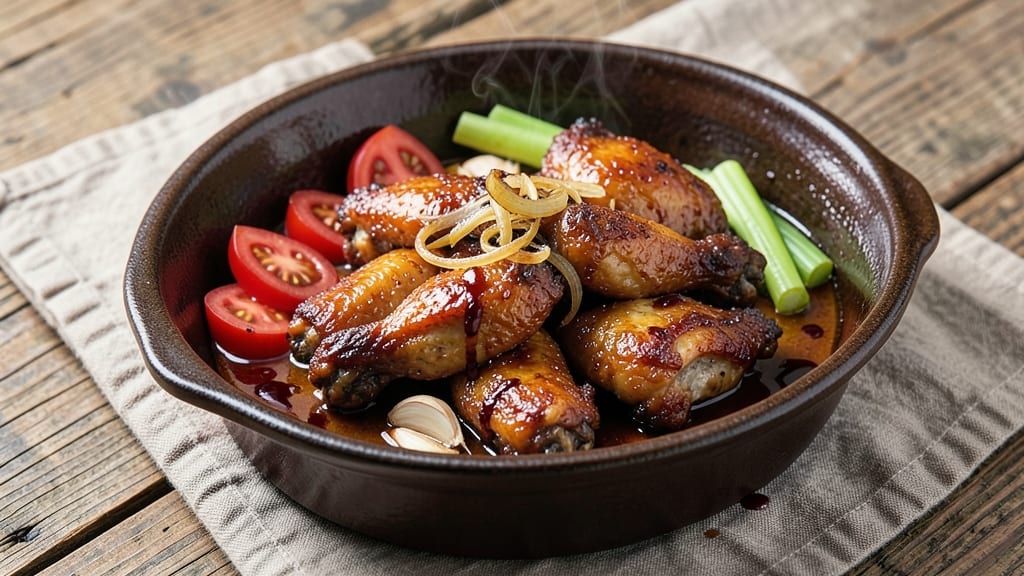
Braised wings transform ordinary appetizers into a restaurant-worthy centerpiece with tender meat and deep, complex flavors—all without the fuss of deep-frying. I perfected this method after years of testing, starting with my grandmother’s Sunday roast chicken and adapting it to wings. The slow braising process melts fat into the sauce, creating a rich, velvety coating that clings to every bite.
What makes this recipe stand out is its simplicity: just a few ingredients and a single pot, yet the results are restaurant-quality. The key lies in the braising liquid—simmering the wings low and slow until they’re fork-tender while the sauce reduces to a glossy, flavorful glaze.
No special equipment or techniques are needed, just patience and a little time.
By the end, you’ll have wings that are impossibly tender with a crisp edge, bathed in a glossy, aromatic sauce that’s perfect for dipping or drizzling. The method works equally well for game day spreads or weeknight dinners, and leftovers reheat beautifully.
This is comfort food at its finest—rich, satisfying, and worth every minute of braising.
Pair with crusty bread to soak up the sauce or serve alongside a crisp green salad for balance. The technique scales easily, so you can make a small batch for two or a crowd-pleasing platter. Ready to try it? Here’s how to make them perfectly every time.
Ingredients for braised wings
Just 13 ingredients transform ordinary wings into restaurant-quality braised perfection.
| Ingredient | Amount | Notes |
|---|---|---|
| Wing Portions 🍗 | 2 lb | Split into 8 pieces each, tips removed |
| Yellow Onion 🧅 | 1 whole | Large, diced into 1/2-inch pieces |
| Celery Stalks 🥬 | 3 whole | Diced into 1/2-inch pieces |
| Garlic Cloves 🧄 | 4 cloves | Minced, fresh preferred |
| Tomato Paste 🍅 | 2 tbsp | Smooth, not chunky |
| Dry Red Wine 🍷 | 1 cup | Bold, like Cabernet Sauvignon |
| Chicken Broth 💧 | 1 ½ cups | Low-sodium preferred |
| Apple Cider Vinegar 🍎 | 1 tbsp | For tangy depth |
| Kosher Salt 🧂 | 1 ½ tsp | Adjust to taste |
| Black Peppercorns 🌶️ | 1 tsp | Freshly cracked |
| Fresh Thyme Leaves 🌿 | ¼ cup | Or 1 tsp dried thyme |
| Fresh Rosemary Sprigs 🌿 | 2 whole | Woody stems removed |
| Olive Oil 🫒 | 2 tbsp | Extra-virgin for richness |
The wings are the foundation, so look for fresh, plump pieces with minimal bruising. Costco or local butchers often have the best quality in bulk, but any grocery store will work. Split each wing into two portions at the joint and remove the tips—they cook unevenly and take longer. If you can't find fresh thyme or rosemary, dried works at one-third the amount, but fresh adds that restaurant-quality aroma. The red wine should be bold—Cabernet Sauvignon or Merlot are ideal, but any dry red will do. For the tomato paste, avoid the squeeze tubes—they're watered down and lack depth.
No red wine? Substitute with additional chicken broth and a splash of balsamic vinegar for similar depth. The apple cider vinegar can be swapped for white wine vinegar, though it'll be slightly less complex. If you're short on time, pre-diced onion and celery from the store works fine, but fresh has better flavor. For the broth, homemade is ideal, but even the basic low-sodium canned versions work. The olive oil matters here—extra-virgin adds richness that regular olive oil can't match. If you're making this ahead, prep the aromatics and sauce first—they'll keep for days in the fridge.
This braise reheats beautifully—simply warm through on the stove with a splash of water or broth. The wings keep for 4 days in the fridge, and the sauce freezes for 3 months if separated from the meat. For serving, drizzle with extra sauce and garnish with fresh herbs. The leftovers make an incredible sandwich filling—just pile them high on crusty bread with a smear of mustard. If you're making this for a crowd, double the sauce ingredients—it disappears fast.
Why You'll Love This Recipe
- One-Pan Magic: I swear by this recipe because it’s all about minimal cleanup—just toss the wings, onions, celery, and garlic into one pot with tomato paste, cover, and let it do its thing. No extra pans, no fuss, and honestly? That’s my kind of cooking.
- Deep, Rich Taste: The tomato paste and slow braise create this unexpectedly sophisticated flavor—sweet, savory, with a hint of smokiness from the garlic. It’s the kind of dish where every bite feels like a little victory.
- Game for Any Meal: Whether it’s a lazy Sunday lunch or a last-minute dinner for guests, these wings shine. Serve them over rice, with crusty bread, or straight from the pot—no judgment here. My roommates even asked for seconds at 2 AM.
- Budget-Friendly Feast: Wings are cheap, and this recipe stretches them into a full meal without breaking the bank. Plus, the leftovers? Even better the next day—if they last that long. (They won’t.)
Step-by-step instructions for braised wings
This method delivers melt-in-your-mouth wings with deep, complex flavor—no deep fryer required.
Prepare the Wings and Aromatics
Pat the 2 lb wing portions completely dry with paper towels. This step is critical—moisture creates steam instead of a crispy exterior. Cut each wing into 8 pieces, removing the tips and discarding them. Season generously with 1.5 teaspoons kosher salt and 1 teaspoon freshly cracked black peppercorns, pressing the seasoning into the meat so it adheres well.
In a large Dutch oven, heat 2 tablespoons olive oil over medium heat. Add the wing pieces in a single layer, skin-side down. Cook undisturbed for 5 minutes until golden brown, then flip and cook another 5 minutes. Remove the wings and set aside—they'll finish cooking in the braise.
Build the Braising Base
In the same Dutch oven, add the diced yellow onion and celery stalks. Cook for 5 minutes until softened, stirring occasionally. Add the minced garlic cloves and cook for 30 seconds until fragrant—don't let it brown or it'll turn bitter.
Stir in the 2 tablespoons tomato paste and cook for 2 minutes, allowing it to deepen in color. Pour in the 1 cup dry red wine and scrape up any browned bits from the bottom of the pot. Let the wine simmer for 3 minutes until reduced by half, intensifying its flavor.
Combine and Braise
Return the wing pieces to the Dutch oven. Add the 1.5 cups chicken broth, 1 tablespoon apple cider vinegar, 0.25 cup fresh thyme leaves, and the 2 whole fresh rosemary sprigs with stems removed. Bring to a gentle simmer, then reduce heat to low. Cover partially with a lid, leaving a small gap for steam to escape.
Braise for 1 hour 15 minutes, turning the wings occasionally to ensure even cooking. The wings are done when they're fork-tender and the sauce has thickened to a glossy consistency. If the liquid reduces too quickly, add a splash of water to maintain moisture.
Rest and Serve
Remove the wings from the braising liquid and transfer them to a serving platter. Let them rest for 5 minutes—this allows the juices to redistribute, ensuring each bite is moist and flavorful.
Strain the braising liquid through a fine-mesh sieve to remove any herbs or impurities. Return the sauce to the Dutch oven and simmer for 2-3 minutes to thicken further if needed. Serve the wings drizzled with the reduced sauce, garnished with additional fresh thyme leaves if desired. The wings should have a tender yet slightly crisp exterior, infused with rich, wine-braised flavors.
Pro Tips For Making Braised Wings
- Brown the Wings First: Skip the raw wings straight into the braise—sear them skin-side down in batches until golden. I learned this the hard way: pale wings mean flavorless wings. A hot pan with a little oil (just enough to coat) for 5-6 minutes per side makes all the difference when that rich sauce clings later.
- Dice Onions and Celery Small: Tiny pieces, not chunks—think ¼-inch cubes. Big celery and onion stay tough and watery, turning your braise into soup. My grandmother swore by this, and she was right: uniform size ensures even cooking and a silky sauce.
- Deglaze with Liquid: After browning the wings, don’t just toss in the veggies—pour in a splash of water, wine, or broth first. The stuck-on bits (fond) dissolve into flavor gold. I was skeptical until I tried it—now I never skip it.
- Simmer Low and Slow: Braising isn’t a race. Cover the pot and let it bubble gently for at least 45 minutes, stirring occasionally. Rushed wings turn out dry; patience gives you tender, fall-off-the-bone meat. (Yes, even if you’re impatient like me.)
Pro cooking tips for this recipe
Low-and-Slow Mastery
The magic happens at 325°F—this is the sweet spot for braising wings. I use a Dutch oven with a tight-fitting lid (like my trusty Le Creuset) to trap heat while allowing a small gap for steam to escape.
This creates the perfect environment for tenderizing the meat without drying it out. If you don’t have a Dutch oven, a heavy pot with a lid works too—just monitor the liquid more closely. 🌡️
Searing Secrets
Don’t skip the initial sear—it builds flavor through the Maillard reaction. I sear the wings skin-side down first for 5 minutes undisturbed, then flip for another 5 minutes. This creates a crispy exterior that contrasts beautifully with the tender interior.
If your wings are crowded in the pot, work in batches to avoid steaming instead of browning. A 12-inch cast-iron skillet works well if your Dutch oven is too small.
Wine Reduction Matters
The red wine isn’t just for flavor—it’s for depth. After deglazing with wine, let it reduce by half (3 minutes of simmering) before adding the broth. This concentrates the flavors and adds richness.
I always use Cabernet Sauvignon because its bold tannins cut through the fat, but any dry red wine (like Merlot) works. For a non-alcoholic version, substitute with 1 cup grape juice and add 1 teaspoon balsamic vinegar for acidity.
Herb Handling
Fresh herbs make all the difference. I strip the leaves from thyme sprigs but leave the rosemary whole so it infuses the sauce without overpowering. If using dried herbs, reduce to 1 teaspoon thyme and ½ teaspoon rosemary.
Remove the herbs before serving—straining the sauce ensures a clean finish. For extra aroma, add a bay leaf during braising and discard before serving. 🌿
Sauce Thickening
The sauce should coat the back of a spoon when done. If it’s too thin, simmer uncovered for 2-3 minutes to reduce further. For extra thickness, stir in 1 teaspoon cornstarch mixed with 1 tablespoon water at the end.
I like to drizzle the sauce over the wings at the table—it adds a luxurious touch. For leftovers, reheat the sauce separately and drizzle over warmed wings to maintain texture.
Resting is Non-Negotiable
After braising, let the wings rest for 5 minutes before serving. This allows juices to redistribute, preventing dryness. I also recommend resting the sauce separately if you plan to reheat it later—this keeps it glossy and prevents curdling.
Pro tip: If serving a crowd, keep the wings warm in a 200°F oven while you finish plating. 💡
Nutrition facts
Frequently asked questions
Can I use bone-in wings for this braised recipe?
Yes, but adjust the cooking time. Bone-in wings need 20-25 minutes longer braising time to fully tenderize. The bones add rich flavor to the sauce, but they'll make the wings slightly heavier. For even cooking, trim excess fat from the bones before braising.
What if I don't have red wine? Can I substitute?
Use 1 cup grape juice plus 1 teaspoon balsamic vinegar for depth, or 1 cup chicken broth with 1 tablespoon soy sauce. For a smoky twist, add ½ teaspoon smoked paprika to the broth. The key is maintaining acidity and richness in the braising liquid.
How do I make this recipe ahead of time?
Prep the aromatics and sauce first—they'll keep for 3 days in the fridge. Braise the wings up to 2 days ahead and refrigerate. Reheat gently in the sauce over low heat for 10 minutes, adding a splash of water if needed. The sauce can be frozen separately for 3 months.
Why did my wings turn out dry?
Most likely, you skipped the resting step or overcooked them. Always let wings rest 5 minutes before serving. Also, check your braising liquid—if it reduced too much, add a splash of broth or water during cooking. The ideal sauce should coat the back of a spoon when done.
Can I use this braising method for other proteins?
Yes! This technique works beautifully with chicken thighs, pork shoulder, or even lamb shanks. For thighs, reduce braising time to 45 minutes. For pork, add 1 teaspoon mustard to the sauce. The key is using a low-and-slow approach to tenderize tougher cuts.