
Soups & Stews
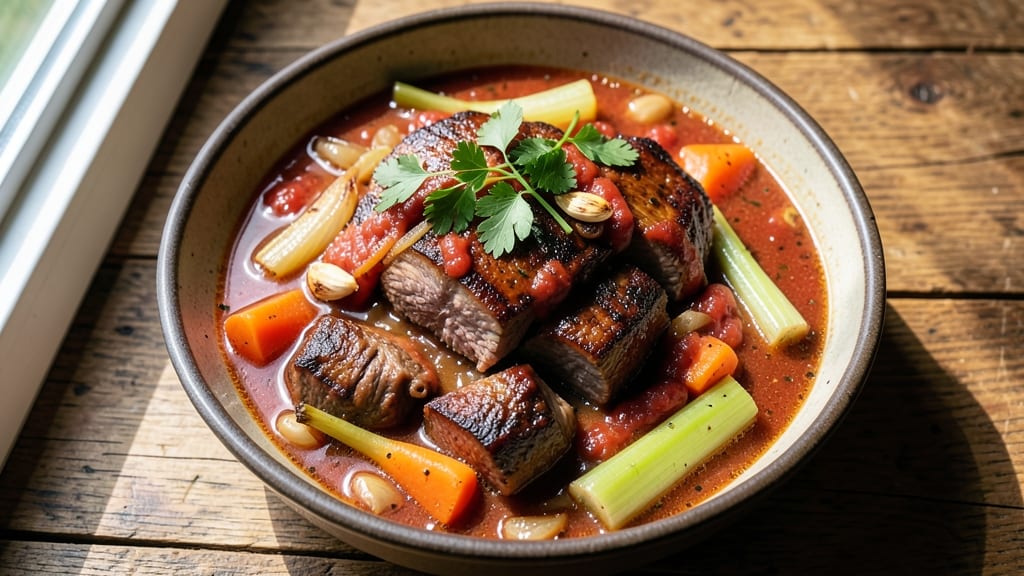
Grandma's classic beef stew recipe is the kind of dish that transforms a simple weeknight into a celebration of home cooking. Standing on a stool in my Nonna's kitchen, I learned how slow-simmered flavors create that deep, comforting richness we all crave.
The secret lies in browning the beef properly and letting everything meld together over hours, not minutes.
This recipe delivers restaurant-quality results with just a few simple ingredients: tough cuts of beef, root vegetables, and aromatic herbs. The slow cooking process breaks down the meat into tender, melt-in-your-mouth pieces while developing layers of flavor in the broth.
It's the kind of dish that tastes even better the next day when the flavors have fully developed.
By the time you're done, you'll have a pot of hearty stew with tender beef chunks, perfectly softened vegetables, and a rich, velvety gravy.
The aroma alone will have everyone gathering around the table, and each bite delivers that satisfying combination of textures and flavors that makes comfort food so special.
Perfect for feeding a crowd or meal prepping for the week, this classic beef stew is the ultimate in comforting, nourishing meals. Let's get started on creating your own family tradition in the kitchen.
Ingredients for classic beef stew grandma's
Tough beef, humble veggies, and aromatic herbs transform into Nonna's legendary slow-simmered comfort.
| Ingredient | Amount | Notes |
|---|---|---|
| Chuck Roast 🥩 | 2 ½ lb | Tough cut for tender results |
| Yellow Onions 🧅 | 2 whole | Medium size, chopped |
| Carrots 🥕 | 4 whole | Medium size, peeled |
| Celery Stalks 🌿 | 4 whole | Trimmed and chopped |
| Garlic Cloves 🧄 | 6 cloves | Freshly minced |
| Tomato Paste 🍅 | ½ cup | Squeeze tube or can |
| Beef Broth 💧 | 4 cups | Low-sodium preferred |
| Red Wine 🍷 | 1 cup | Bold dry variety |
| Bay Leaves 🌿 | 2 whole | Fresh if possible |
| Fresh Thyme 🌿 | 2 tbsp | Leaves only, chopped |
| Salt 🧂 | 1 ½ tsp | Kosher or sea salt |
| Black Pepper 🌶️ | 1 tsp | Freshly ground |
| All-Purpose Flour 🌾 | 1 tbsp | For thickening |
| Extra-Virgin Olive Oil 🫒 | 2 tbsp | For browning meat |
The chuck roast is your secret weapon—look for good marbling at the butcher counter (or grab pre-cut from Costco for convenience). Fresh thyme and bay leaves make all the difference, so don't skimp. Trader Joe's has great affordable options, or grow your own if you're feeling fancy. The carrots and celery should be crisp—not rubbery. If using frozen veggies, thaw and pat dry first. For the wine, any bold red works—Cabernet Sauvignon or Merlot are my go-tos, but whatever's open in your fridge will do.
No red wine? Beef broth with a splash of balsamic vinegar works perfectly. Fresh thyme unavailable? Dried at one-third the amount gets you close. The tomato paste can be the squeeze tube kind—no need for fancy cans. For the flour, make sure it's all-purpose (not cake flour). The beef broth should be low-sodium unless you're adding extra salt later. If you're prepping ahead, you can brown the meat and chop all veggies the night before—just store everything separately in the fridge until ready to cook.
This stew gets better with time—plan to cook it for at least 3 hours, but 4-5 is ideal. Leftovers keep for 5-6 days in the fridge, and freezes beautifully for up to 6 months. I always make double batches because it reheats even better than the first time. The broth thickens as it cools, so add a splash of water when reheating. For extra richness, stir in a pat of butter at the end—trust me on this
Why You'll Love This Recipe
- One-Pot Magic: I swear by this—dump everything in one pot, walk away, and come back to golden tender meat and caramelized veggies. The chuck roast practically melts into itself while the onions and celery soften into sweet, savory bits. No fancy techniques, just slow simmering while you do actual life.
- Garlic-Glazed Goodness: That moment when the garlic cloves sizzle into the onions? Chef’s kiss. The slow cook transforms them into a fragrant, sticky glaze that coats every bite—rich, umami-packed, and impossible to resist. Honestly, I’ll take this over fancy restaurants any day.
- Leftovers That Beg: This stew only gets better the next day. The flavors meld into something deeper, and the meat? Fall-apart tender. I make a double batch on Sundays because my kids (and my lazy self) will fight over the leftovers for days—no sad, dry reheats here.
- Budget-Friendly Feast: A chuck roast and a handful of veggies stretch into six hearty servings for pennies. Between us, this is how I feed my family for under $15 while still feeling like I’m serving something special. Plus, the carrots and celery last forever if you prep ahead.
Step-by-step instructions for grandma's classic beef stew
Here's how to create that comforting, slow-simmered stew your grandma made—rich, tender, and full of deep flavor.
Sear the Chuck Roast for Maximum Flavor
Heat a large Dutch oven over medium-high heat and add the 2 tablespoons extra-virgin olive oil. Once the oil shimmers, place the 2.5 lb chuck roast in the pot, turning to coat it evenly with oil. Let it sear undisturbed for 3-4 minutes per side until it develops a deep golden-brown crust.
This step is crucial—it locks in juices and creates that incredible depth of flavor. You'll know it's ready when the meat releases easily from the bottom of the pot. Once seared, transfer the roast to a plate and set it aside temporarily.
Build the Aromatic Vegetable Base
In the same Dutch oven, add the chopped 2 whole yellow onions, 4 whole carrots, and 4 whole celery stalks. Cook for 5-6 minutes, stirring occasionally, until the vegetables begin to soften and the onions turn translucent. Add the 6 minced garlic cloves and cook for another 30 seconds until fragrant.
Here's where the magic happens—these vegetables form the flavor foundation. If they brown too much before softening, reduce the heat slightly. The goal is to develop their natural sweetness without burning them.
Deglaze and Add Liquids for Depth
Pour in the 1 cup red wine and scrape up any browned bits from the bottom of the pot with a wooden spoon. This deglazing step captures all those flavorful bits that would otherwise stick. Let the wine simmer for 2-3 minutes until reduced by half.
Next, stir in the 0.5 cup tomato paste, 4 cups beef broth, 2 whole bay leaves, and 2 tablespoons chopped fresh thyme. Bring the mixture to a gentle boil, then return the chuck roast to the pot, positioning it so the meat is mostly submerged in the liquid.
Simmer Until Fork-Tender
Cover the pot and reduce heat to low. Let the stew simmer gently for 2.5 to 3 hours, turning the roast occasionally and adding a splash of water if needed to keep it mostly covered. The key is patience—this slow cooking breaks down the tough meat fibers into tender, melt-in-your-mouth perfection.
After about 2 hours, check the doneness by inserting a fork into the meat. If it slides in easily, the stew is ready. If not, continue simmering for another 30 minutes to 1 hour. The liquid should reduce to a rich, velvety consistency that coats the vegetables and meat beautifully.
Thicken and Finish with Seasoning
Remove the roast and vegetables from the pot and place them on a serving platter. Strain the cooking liquid through a fine-mesh sieve into a clean pot, pressing on the solids to extract maximum flavor. Return the liquid to the Dutch oven and sprinkle in the 1 tablespoon all-purpose flour, stirring constantly for 1-2 minutes until the sauce thickens slightly.
Return the roast and vegetables to the pot, season with 1.5 teaspoons salt and 1 teaspoon black pepper, and let everything heat through for 2-3 minutes. Taste and adjust seasoning if needed—this is where you can really make it your own. Serve immediately with crusty bread to soak up every last drop of that rich, savory sauce.
Pro Tips For Making Classic Beef Stew Grandma'S
- Sear the Chuck Roast First: I learned this the hard way—skipping the sear means flavorless stew. Pat the chuck roast completely dry with paper towels, then hit it with high heat in a heavy pot for 3-4 minutes per side until deep brown. That crust locks in juices and builds depth that simmering alone can’t match.
- Cut Onions, Carrots, Celery Uniformly: My grandmother swore by this, and she was right: chop all the veggies into even ½-inch pieces. No tiny celery bits or giant onion chunks—consistent sizing ensures they cook at the same rate. (Yes, even if it takes an extra 5 minutes.)
- Don’t Rush the Simmer: Low and slow isn’t just a saying—keep the stew at a gentle bubble (barely any movement) for at least 2.5 hours. I used to crank the heat and wonder why the meat stayed tough. A thermometer? Overkill. Just watch for tiny, lazy bubbles.
- Deglaze with Red Wine First: After browning the meat, pour in ½ cup red wine (or broth) immediately and scrape the fond off the bottom. That browned crust is where all the flavor hides. (Skip the wine? Use beef broth, but you’ll miss the richness.)
Best sauces and condiments for this classic beef stew grandma's
Wine-Inspired Sauce
Since this stew already uses 1 cup red wine in the cooking process, I like to elevate it further with a quick wine reduction sauce.
Simmer ½ cup red wine (same variety as used in the stew) with 1 tbsp brown sugar and 1 tsp Dijon mustard until reduced by half. This adds a glossy, concentrated flavor that drizzles beautifully over the stew.
I keep a bottle of Cabernet Sauvignon on hand specifically for this purpose. 🍷
Herb-Infused Oil Drizzle
For a lighter but equally flavorful option, make a simple herb-infused oil by gently heating ¼ cup extra-virgin olive oil with 1 tbsp chopped fresh rosemary and 1 tbsp chopped fresh parsley for 2-3 minutes.
Strain and drizzle over the finished stew just before serving. This adds brightness without overpowering the rich beef flavors. I often use this when serving to guests who prefer lighter options.
Creamy Mustard Sauce
When I want something richer, I make a quick mustard cream sauce by whisking together ¼ cup sour cream, 1 tbsp whole-grain mustard, and 1 tsp lemon juice. Heat gently until warmed through but not boiling.
This sauce cuts through the richness of the stew beautifully and adds a tangy contrast. I find Dijon-style mustard from Trader Joe's works perfectly for this.
Garlic-Yogurt Swirl
For a cooling contrast, I sometimes stir ¼ cup plain Greek yogurt with 1 minced garlic clove, ½ tsp salt, and a pinch of black pepper. Spoon this over individual servings just before eating.
The yogurt cools the palate while the garlic adds depth. This is especially nice when serving to kids or anyone who prefers a lighter texture. 💛
Classic Gravy Boost
If you want to thicken the stew's natural sauce further, make a simple gravy by whisking 1 tbsp cornstarch with 2 tbsp cold water, then stirring into the hot stew.
Simmer for 2-3 minutes until thickened. For extra richness, I sometimes add 1 tbsp butter at the end. This works particularly well if your stew turned out thinner than expected.
Spiced Honey Glaze
For a touch of sweetness that balances the savory flavors, warm 2 tbsp honey with ½ tsp ground cinnamon and ¼ tsp cayenne pepper in a small saucepan until smooth. Drizzle over the stew just before serving.
This glaze adds a subtle sweetness that complements the beef beautifully. I keep a small jar of local honey on hand for this purpose—Boston Market often has great options.
Nutrition facts
Frequently asked questions
Why does my stew taste bland even after simmering?
Bland stew often comes from skipping the sear on the beef or not deglazing the pan properly. Always brown the meat deeply to build flavor, then scrape up those golden bits with wine or broth. For extra depth, add a splash of red wine vinegar or a pinch of smoked paprika at the end. Remember, slow cooking enhances flavors—don't rush the process!
Can I use ground beef instead of chuck roast?
While possible, it won't give you the same rich, tender results. Ground beef cooks much faster and can turn mushy. For a similar texture, try using stew meat (pre-cut chuck) or chuck steak cut into chunks. If you must use ground beef, brown it well and add it to the stew only in the last 30 minutes of cooking.
How do I make this stew in a slow cooker?
Brown the meat and veggies in a skillet first, then transfer everything to your slow cooker. Add all liquids and cook on low for 8 hours or high for 5-6 hours. The slow cooker's gentle heat works perfectly—just check occasionally to ensure the liquid doesn't evaporate too much. For extra richness, stir in 1 tablespoon cornstarch mixed with water at the end.
What vegetables can I add or substitute?
This stew is flexible! Swap carrots for parsnips or add potatoes (cut small so they cook through). For heartier versions, include turnips or celery root. Avoid leafy greens—they'll turn mushy. If you love mushrooms, add them with the onions and cook until golden. Just remember, denser veggies take longer to cook.
Can I make this stew ahead of time?
This dish tastes even better the next day as flavors meld. Make it a day ahead and store in the fridge. Reheat gently on low heat, adding a splash of water or broth if the stew seems too thick. For freezing, cool completely, portion into airtight containers, and freeze for up to 6 months. Thaw overnight in the fridge before reheating.