
Snacks
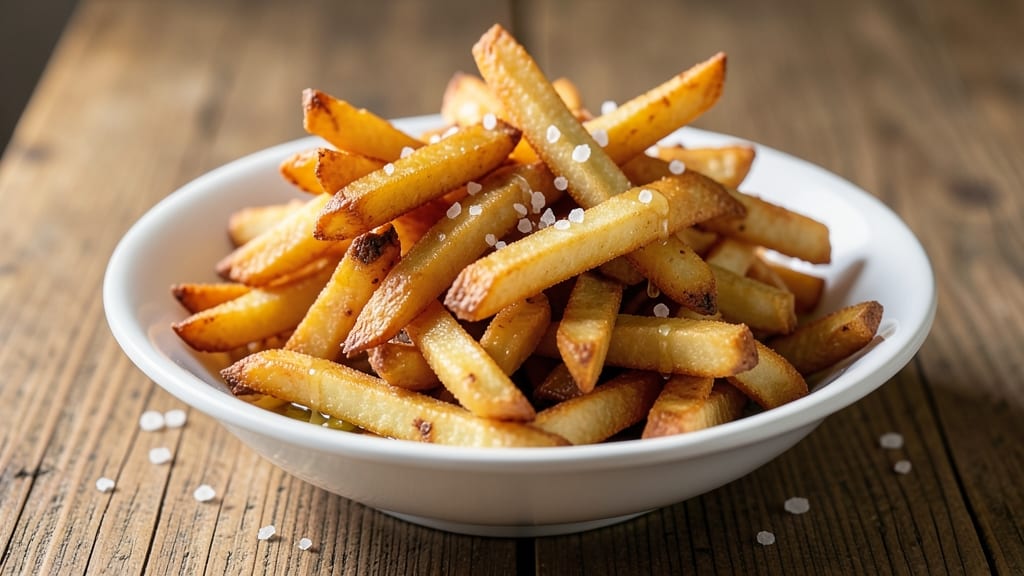
This classic fries recipe delivers the perfect balance of crispy exterior and fluffy interior—just like your favorite diner serving. The secret lies in precise cutting techniques and a two-stage frying process that ensures every fry achieves that coveted golden crunch without burning.
I've perfected this method after years of trial and error, and it consistently produces results that rival restaurant quality.
What sets this recipe apart is the attention to detail at every step, from selecting the right potatoes to maintaining the ideal oil temperature. You'll need just a few simple ingredients—potatoes, oil, and salt—but mastering the technique transforms them into something extraordinary.
The double-frying method creates that signature crispiness while keeping the inside tender, a challenge many home cooks struggle with.
By the time you're done, you'll have a batch of fries that are golden brown, uniformly crispy, and impossible to resist. The key is patience—letting the fries rest between fryings allows the moisture to escape, ensuring that final crunch.
Serve them up with your favorite dipping sauce or seasoning for a snack that's as satisfying as it is delicious.
This recipe works equally well for steak fries or shoestring varieties, making it versatile enough for any occasion. Whether you're feeding a crowd or treating yourself to a simple snack, these fries will deliver every time. Let's get started on creating the perfect batch!
Ingredients for classic fries
Four simple ingredients transform into crispy, golden fries with perfect fluffiness inside.
| Ingredient | Amount | Notes |
|---|---|---|
| Russet Potatoes 🥔 | 2 lb | Large, uniform size preferred |
| Vegetable Oil 🫒 | 3 cups | High smoke point, like peanut oil |
| Ice ❄️ | 1 cup | For cooling fries between fryings |
| Coarse Sea Salt 🧂 | 1 tbsp | For seasoning after frying |
| White Vinegar 🍶 | 1 tbsp | For clean oil between fryings |
| All-Purpose Flour 🌾 | ¼ cup | For dredging if desired |
Russet potatoes are non-negotiable here—their high starch content gives that ideal texture. Buy them fresh (no sprouts or soft spots) and let them sit out for 30 minutes before cutting so they don't turn to mush. Costco or Walmart usually have the best prices for big bags. For oil, peanut oil is my go-to—it stays stable at high heat and doesn't absorb flavors. If you're using vegetable oil, make sure it's 100% vegetable with no additives. The ice is key for that second fry—it's what gets your fries properly crispy without burning.
No ice? Freeze a cup of water in ice cube trays and use those cubes instead. Running out of oil? Vegetable shortening works in a pinch, but it won't give the same crispiness. Want to skip the flour? No problem—these fries taste great plain. The vinegar is just for cleaning the oil between fryings, but if you're doing everything fresh, you can skip it. For salt, Morton's coarse kosher is perfect, but any sea salt will do. Just don't use table salt—it'll clump and won't stick right.
Store leftover fries in the fridge for up to 3 days, but honestly they're best fresh. For extra crispiness, reheat in the oven at 400°F for 5-10 minutes. The oil can be reused once or twice if you strain it through a fine-mesh sieve. Keep it in a sealed container in a cool, dark place for up to 2 weeks. These fries freeze surprisingly well too—just spread them out on a tray first to prevent sticking, then transfer to a bag for up to 2 months.
Why You'll Love This Recipe
- Five-Ingredient Magic: I swear by this lineup—Russets, oil, salt, ice, and vinegar. That’s it. No fancy gadgets or confusing steps, just potatoes cut into sticks and fried to golden perfection. Honestly, it’s the kind of recipe that makes me feel like I’ve actually cooked something impressive, even when I’m just standing at the stove for 20 minutes.
- Crispy-Creamy Gold: The secret’s in the ice bath—drops the temp fast so they stay crispy outside but fluffy inside. That first bite? The salt clings to the edges like it’s been waiting for you, and the vinegar rinse? It’s the unsung hero that keeps them from turning greasy. Between us, this is the kind of fries that make fast food feel like a betrayal.
- Game for Any Meal: I make these for lazy Sundays, as a side for burgers, or even just because I’m craving them at midnight. They reheat like a dream (toss in the oven for 5 minutes) and pair with everything—ketchup, mayo, cheese sauce, or straight-up with a sprinkle of salt. My daughter picks out the best ones for her plate, but I always end up stealing a few back.
- Budget-Friendly Staple: Russet potatoes are cheap, and this recipe stretches them far. A single bag feeds my family for days, and the oil lasts for multiple batches. Plus, no takeout menus needed—I’ll be real, I’ve saved more than a few bucks by keeping this in my back pocket for movie nights or when the kids come home starving. It’s my secret weapon for not breaking the bank.
Step-by-step instructions for double-fried crispy fries
Here's how to make restaurant-quality fries with a perfect golden crust every time.
Cut and Soak the Potatoes for Maximum Crisp
Start by peeling the 2 lb russet potatoes—this ensures even cooking and a cleaner finish. Using a mandoline or sharp knife, cut them into ¼-inch thick sticks. I like to work in batches, keeping the cut potatoes in cold water to prevent browning while you finish cutting.
Drain the cut potatoes and transfer them to a large bowl. Cover with cold water and add 1 tablespoon of the white vinegar. Soak for 30 minutes—this removes excess starch, which prevents soggy fries. Drain well and pat thoroughly dry with paper towels. The drier the potatoes, the crispier your fries will be.
First Fry for Cooking Through
Fill a large, heavy-bottomed pot with 1½ cups of the vegetable oil and heat it to 325°F. You'll want a deep fry thermometer to monitor this accurately. When the oil reaches temperature, carefully add half of the potato sticks in a single layer—don't overcrowd or the temperature will drop.
Fry for 4 to 5 minutes until the potatoes are soft when pierced with a fork but not yet browned. Use a slotted spoon to remove them and immediately transfer to a colander. Pour the 1 cup of ice over the hot fries to stop the cooking process and create a crisp exterior. This shock treatment is what gives classic fries their signature texture.
Second Fry for Golden Crunch
Increase the oil temperature to 375°F. Add the remaining 1½ cups of vegetable oil to the pot if needed, maintaining the 3 cups total. Fry the potatoes in batches for 2 to 3 minutes until they reach a deep golden brown color. The key here is high heat and quick cooking—this creates that perfect crispy exterior while keeping the inside fluffy.
As you fry, keep the potatoes moving gently with tongs to ensure even browning. If the oil starts smoking excessively, reduce the heat slightly. The fries should be dry and crisp when done—if they're still damp, fry for another 30 seconds. Transfer to a paper towel-lined plate to drain excess oil.
Season Immediately for Maximum Flavor
While the fries are still hot, sprinkle them evenly with the 1 tablespoon coarse sea salt. Toss gently to distribute the salt completely. The heat will help the salt adhere better and create those little salt crystals that make every bite so satisfying.
For an optional extra crunch, toss the hot fries with the ¼ cup all-purpose flour right after seasoning. This creates a light, crispy coating that adds texture without overwhelming the flavor. Serve immediately while they're at their crispest—classic fries lose their crunch as they cool.
Pro Tips For Making Classic Fries
- DON’T SKIP THE SOAK: I learned this the hard way—raw potatoes release starch like a sieve when cut, and that gummy mess turns your fries into glue. Toss the cut fries in a bowl of ice water for 30 minutes (yes, even if you’re impatient like me), then drain and pat thoroughly dry. This isn’t just about texture; it’s the difference between crispy and sad.
- USE TWO HEATS, NOT ONE: Start your fries in 350°F oil until they’re soft inside—about 4-5 minutes. Then crank the heat to 375°F for the last 2-3 minutes to get that golden crust. I used to fry them at one temperature, and they’d either stay pale or burn before cooking through. Two stages = perfect every time.
- SALT BEFORE FRIED: Toss the drained, dried fries with a generous pinch of coarse sea salt right after cutting, before they hit the oil. The salt dissolves into the potato’s surface, seasoning from the inside out. (I know, it sounds weird, but your fries will taste like they’ve been seasoned for hours.) Skip this, and you’re left with bland outsides.
- FILTER THE OIL AFTER USE: Strain the used oil through a fine-mesh sieve or cheesecloth into a jar—it’ll stay fresh for weeks. I used to just dump it, but now I reuse it for everything from roasting to deep-frying chicken. Just keep it cool and dark, and you’ll save money (and the planet) with every batch.
Best sauces and condiments for this classic fries
Classic Salted Fries
Start with the simplest version: coarse sea salt sprinkled generously over hot fries. I recommend Morton’s kosher salt for its even distribution and satisfying texture. Toss immediately after the second fry while they’re still piping hot—this helps the salt adhere perfectly.
For extra drama, add a pinch of smoked paprika or garlic powder to the salt mixture before tossing. 🧂
Cheesy Ranch Dip
Mix ½ cup sour cream, ¼ cup mayonnaise, 2 tablespoons ranch seasoning, 1 tablespoon finely chopped chives, and 1 tablespoon chopped parsley in a bowl. Chill for 30 minutes to let flavors meld.
Serve with fries for a creamy, tangy contrast. For a shortcut, use Hidden Valley Ranch seasoning mix (just add water to make a paste).
Spicy Ketchup
Combine ½ cup ketchup, 1 tablespoon apple cider vinegar, 1 teaspoon smoked paprika, ½ teaspoon cayenne pepper, and a pinch of salt. Simmer for 5 minutes to deepen flavors.
Let cool before serving—this sauce pairs perfectly with the crispy texture. For extra heat, add 1 teaspoon hot sauce or diced jalapeños. 🌶️
Garlic Aioli
Blend ½ cup mayonnaise, 2 cloves roasted garlic, 1 teaspoon lemon juice, and ½ teaspoon Dijon mustard until smooth. Add 1 tablespoon chopped parsley for freshness. This rich, garlicky sauce elevates simple fries to gourmet level.
Serve in a small bowl with a garlic sprig for garnish. For a lighter version, substitute Greek yogurt for half the mayo.
Honey Mustard
Whisk together ¼ cup Dijon mustard, 3 tablespoons honey, 1 tablespoon apple cider vinegar, and 1 teaspoon grated onion. Adjust sweetness to taste—this sauce balances the crispy, salty fries beautifully.
Drizzle over fries or serve on the side for dipping. For a smoky twist, add ½ teaspoon liquid smoke.
Truffle Oil Drizzle
Drizzle 1 teaspoon high-quality truffle oil over fries right before serving. The earthy, aromatic flavor adds a luxurious touch without overpowering. Pair with a sprinkle of fresh parsley and a pinch of flaky sea salt.
For a budget-friendly alternative, use white truffle salt instead. This works especially well with steak fries. 💫
Nutrition facts
Frequently asked questions
Why do I need to soak the potatoes before frying?
Soaking removes excess starch that would make your fries soggy instead of crispy. The 30-minute vinegar soak also helps create that perfect golden crust during the second fry. Skipping this step often results in fries that turn out greasy or limp.
Can I make crispy fries without double-frying?
Single-frying works but requires perfect 400°F oil temperature and 12-15 minutes of careful frying. The ice bath between fryings in the double method creates that signature restaurant-style crunch. For home cooks, double-frying is more forgiving and consistently delivers better results.
What's the best oil for frying potatoes?
Peanut oil is ideal with its high smoke point (450°F) and neutral flavor. Vegetable oil works too, but avoid olive or canola—they burn at lower temps and add unwanted flavors. For air frying, use avocado oil spray instead.
How do I keep my fries crispy after frying?
Serve immediately while hot, or keep them warm in a 200°F oven on a wire rack (not a plate) for up to 10 minutes. For leftovers, reheat in the oven at 425°F for 5 minutes—microwaving kills the crunch.
What's the difference between steak fries and shoestring fries?
Steak fries are cut into ½-inch thick sticks (use this recipe but adjust cutting size) while shoestring fries are ¼-inch thin strips. The cooking time remains similar, but thin fries crisp faster. For shoestrings, reduce second fry time to 1-2 minutes max.