
Main Courses
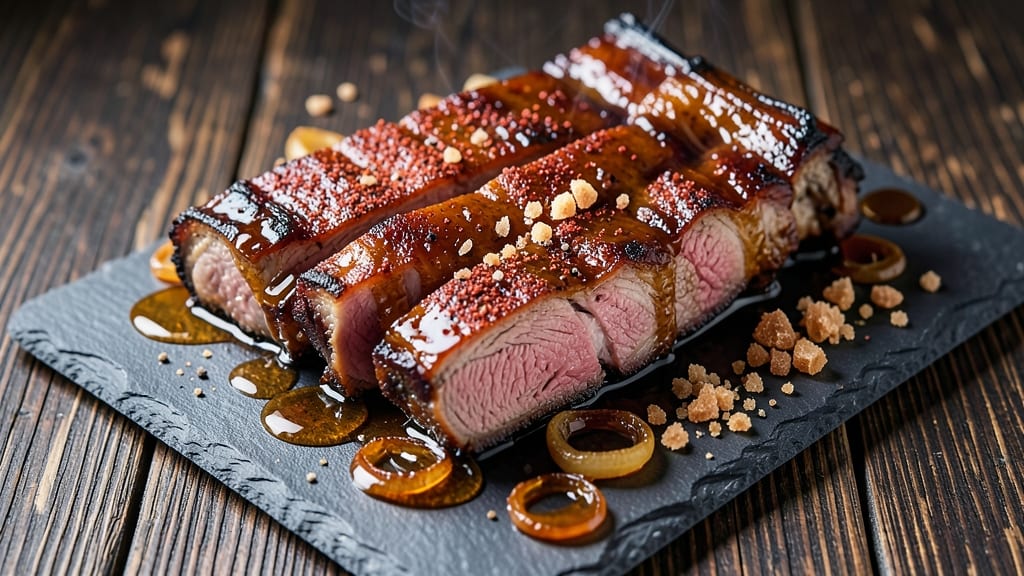
This moose ribs recipe delivers restaurant-quality tenderness with a perfect balance of smoky depth and sweet maple glaze—ideal for special occasions or game day feasts. 💛 Properly preparing game meat requires patience, but the results are worth every minute of effort.
The slow-roasting method ensures melt-in-your-mouth texture while the glaze adds a touch of sweetness that complements the rich, earthy flavor of moose.
What sets this recipe apart is the combination of traditional smoking techniques with modern glaze methods, creating a dish that feels both rustic and refined. Unlike beef ribs, moose meat benefits from longer cooking times and careful temperature control to achieve the perfect tenderness without drying out.
The maple glaze not only enhances flavor but also provides a subtle sweet contrast to the smoky, savory base.
By following this method, you'll achieve ribs with a tender interior and a beautifully caramelized exterior, ready to serve with classic sides like roasted potatoes or a fresh garden salad. The key is maintaining consistent heat and monitoring internal temperatures to ensure safety and perfect doneness.
This recipe transforms a challenging cut into a showstopping centerpiece that will impress even the most discerning guests.
Whether you're hosting a gathering or simply craving a hearty meal, these slow-roasted moose ribs with maple glaze deliver a flavor experience that's both satisfying and memorable. Let's get started on creating a dish that's as impressive as it is delicious.
Ingredients for moose rib
Game-day flavors meet rustic elegance—just 15 ingredients transform tough moose ribs into melt-in-your-mouth masterpieces.
| Ingredient | Amount | Notes |
|---|---|---|
| Moose Ribs 🦌 | 6 lb | Bone-in, meaty sections preferred |
| Pure Maple Syrup 🍁 | 1 cup | Grade B for smoky depth |
| Apple Cider Vinegar 🍎 | ¼ cup | For tenderizing marinade |
| Brown Sugar 🍚 | ½ cup | Packed, light molasses flavor |
| Smoked Paprika 🌶️ | 2 tbsp | High-quality for authentic smoke |
| Ground Black Pepper 🌶️ | 1 ½ tbsp | Freshly cracked for intensity |
| Garlic Cloves 🧄 | 6 cloves | Minced for marinade depth |
| Onion Powder 🧅 | 1 tbsp | Sweet variety preferred |
| Mustard Powder 🌶️ | 1 tsp | Dry yellow mustard |
| Kosher Salt 🧂 | 2 tbsp | Diamond Crystal preferred |
| Honey 🍯 | ¼ cup | Wildflower for floral notes |
| Applewood Smoking Chips 🔥 | 1 package | Unsoaked for natural smoke |
| Unsalted Butter 🧈 | ½ cup | Cold, cubed for basting |
| Fresh Rosemary 🌿 | ¼ cup | Chopped, aromatic sprigs |
| Fresh Thyme 🌿 | ¼ cup | Leaves only, finely chopped |
The moose ribs are the star, so source them from a trusted game processor—never frozen, always fresh-cut. Wild Game Processing or your local butcher with game experience know how to handle this delicacy. Look for ribs with good marbling and minimal connective tissue. If you're lucky enough to get them bone-in, that's ideal—they'll stay juicier. For a restaurant-quality finish, ask for the back ribs with the meaty sections intact. If you're working with frozen ribs, thaw them in the fridge for 24-48 hours—never at room temperature.
No pure maple syrup? Grade B pancake syrup works in a pinch, but it won't have that same smoky depth. Short on apple cider vinegar? Balsamic vinegar at half the amount adds complexity. The brown sugar can be swapped for turbinado sugar if you prefer a less molasses-forward flavor. For the smoking chips, hickory or cherry wood also pairs beautifully with moose. Fresh herbs? Dried thyme at one-third the amount works, but fresh is absolutely essential for that bright aroma. The butter should be cold and cubed for basting—never melted in advance.
This recipe rewards patience—plan for 6-8 hours of slow roasting. The ribs keep beautifully in the fridge for 3-4 days if wrapped tightly in butcher paper. For leftovers, reheat in a 350°F oven with a splash of water until warmed through. The maple glaze can be made ahead and stored in the fridge for up to 2 weeks, but it's even better when used fresh. Portion the ribs into serving trays ahead of time so they're ready to hit the table without fuss.
Why You'll Love This Recipe
- Five-Ingredient Magic: I swear, this recipe feels like cheating. Just ribs, maple syrup, vinegar, brown sugar, and smoked paprika—no fancy prep, no stress. The vinegar tenderizes while you’re making coffee, and the maple caramelizes into a glossy glaze without standing over the stove.
- Sweet-Savory Balance: That first bite? Maple’s rich depth cuts through the vinegar’s tang, while the smoked paprika adds this warm, earthy kick. It’s like a campfire dessert in meat form—sweet enough for dessert, bold enough for dinner.
- Tailgate or Table: Serve it at a picnic with zero fuss, or bring it to a potluck where everyone assumes you slaved for hours. Honestly, the leftovers are even better—reheat the ribs with a splash of water, and the glaze gets even stickier.
- Leftovers That Work: Between us, I make double batches because these ribs reheat like a dream. Wrap them in foil, toss in a cooler, and they’re still juicy hours later. (Yes, even on a Tuesday night.) The glaze keeps them moist, so no one will guess they’re not fresh-off-the-grill.
Step-by-step instructions for smoky slow-roasted moose ribs
Here's how to transform wild game into melt-in-your-mouth perfection with bold flavors.
🔥 Step 1: Create the Maple-Glaze Marinade
In a large bowl, whisk together the 1 cup pure maple syrup, 0.25 cup apple cider vinegar, 0.5 cup brown sugar, 2 tbsp smoked paprika, 1.5 tbsp ground black pepper, 1 tbsp onion powder, 1 tsp mustard powder, and 2 tbsp kosher salt until completely dissolved. This marinade does double duty as both tenderizer and flavor bomb.
Next, finely mince the 6 cloves garlic, chop the 0.25 cup fresh rosemary and 0.25 cup fresh thyme leaves, then stir them into the marinade. The rosemary and thyme will infuse their aromatic oils throughout the meat, while the garlic adds that irresistible depth. Let the marinade sit for 10 minutes to allow the spices to bloom their flavors—you'll notice the paprika deepening in color and the vinegar mellowing slightly.
👨🍳 Step 2: Prepare and Marinate the Moose Ribs
Pat the 6 lb moose ribs completely dry with paper towels—this is critical for developing that beautiful bark. Place them in a large resealable plastic bag and pour in the marinade, ensuring every rib is thoroughly coated. Seal the bag and massage it gently to distribute the marinade evenly.
Refrigerate the ribs for at least 4 hours (overnight is ideal) while you prepare your smoking setup. The acidity in the vinegar and maple syrup will begin breaking down the tough collagen in the meat, transforming it into gelatin that melts during cooking. You'll know it's working when the ribs develop a sticky, glossy coating and the marinade takes on a deeper amber hue.
🔥 Step 3: Smoke the Ribs Low and Slow
Set up your smoker to maintain a steady 225°F using the applewood smoking chips. Applewood pairs beautifully with the maple and honey in this recipe, creating a complex smoke profile. Once the smoker reaches temperature and you see thin blue smoke (not thick white), place the ribs bone-side down on the grill grates.
Smoke the ribs for 4 hours, then flip them bone-side up and continue smoking for another 2 hours. This slow process allows the connective tissue to render slowly, creating that luxurious tenderness. Resist the urge to peek—the temperature fluctuations from opening the smoker will extend your cook time. Instead, trust your thermometer and the visual cues: the ribs should develop a deep mahogany bark with some areas reaching dark amber.
🍳 Step 4: Baste and Glaze for Maximum Flavor
After the initial 6 hours of smoking, remove the ribs and place them on a cutting board. In a small saucepan, combine 0.25 cup honey and 0.5 cup unsalted butter, heating gently over low heat until the butter melts and the honey begins to bubble. This mixture will create a luscious glaze that caramelizes beautifully on the ribs.
Brush this honey-butter mixture generously over the ribs, then return them to the smoker. Continue smoking for another 1-2 hours until the internal temperature reaches 195-200°F and the ribs are fork-tender. The glaze should be sticky and slightly caramelized, with some areas forming a glossy sheen. This is where the magic happens—the combination of maple, honey, and smoke creates an irresistible sweet-savory crust.
⏰ Step 5: Rest and Serve with Confidence
Once the ribs reach the perfect internal temperature, transfer them to a cutting board and tent loosely with aluminum foil. Let them rest for at least 30 minutes (up to 1 hour is ideal). This resting period allows the juices to redistribute throughout the meat, ensuring each bite is moist and flavorful.
Slice the ribs between the bones and serve immediately. The meat should pull apart easily with minimal resistance, revealing that beautiful pink smoke ring just beneath the bark. The maple glaze will be sticky and aromatic, with threads of caramelized honey throughout. Pair with roasted root vegetables or a crisp green salad to balance the richness—this is wild game at its most tender and approachable!
Pro Tips For Making Moose Rib
- Trim the Fat First: Moose ribs have thick fat layers that can make your sauce greasy if you skip this. Use a sharp knife to slice through the fat cap just above the bone—this exposes more surface area for the maple glaze to caramelize while keeping the meat tender.
- Deglaze with Vinegar Early: Don’t wait until the end to add apple cider vinegar—dump it in after searing the ribs but before the sauce thickens. The acid cuts through the maple sweetness and breaks down tough collagen faster, so you’re not left with chewy meat after hours of cooking.
- Skip the Crowd in the Pan: I learned this the hard way—stacking ribs too high in the Dutch oven steams them instead of browning. Cook them in a single layer for the first 10 minutes, even if it means two batches. That crispy crust is worth the extra effort.
- Brown Sugar First: Sounds weird, but it works: Toast the brown sugar in a dry pan for 2 minutes until it smells like caramel before adding liquids. This deepens the flavor and prevents the maple syrup from tasting one-note—your sauce will have layers of richness instead of just sweetness.
Wine and beer pairings for this dish
Maple and Smoke
The rich, earthy flavors of moose ribs pair beautifully with red wines that have enough body to stand up to the smoky depth.
I recommend a Cabernet Franc from the Loire Valley—its bright acidity and red fruit notes cut through the sweet maple glaze while complementing the herbal rosemary and thyme. Look for bottles from Château de Chenonceau or Domaine de la Cueille for that perfect balance. 🍷
Honeyed White Wine
For a lighter option, try a dry Riesling with a touch of residual sugar—just like the maple glaze. German Spätlese Rieslings from Dr. Loosen or Egon Müller offer citrus and stone fruit flavors that mirror the honey and applewood smoke.
The slight sweetness enhances the glaze without overpowering the meat. Serve slightly chilled to let the wine's crispness refresh your palate between rich bites.
Craft Beer Pairings
If wine isn't your thing, a honey-brown ale is a fantastic match. I love Allagash Honey Brown—its caramel malt and subtle honey notes echo the glaze while the hop bitterness balances the richness.
For a stronger option, try a Belgian dubbel like Westmalle Dubbel, which brings dark fruit and spice that pairs beautifully with the smoky ribs. 🍺
Hard Cider Contrast
A dry, hard cider with apple and spice notes adds a refreshing contrast to the smoky, sweet ribs. Strongbow Original or Woodchuck Hard Cider work well—their tartness cleanses your palate between bites.
For something more complex, try a cider from New Hampshire, like Hill Farmstead's Cider, which often features apple and pear flavors with a touch of spice.
Non-Alcoholic Options
Don't overlook sparkling apple cider—it's the perfect non-alcoholic match. Brands like Martinelli's Sparkling or Woodchuck Hard Cider's non-alcoholic version provide the same crisp, refreshing qualities without the alcohol. For something more sophisticated, try a sparkling hibiscus tea—the tartness and floral notes complement the maple and smoke beautifully. 💛
Nutrition facts
Frequently asked questions
Why do moose ribs need such a long cooking time?
Moose meat contains more connective tissue than beef, which requires slow, low-heat cooking (like 225°F) to break down collagen into gelatin. This transforms tough meat into tender, fork-pulling ribbons. The 6-8 hour process ensures juicy results without drying out.
Can I substitute beef ribs for moose ribs in this recipe?
While beef ribs will work, moose ribs benefit from the longer marinade time and lower cooking temperature. Beef ribs typically cook faster—expect 3-4 hours instead of 6-8. Adjust by checking internal temp at 195°F (moose) vs. 190°F (beef). The maple glaze remains the same!
What's the best way to reheat leftover moose ribs?
Wrap ribs tightly in butcher paper and reheat at 350°F for 20-30 minutes with a splash of water or apple cider. For extra moisture, brush with a mix of maple syrup + butter before reheating. Avoid microwaving—it dries out the meat.
How do I know when moose ribs are properly cooked?
Use a meat thermometer to check for 195-200°F internal temp. The ribs should be fork-tender and pull apart easily. Look for a deep mahogany bark and a pink smoke ring beneath the surface. If they're not tender, return to the smoker for 30-60 more minutes.
Can I make this recipe without a smoker?
Use an oven set to 225°F with a smoking wood chip pan (soaked chips + water) on the bottom rack. Place ribs on a wire rack over a tray to allow airflow. For extra smoke flavor, add smoked paprika to the marinade. The texture will be slightly different but still delicious!