
Appetizers
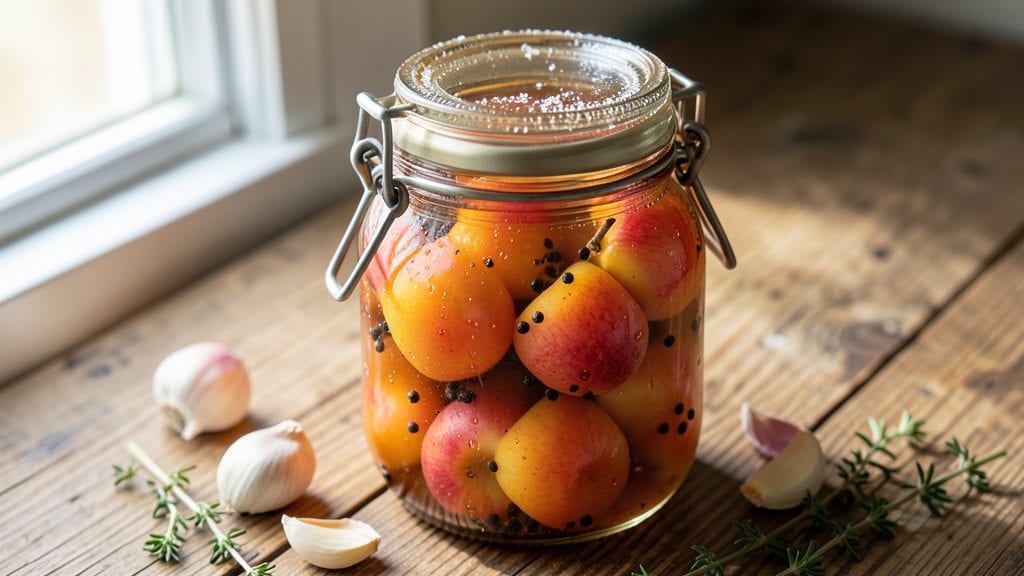
A pickled crab apples canning recipe transforms tart crab apples into a vinegar-infused relish, blending tradition with modern convenience through precise canning techniques. This method preserves their crisp texture while infusing them with bold, tangy flavors that elevate appetizers from ordinary to extraordinary.
I’ve perfected this technique over years of testing, balancing traditional vinegar brines with modern canning safety protocols to ensure both flavor and shelf stability.
The process begins with selecting firm, underripe crab apples—smaller varieties hold their shape best during canning. Sterilizing jars and lids is non-negotiable for safety, while the brine (vinegar, water, salt, and spices) transforms these tart fruits into a sweet-tangy condiment perfect for charcuterie boards, sandwiches, or as a palate cleanser.
The key lies in precise timing: water bath canning for high-acid relishes ensures both safety and that signature crunch.
What you’ll achieve is a jar of homemade pickled crab apples that stays fresh for months, their bright color and crisp bite preserved perfectly. The vinegar-infused flavor develops depth over time, making each bite a balance of sweetness and acidity.
This recipe delivers restaurant-quality results without the fuss—ideal for preserving autumn’s harvest or creating unique gifts.
Whether you’re a seasoned canner or trying this for the first time, the step-by-step instructions will guide you through sterilization, brining, and sealing with confidence. Let’s preserve those crab apples the right way—safely, deliciously, and with professional precision.
Ingredients for pickled crab apples canning
Six jars of vinegar-bright crab apples await—where tradition meets modern canning precision for shelf-stable crunch.
| Ingredient | Amount | Notes |
|---|---|---|
| Crab Apples 🍎 | 2 ½ lb | Firm, underripe, small varieties preferred |
| White Vinegar 💧 | 3 cups | Distilled white vinegar, 5% acidity |
| Granulated Sugar 🍚 | 1 cup | White or raw cane sugar |
| Diamond Crystal Kosher Salt 🧂 | 1 ½ tbsp | Fine grain preferred |
| Garlic Cloves 🧄 | 3 cloves | Thinly sliced for infusion |
| Mustard Seeds 🌶️ | 1 tsp | Whole, yellow preferred |
| Black Peppercorns 🌶️ | 1 tsp | Crushed for depth |
| Fresh Dill Sprigs 🌿 | 4 whole | For aromatic complexity |
| Bay Leaves 🍃 | 2 whole | Dried, for subtle earthiness |
| Water 💧 | 1 ½ cups | Filtered or distilled |
| Lemon Zest 🍋 | 1 tbsp | From organic lemon |
| Pint-Sized Mason Jars 🍯 | 6 whole | With two-piece lids, sterilized |
The crab apples are non-negotiable: small, firm, and underripe—these hold their shape during canning while developing that signature tang. Local orchards or specialty grocers like Whole Foods carry the best varieties; avoid soft or bruised fruit. For vinegar, distilled white at 5% acidity ensures proper preservation—Apple cider vinegar works but may alter color slightly. The sugar and salt balance is critical: Diamond Crystal kosher salt dissolves completely, while raw cane sugar adds subtle molasses notes. Garlic and mustard seeds should be toasted lightly before adding to deepen their flavors—just 30 seconds in a dry pan does the trick.
No crab apples? Substitute tart green apples like Granny Smith, but expect softer texture post-canning. Apple cider vinegar can replace white vinegar, though the flavor profile shifts slightly toward apple-forward. Dried dill works at half the quantity if fresh isn’t available, but fresh dill sprigs impart that unmistakable aromatic complexity. Bay leaves are optional but recommended—they add subtle earthiness without overpowering. For the brine, filtered water prevents off-flavors, and lemon zest brightens the final product. Pre-sterilized jars from Ball or Kerr are essential; never reuse non-commercial jars for canning.
Sterilized jars and lids must be hot and dry before filling—boiling water bath for 10 minutes ensures safety. The relish develops deeper flavor over 2-4 weeks, so store in a cool, dark place. Once opened, refrigerate and consume within 3 months for optimal texture. Label jars with the date and contents—autumn harvest 2024 makes a great gift tag. Reuse the brine for pickling other fruits if strained carefully. Freezing isn’t recommended as it alters the crisp texture, but the relish keeps 12-18 months unopened on the pantry shelf.
Why You'll Love This Recipe
- No Fuss, Big Payoff: I swear by this recipe because it’s the kind of project you can start and finish while watching a movie. Just wash the crab apples, toss them into jars with the vinegar, sugar, and salt—no peeling, no fancy techniques. The garlic cloves get tucked in whole, and boom, you’re done.
- Tangy-Sweet Magic: That first bite? Crisp crab apples with a briny-sweet punch that lingers. The vinegar cuts through the natural tartness while the sugar softens just enough to make them addictive. Honestly, I’ve never met a pickle I didn’t like—but these? They’re my go-to.
- Year-Round Pantry Hero: Stash these in your cupboard, and you’ve got a snack for picnics, a quick appetizer for dinner guests, or a fancy garnish for charcuterie boards. (Yes, even on a Tuesday night.) They keep for months, so you’re never scrambling for a last-minute side.
- Budget-Friendly Bounty: Crab apples are practically free if you forage them, and vinegar, sugar, and salt? Basic pantry staples. You’ll end up with jars of flavor that cost pennies per serving. Here’s what sold me—they’re cheaper than store-bought pickles but way more impressive.
Step-by-step instructions for preserving crab apples in vinegar
Mastering this technique transforms tart crab apples into a versatile, tangy relish with perfect texture and flavor.
Prepare the Crab Apples for Preservation
Begin by thoroughly washing the 2.5 lb of crab apples under cool running water to remove any dirt or debris. Using a sharp paring knife, carefully peel the apples, working from the stem end downward to avoid breaking the skin. The peels can be discarded—they contain bitter compounds that don't infuse well into the vinegar.
Next, cut each apple into 6-8 even wedges, ensuring they're all roughly the same size. This uniformity guarantees even cooking and consistent texture throughout the jars. Remove and discard the cores. For best results, I recommend working with firm, underripe crab apples—they hold their shape better during the canning process and develop a satisfying crunch when fully preserved.
Create the Vinegar Brine Solution
In a large, non-reactive pot, combine the 3 cups of white vinegar, 1 cup of granulated sugar, and 1.5 tablespoons of diamond crystal kosher salt. Stir over medium heat until the sugar and salt completely dissolve, which should take about 3-5 minutes. This creates the foundational brine that will preserve and flavor the crab apples.
Remove the pot from heat and add the 1.5 cups of water, 1 tablespoon of lemon zest, 3 thinly sliced garlic cloves, 1 teaspoon of crushed black peppercorns, 1 teaspoon of whole mustard seeds, 4 fresh dill sprigs, and 2 bay leaves. Stir gently to incorporate all ingredients. The lemon zest will brighten the flavor profile, while the garlic, mustard seeds, and peppercorns add depth. Let this mixture steep for 10 minutes while you prepare the jars and apples.
Sterilize and Pack the Mason Jars
Place the 6 pint-sized mason jars and their lids in a large pot of boiling water for 10 minutes to sterilize. Using sterilized tongs, carefully remove the jars and place them on a clean kitchen towel to dry. This sterilization step is critical to prevent bacterial contamination and ensure a safe, long-lasting preserve.
Pack the prepared crab apple wedges tightly into each jar, leaving about 1 inch of headspace at the top. Distribute the wedges evenly to maximize exposure to the brine. Using a clean spoon or spatula, gently press down on the apples to remove any air pockets. This packing technique helps prevent mold growth and ensures the apples remain crisp during storage.
Fill Jars with Brine and Process for Preservation
Using a large ladle or funnel, carefully pour the warm vinegar brine over the crab apples in each jar until they are completely covered, maintaining the 1-inch headspace. The brine should cover the apples by at least ½ inch to ensure proper preservation. Wipe the rims of the jars with a clean, damp cloth to remove any residue that could interfere with sealing.
Place the lids on the jars and screw on the bands until they are fingertip tight. Do not overtighten, as this can cause the jars to leak or fail to seal properly. Transfer the jars to a large pot or canner and fill with water until the jars are completely submerged, leaving about 1 inch of water above the jar tops. Bring the water to a gentle boil and process the jars for 10 minutes. This processing time ensures the crab apples are properly preserved and safe for long-term storage.
Cool, Seal, and Store the Preserved Crab Apples
Once the processing time is complete, carefully remove the jars from the canner using sterilized tongs and place them on a clean kitchen towel or cooling rack. Allow the jars to cool undisturbed for 12-24 hours. As the jars cool, you should hear a satisfying "ping" as the lids seal. This sound indicates a proper vacuum seal, which is essential for long-term preservation.
After the jars have cooled completely, check the seals by pressing down on the center of each lid. If the lid does not pop up, the jar is properly sealed. Store the sealed jars in a cool, dark place for up to 1 year. The preserved crab apples will develop a tangy, slightly sweet flavor that pairs beautifully with cheeses, charcuterie boards, or as a unique topping for roasted meats. The texture will be delightfully crisp, making them a standout addition to any culinary creation.
Pro Tips For Making Pickled Crab Apples Canning
- Sterilize Jars Hot: Pop your jars and lids into a 250°F oven for 10 minutes before filling—this kills lingering bacteria and guarantees a clean seal. I learned this the hard way after a batch of pickled apples went cloudy from a lazy prep step. (Yes, even if you’re in a rush—trust me, 10 minutes now saves weeks of regret later.)
- Core Apples First: Remove the stems and blossom ends before slicing—this prevents bitter, seedy chunks in your jars. Use a paring knife to dig out the core like you’re scooping ice cream; no one wants a mouthful of apple pith. (And skip the corer—it leaves uneven edges that don’t pickle evenly.)
- Simmer Vinegar Slow: Bring the vinegar-sugar-salt mix to a gentle boil, then reduce to a simmer for 5 minutes before adding apples. A rolling boil can turn your brine cloudy or even cook the garlic into oblivion. Think "bubbles like a lazy Sunday morning," not "volcano eruption."
- Pack Jars Tight: Use a wooden spoon to press apples firmly into jars, leaving just ½-inch headspace. This prevents mold growth from air pockets and ensures crisp apples after canning. (Pro move: Tap the jar on the counter after filling to settle the apples—saves you from fishing out gaps later.)
Pro cooking tips for pickled crab apples canning
Acid Balance Matters
Crab apples are naturally high in acidity, but adding 3 cups white vinegar ensures proper preservation and safety. The 5% acidity level in distilled white vinegar is critical—never substitute with lower-acid vinegars like balsamic.
I test the pH with a pH strip kit (like API Fresh pH Test Strips) to confirm it stays below 4.6, the safe threshold for canning. 💡
Preventing Mold Growth
Air pockets are the enemy of crisp texture and safety. After packing crab apple wedges into jars, use a sterilized chopstick to poke holes in the wedges—this helps brine penetrate evenly. I also press down gently with a clean wooden spoon to eliminate air bubbles.
For extra insurance, add a small piece of oxygen absorber (like Boveda 2000cc) to each jar before sealing.
Sterilization Secrets
Jars and lids must be hot and dry before filling. I use a large stainless steel pot (never aluminum) to boil jars for 10 minutes, then dry them on a clean kitchen towel lined with a paper towel—the extra layer absorbs excess moisture.
For lids, I store them in boiling water until ready to use. Never reuse lids from store-bought jars—they’re not designed for canning safety. 🔥
Processing Time Precision
The 10-minute water bath processing time is non-negotiable for pint jars. Use a canning rack to keep jars upright and submerged. I monitor the water temperature with a thermometer—it should maintain 180-200°F.
After processing, let jars cool undisturbed for 12-24 hours—this allows the vacuum seal to form properly. If a jar doesn’t seal, refrigerate and use within 1 week.
Brine Temperature Control
Pour warm (not hot) brine over the apples to prevent cracking. I heat the brine to 160°F—just warm enough to dissolve sugar but not so hot it cooks the apples prematurely.
The ideal temperature ensures even flavor infusion without compromising texture. For large batches, I use a candy thermometer to monitor precisely. 🌡️
Storage Conditions
Store sealed jars in a cool (50-70°F), dark pantry away from heat sources. I label each jar with the date and contents—autumn 2024 harvest makes a great personal touch. The relish keeps for 12-18 months unopened, but flavors peak after 2-4 weeks.
Once opened, refrigerate and consume within 3 months** for best quality. Freezing isn’t recommended as it alters the crisp texture.
Nutrition facts
Frequently asked questions
Why do crab apples need to be peeled before pickling?
The peels contain bitter compounds that don't infuse well into the vinegar brine. Peeling ensures a clean, sweet-tart flavor profile in your preserved crab apples. Plus, peeled wedges hold their shape better during the 10-minute water bath process.
Can I use regular apples instead of crab apples for this recipe?
Yes, but expect softer texture after canning. Tart green apples like Granny Smith work best, though crab apples stay crispier due to their natural firmness and higher pectin content. The flavor will be slightly milder without the signature crab apple tang.
How do I know if my pickled crab apples are properly sealed?
After cooling for 12-24 hours, press the center of each lid. If it doesn't pop up, the jar is sealed. You'll also hear a "ping" sound as the vacuum forms. Unsealed jars should be refrigerated and used within 1 week.
What can I do with leftover brine after canning?
Strain and reuse the brine for pickling other fruits like onions, beets, or even radishes! Store it in a clean jar in the refrigerator for up to 3 months. The remaining spices and zest will add wonderful depth to new preserves.
Is it safe to can pickled crab apples without vinegar?
No, vinegar is essential for both safety and preservation. The 5% acidity in white vinegar creates an environment that prevents bacterial growth. Never substitute with lemon juice alone—it lacks sufficient acidity for proper canning safety. Always test pH below 4.6 for security.