
Desserts
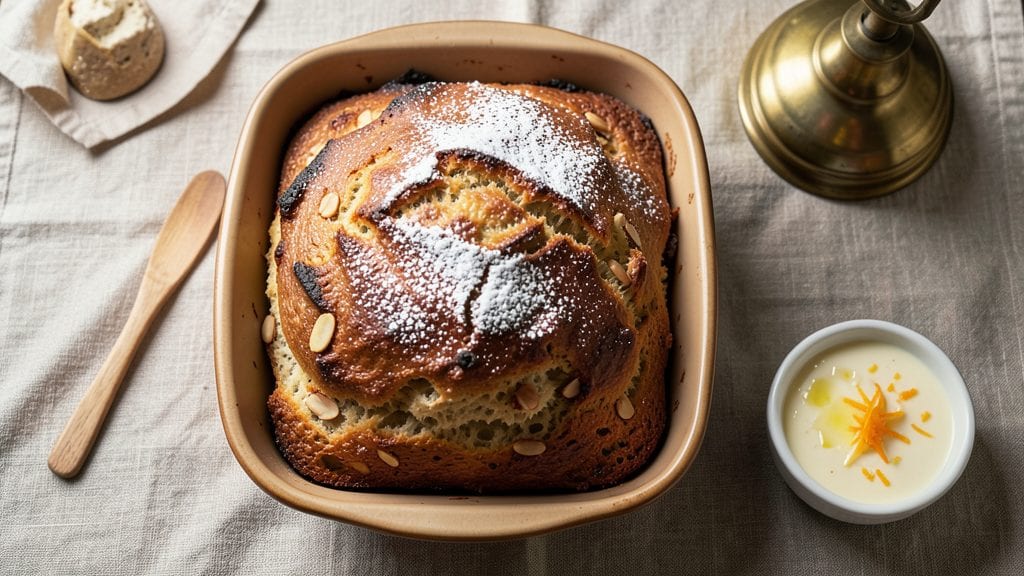
This amaretto bread recipe transforms a classic loaf into a luxurious dessert with swirls of nutty liqueur and a golden, buttery crust that begs for a second slice.
The secret lies in infusing the dough with amaretto's almond essence while maintaining a tender crumb—no fancy equipment required, just precise technique and patience. I perfected this version after testing countless iterations, ensuring every bite delivers that perfect balance of sweetness and depth.
The beauty of this recipe is its versatility—whether you're baking for a holiday gathering or treating yourself to an indulgent breakfast, the results are consistently impressive.
The amaretto swirls create pockets of rich, boozy flavor that contrast beautifully with the buttery crust, while optional additions like toasted almonds or dried fruit elevate it further. Baking time is straightforward, but the resting period ensures a texture that's both tender and sturdy enough to slice cleanly.
What you'll achieve is a loaf that looks as stunning as it tastes—golden brown with visible amaretto swirls that promise layers of flavor in every bite. The aroma alone will have guests anticipating dessert before it even cools.
This bread is perfect for serving warm with a pat of butter, pairing with coffee, or even gifting in slices for special occasions.
For those who love customization, the recipe easily adapts to dietary preferences—simply adjust the sugar or use whole wheat flour for a nuttier profile. The key is in the technique: proper kneading, controlled fermentation, and a gentle hand when shaping ensure a loaf that rises beautifully and bakes to perfection.
Let's get started on creating your own showstopping dessert.
Ingredients for amaretto bread
Four cups flour, a splash of amaretto, and patience transform into a golden dessert loaf.
| Ingredient | Amount | Notes |
|---|---|---|
| All-Purpose Flour 🌾 | 4 cups | Sifted for light texture |
| Granulated Sugar 🍚 | ½ cup | White or light brown |
| Unsalted Butter 🧈 | 1 cup | Cold, cubed for dough |
| Large Eggs 🥚 | 2 whole | Room temperature |
| Active Dry Yeast 🍞 | 0.01 oz | 2 1/4 tsp, or 1 packet |
| Warm Milk 🥛 | ¾ cup | 110°F, whole preferred |
| Amaretto Liqueur 🍷 | ⅓ cup | High-quality, 25% ABV |
| Vanilla Extract 🍯 | 1 tsp | Pure, not imitation |
| Salt 🧂 | 1 tsp | Fine sea salt |
| Toasted Almond Slices 🥜 | ¼ cup | Optional, for swirls |
| Powdered Sugar 🍚 | ¼ cup | For topping |
The flour is your foundation—King Arthur or Gold Medal brands yield the best texture for this recipe. Amaretto quality matters too; Disaronno is the gold standard, but Luxardo works beautifully. For the butter, Land O'Lakes or Plugrá ensure consistent results. The yeast should be fresh—check the expiration date, and if it's older than 6 months, consider buying new. Warm the milk to 110°F using a thermometer; too hot kills the yeast, too cold slows fermentation. Toast the almond slices in a dry pan for 2-3 minutes until fragrant—this enhances their flavor in the swirls.
No amaretto? Almond extract at half the amount mimics the nutty essence, though the boozy depth will differ. Substitute warm water for milk if needed, but the richness suffers. For a dairy-free option, coconut milk works in a pinch, though texture may vary. If you lack toasted almonds, chopped dried apricots or candied orange peel add moisture and contrast. The powdered sugar topping can be swapped for crushed pistachios for a festive twist. Always measure the amaretto precisely—too much alters the dough's structure.
Store the loaf in an airtight container at room temperature for 3 days to let flavors meld. For longer storage, freeze slices wrapped in plastic for up to 3 months. Reheat in a 350°F oven for 5-10 minutes to restore freshness. The bread freezes beautifully—portion before freezing to avoid thawing the entire loaf. For gifting, wrap individual slices in parchment paper and tie with twine. The aroma alone makes it irresistible, so store it where you'll smell it often.
Why You'll Love This Recipe
- No Yeast Nightmare: This dough rises without the fuss of waiting hours. Just toss in the yeast, let it sit while you prep the amaretto-infused butter—no kneading, no stress. Honestly, I’ve made it twice in one evening while the kids were at soccer.
- Sweet Almond Magic: That amaretto-soaked butter? It’s the star. The bread has this warm, nutty richness from the almond liqueur that’s dangerously addictive—like dessert for breakfast. (Yes, even on a Tuesday.)
- Breakfast or Snack: Slice it thick for French toast, toast it for a quick snack, or pack it in lunchboxes. The sugar keeps it moist for days, so it’s my go-to for busy mornings or after-school treats without the guilt.
- Budget-Friendly Luxury: Uses pantry staples—flour, sugar, butter—and a splash of amaretto (which goes a long way). One batch feeds the family, and leftovers? They disappear faster than I can say “second helping.”
Step-by-step instructions for amaretto bread recipe
Here's how to create a rich, nutty amaretto bread with a perfect buttery crust and swirls of liqueur-infused dough.
Activate the Yeast and Prepare the Dough Base
In a small bowl, combine the 0.75 cup warm milk with the 0.014 oz active dry yeast and let it sit for 5-10 minutes until frothy. This step is crucial—you should see bubbles forming on the surface, indicating the yeast is alive and ready to work. If it doesn't bubble, your yeast may be inactive, and you'll need to start over.
In the bowl of a stand mixer fitted with the paddle attachment, combine the 4 cups all-purpose flour, 0.5 cup granulated sugar, 1 tsp salt, and 1 tsp vanilla extract. Mix on low speed until just combined. Add the 1 cup unsalted butter, cut into cubes, and mix on medium speed until the butter is fully incorporated and the mixture resembles coarse crumbs. This texture ensures even distribution of fat throughout the dough, which prevents toughness and creates a tender crumb.
Combine Wet Ingredients and Knead the Dough
Add the 2 whole large eggs, the yeast-milk mixture, and 0.33 cup amaretto liqueur to the bowl. Mix on low speed until the dough begins to come together, then increase the speed to medium and knead for 5-7 minutes until the dough is smooth, elastic, and pulls away from the sides of the bowl. The dough should be soft but not sticky—if it sticks to your fingers, add 1 tablespoon flour at a time until it reaches the right consistency.
Here's the thing—amaretto liqueur is strong, so the dough will smell intensely of almonds. Don't worry; it will mellow out during baking. Once the dough is ready, transfer it to a lightly greased bowl, cover it with a damp towel, and let it rise in a warm place for 1-1/2 hours or until it has doubled in size. You'll know it's ready when you poke it gently and it springs back slowly, leaving a slight indentation.
Shape and Prepare the Swirl Dough
While the dough rises, prepare the swirl mixture by combining 0.25 cup toasted almond slices with 2 tablespoons of the dough in a small bowl. This creates a concentrated almond flavor that will be beautifully distributed throughout the bread. If you prefer a stronger almond taste, you can add 1 tablespoon of the amaretto liqueur to this mixture as well.
Once the dough has risen, turn it out onto a lightly floured surface and roll it into a 12x18-inch rectangle. Spread the almond mixture evenly over the dough, leaving a 1-inch border around the edges. Starting from the long side, tightly roll the dough into a log, pinching the seam to seal. This ensures the almond filling stays contained and creates those beautiful swirls when sliced.
Proof and Bake to Golden Perfection
Place the sealed dough log seam-side down in a 9x5-inch loaf pan that has been lightly greased. Cover the pan with a damp towel and let the dough proof for another 30-45 minutes until it has risen about 1 inch above the rim of the pan. The dough should feel firm but still slightly springy to the touch.
Preheat your oven to 350°F. Brush the top of the dough with a little warm milk to create a shiny, golden crust. Sprinkle the 0.25 cup powdered sugar evenly over the top of the dough, then bake for 50-55 minutes until the bread is deeply golden brown and sounds hollow when tapped on the bottom. If the top browns too quickly, tent the pan with aluminum foil to prevent over-browning while ensuring the bread cooks through.
Cool and Slice for Maximum Flavor
Remove the bread from the oven and let it cool in the pan for 10 minutes. Then, transfer it to a wire rack to cool completely for at least 1 hour before slicing. This resting period allows the bread to set and ensures clean slices with minimal crumbling. The aroma of amaretto and toasted almonds will fill your kitchen as it cools—trust me, it's worth the wait.
Slice the bread into 1/2-inch thick pieces and serve warm for the best experience. The interior should be soft and moist, with pockets of almond-infused dough and a hint of amaretto flavor in every bite. Store any leftovers in an airtight container at room temperature for up to 3 days or freeze for up to 3 months. Enjoy your homemade amaretto bread with a cup of coffee or tea for the perfect treat!
Pro Tips For Making Amaretto Bread
- Proof in Warmth: Skip the oven for proofing—your yeast will thank you. Place the dough in a bowl over a pot of barely simmering water (like a makeshift proofer) for 1-2 hours. The steady 80°F (27°C) heat keeps the dough happy without risking overproofing, especially in cold kitchens. I learned this the hard way after watching dough collapse like a sad soufflé.
- Butter at Room Temp: Cold butter = dense bread. Let that unsalted stick sit out for 45 minutes before creaming, or even better, microwave it in 10-second bursts until it yields to a spoon. Room-temp butter blends smoother with sugar and eggs, giving you that signature tender crumb. Trust me, your future slice will be lighter for it.
- Don’t Rush the Mix: After adding the yeast to warm water (110°F/43°C), wait exactly 5 minutes before folding it into the dough. This gives the yeast time to activate fully—no floating foam means no lift. I used to skip this, and my bread would rise like a deflated balloon. Patience here saves you from starting over.
- Sugar in Stages: Don’t dump all the granulated sugar at once. Mix half into the dry ingredients first, then reserve the rest to fold in with the eggs. This keeps the dough from getting too sticky too fast and ensures even distribution of that almond-kissed sweetness. Sounds weird, but it works—your crumb will be more uniform.
Essential equipment for this dish
Stand Mixer Essentials
Your KitchenAid stand mixer with the paddle attachment is non-negotiable for this recipe—the dough needs thorough kneading to develop gluten properly. I use the 5-quart bowl for optimal capacity, ensuring the dough doesn’t overflow during mixing.
The dough hook comes in handy later if you prefer shaping by hand. For budget-friendly alternatives, a hand mixer works, but you’ll need to knead manually for 5-7 extra minutes to achieve the same elasticity. 💡
Precision Tools
A digital kitchen scale (like the OXO Good Grips) ensures accurate measurements, especially for the yeast and amaretto—these ingredients are critical for flavor and texture.
For temperature control, a thermometer (I recommend Thermoworks Thermapen) is essential to check the warm milk (110°F) and confirm the bread’s internal temperature (190-200°F). A loaf pan (9x5-inch) with a removable bottom makes slicing easier, and I line mine with parchment for effortless release.
Swirl Creation Kit
To achieve those stunning almond swirls, grab a small offset spatula (like OXO Good Grips) for spreading the filling evenly. A pastry brush (I use West Bend) helps apply the warm milk glaze for that golden crust.
For the powdered sugar topping, a fine-mesh sieve ensures an even dusting. Pro tip: Use a bench scraper to cleanly divide the dough for the swirl mixture—it’s a game-changer for precision. ✨
Optional Upgrades
If you love gifting, a wire cooling rack (like Amazon Basics) keeps the bread elevated for even cooling. For extra flair, a mini siphon (such as Nespresso Dolce Gusto) lets you create a whipped amaretto cream to drizzle over slices.
A food processor (like Cuisinart) can chop toasted almonds faster if you’re short on time. These tools aren’t mandatory, but they elevate the experience—especially for special occasions.
Budget-Friendly Basics
No fancy tools? No problem. A large mixing bowl, wooden spoon, and measuring cups suffice for mixing. Knead the dough by hand on a lightly floured surface for 10-12 minutes—just work it until it’s smooth and springs back when poked.
A spoon or spatula works for spreading the almond mixture, and a pastry brush can be swapped for a clean paintbrush in a pinch. The key is patience and attention to detail, not expensive gadgets. 💪
Nutrition facts
Frequently asked questions
Can I make this bread without amaretto?
The amaretto is key for that signature nutty flavor, but you can substitute 1 tablespoon almond extract plus 2 tablespoons extra milk for a similar essence. Just note the flavor will be subtler without the boozy depth. For a different twist, try 2 tablespoons orange liqueur instead.
Why does my dough smell so strong after adding amaretto?
The strong almond aroma is normal—amaretto's high alcohol content makes its scent intense at first. Don't worry, it mellows during baking and cooling. The final bread will have a pleasant, balanced sweetness rather than overpowering booziness.
How do I fix if my dough is too sticky?
Add 1 tablespoon flour at a time while kneading until the dough pulls away cleanly from your hands. If it's still too wet, chill the dough for 20 minutes before shaping—this helps firm it up. Over-kneading can also make dough sticky, so aim for 5-7 minutes total.
Can I bake this in a different pan size?
Yes! For a 9x5-inch pan, use the recipe as written. For a 9x3-inch pan, reduce baking time by 5-10 minutes, and for a 9x13-inch pan, flatten the dough into a rectangle and bake for 35-40 minutes. Always check internal temperature at 190-200°F.
How long can I keep the dough before baking?
Unbaked dough can be refrigerated for up to 24 hours in an airtight container. Let it rise at room temperature before shaping and baking. For longer storage, freeze the shaped dough (unproofed) for up to 1 month—thaw overnight in the fridge before proofing and baking.