
Side Dishes
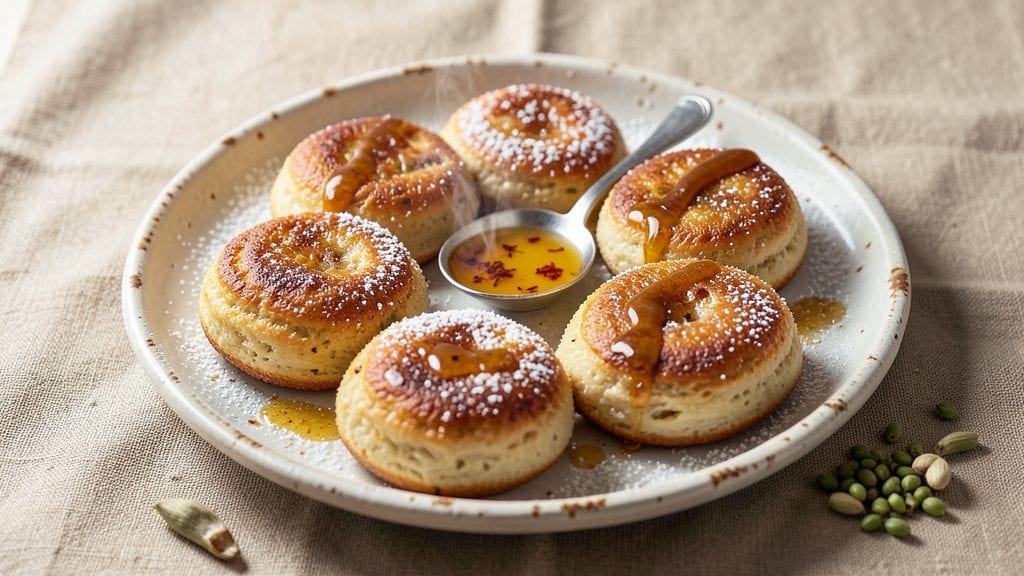
This baked balushahi recipe transforms a beloved Indian sweet from deep-fried indulgence into a lighter, equally fragrant delight. The cardamom-infused dough creates delicate layers that bake to golden perfection, offering all the warmth of tradition without the heaviness.
I perfected this version after years of experimenting with textures—balancing crisp edges with tender centers while preserving that signature spiced aroma.
The secret lies in the dough's resting time and precise baking technique, which yields flaky, melt-in-your-mouth layers without frying. You'll work with simple ingredients—flour, milk, ghee, and cardamom—but the method requires patience: letting the dough rest for at least 2 hours develops the gluten for that signature texture.
This approach makes it a foolproof alternative for those who love the flavor but want a healthier option.
What you'll end up with is a tray of cardamom-scented balushahi that glistens with a light syrup glaze, offering a perfect balance of warmth and sweetness. The aroma alone will transport you to a bustling Indian kitchen, while the texture delivers crispy edges and a soft, pillowy center.
These are ideal for festive occasions, gifting, or simply treating yourself to a taste of tradition.
While this recipe maintains the vegetarian nature of classic balushahi, it does contain dairy (ghee and milk), so keep that in mind for dietary considerations. The baking method also makes it easier to control portion sizes—perfect for sharing or meal prep. Let's create these spiced layers of magic together.
Ingredients for baked balushahi
Simple ingredients transform into delicate, cardamom-scented baked balushahi layers without frying.
| Ingredient | Amount | Notes |
|---|---|---|
| All-Purpose Flour 🌾 | 2 ½ cups | Sifted for light texture |
| Ghee 🧈 | ½ cup | Clarified butter for rich flavor |
| Whole Milk 🥛 | 1 cup | Room temperature preferred |
| Granulated Sugar 🍚 | ¼ cup | Fine grain preferred |
| Ground Cardamom 🌿 | 1 ½ tsp | Freshly ground preferred |
| Baking Powder 🍞 | ½ tsp | Aluminum-free for best rise |
| Salt 🧂 | ¼ tsp | Diamond Crystal preferred |
| Egg Yolks 🥚 | 2 whole | Separated from whites |
| Water 💧 | ¼ cup | Room temperature |
| Rose Water 🌸 | 1 tsp | Pure, food-grade |
| Saffron Strands 🧡 | ⅛ tsp | Soaked in 1 tbsp warm milk |
| Powdered Sugar 🍚 | ½ cup | For dusting and glaze |
| Unsalted Butter 🧈 | 2 tbsp | Melted for brushing |
The quality of your ghee and cardamom defines this recipe. Gujarat or Amul ghee from Indian specialty stores delivers the authentic richness, while Patanjali or MTR brands offer reliable alternatives. For cardamom, green pods ground fresh provide superior aroma—pre-ground loses potency quickly. The flour should be sifted twice to eliminate lumps, ensuring those signature flaky layers. If you can't find saffron, turmeric at one-third the amount mimics the golden hue, though it lacks the floral note. The rose water must be pure; avoid perfumed varieties that can overpower the delicate balance.
No ghee? Melted unsalted butter works in a pinch, though it lacks the caramelized depth. Substitute ground cardamom with equal parts cinnamon and nutmeg, but expect a different flavor profile. For a dairy-free option, coconut oil replaces ghee, though texture may slightly differ. The powdered sugar glaze can be made with icing sugar or even fine cornstarch mixed with sugar if needed. If your dough feels too sticky, add 1 tbsp more flour gradually—overworking it will toughen the texture. The saffron-soaked milk can be prepped ahead and stored for up to 3 days in the fridge.
Balushahi dough requires at least 2 hours of resting at room temperature for optimal texture—cover with a damp towel to prevent drying. Once baked, they're best enjoyed warm or at room temperature, as refrigeration makes them brittle. Store in an airtight container with parchment paper between layers for up to 5 days. For longer storage, freeze baked balushahi for up to 3 months—reheat in a 200°F oven for 5-10 minutes to restore crispness. The syrup glaze hardens when cold, so brush with melted butter before serving if you prefer a glossy finish.
Why You'll Love This Recipe
- No-Fuss Dough: I swear by this dough—just flour, ghee, and milk. No yeast, no waiting, no stress. Mix it, shape it, bake it. That’s it. My lazy Sundays thank me every time.
- Cardamom Magic: One teaspoon of ground cardamom transforms this into something special. It’s warm, aromatic, and just sweet enough without being cloying. Honestly, the ghee makes it taste like a hug from my grandma’s kitchen.
- Tea Time Hero: These disappear faster than I can say “chai break.” Perfect with your morning cup, afternoon slump, or even as a quick dessert when guests drop by. No one will believe they’re baked—just golden, soft, and irresistible.
- Budget Baked Bliss: Ghee’s pricey, sure, but a little goes a long way. This recipe stretches easily for leftovers, and the sugar keeps them fresh for days. Between us? I’ve fed a crowd with half the cost of store-bought pastries. Win.
Step-by-step instructions for baked balushahi
Master this delicate technique for perfectly layered, aromatic balushahi with a tender crumb and fragrant spice infusion.
Prepare the Saffron Milk Infusion
In a small saucepan, combine the 1 cup whole milk with the 0.125 tsp saffron strands and bring to a gentle simmer over medium-low heat. Remove from heat and let steep for 10 minutes, covered, until the saffron releases its deep golden hue and floral aroma. This infusion forms the soul of your balushahi, carrying both color and delicate perfume throughout the batter.
Strain the saffron milk through a fine-mesh sieve into a clean bowl, pressing gently on the strands to extract every last drop. Discard the used strands. The strained milk should be vibrant orange-gold with a subtle floral scent—this is your visual confirmation that the infusion worked properly. Let it cool completely to room temperature before using, as warm milk can activate the baking powder prematurely.
Create the Spiced Ghee Mixture
In a separate bowl, melt the 0.5 cup ghee over low heat until completely liquid but not smoking. Remove from heat and stir in the 1.5 tsp ground cardamom and 0.25 cup granulated sugar, allowing the mixture to steep for 5 minutes. This infusion develops the signature aromatic profile of balushahi, where the warm cardamom and sweet ghee create a fragrant base.
Add the 1 tsp rose water and mix thoroughly. The rose water should blend seamlessly, adding a subtle floral note that complements the cardamom. Let this mixture cool to room temperature before combining with other ingredients. The cooled ghee mixture should be smooth with no visible sugar crystals, indicating proper dissolution.
Combine Wet Ingredients
In a mixing bowl, whisk together the cooled saffron milk, the spiced ghee mixture, the 2 whole egg yolks, and the 0.25 cup water. Add the 0.5 tsp baking powder and 0.25 tsp salt, mixing just until combined. The batter should be smooth with a slightly thick, pourable consistency—similar to heavy cream. Avoid overmixing at this stage to prevent developing gluten that would make the balushahi dense.
Add the 2.5 cups all-purpose flour, mixing gently with a spatula until just combined. The dough should come together into a soft, slightly sticky mass that can be shaped by hand. If it feels too dry, add 1-2 teaspoons of water to achieve the proper consistency. The ideal dough should hold its shape when pressed between fingers but remain tender enough to roll thinly.
Prepare the Dough for Baking
Divide the dough into 4 equal portions (about 3 ounces each) and roll each portion into a thin circle on a lightly floured surface, about ⅛-inch thick. The dough should be rolled evenly to ensure consistent baking. Brush each circle generously with melted 2 tbsp unsalted butter, focusing on the edges to create a crisp, golden finish.
Stack the rolled circles with a thin layer of 0.5 cup powdered sugar between each one, creating a layered effect. Wrap the entire stack tightly in plastic wrap and refrigerate for at least 1 hour (or up to 24 hours). This chilling step is crucial—it allows the powdered sugar to adhere properly and the dough to relax, preventing cracking during baking.
Bake to Perfection
Preheat your oven to 350°F and line a baking sheet with parchment paper. Remove the chilled dough stack from the refrigerator and carefully unwrap it. Using a sharp knife, cut the stack into 4 equal wedges, each with a clean edge. Place the wedges on the prepared baking sheet, spacing them 1 inch apart to allow for even browning.
Bake for 20-25 minutes until the edges are golden brown and the top has risen slightly. The balushahi should feel light when pressed gently—it should spring back slowly rather than collapsing. Rotate the pan halfway through baking to ensure even color development on all sides. Remove from the oven and let cool on a wire rack for 10 minutes before serving.
Pro Tips For Making Baked Balushahi
- Chill the Dough: Balushahi dough is stubborn—it fights back when rolled. After kneading, wrap it tightly in plastic and refrigerate for at least 30 minutes (or up to 2 hours). Cold dough rolls smoother, cracks less, and holds its shape when cutting circles. I learned this the hard way after wrestling with sticky, uneven discs that refused to bake evenly.
- Use Room-Temp Ghee: Cold ghee makes the dough dry and crumbly. Warm it slightly (just until it melts into liquid) before mixing—this ensures even distribution without overworking the flour. Too much ghee? The dough will be greasy and collapse. Too little? Your balushahi will taste bland. Aim for a soft, pliable dough that sticks slightly when pressed.
- Don’t Overfill the Circles: Stuffing balushahi with too much sugar filling makes them burst or sink in the middle. Use a piping bag or spoon to add filling just to the edge of each circle—leave a 0.5-inch border. Press gently to seal, then bake. Overstuffed ones look like sad, lopsided pancakes. Trust me, the filling will expand.
- Bake in Batches: Crowd the tray, and your balushahi will steam instead of brown. Arrange circles with at least 1 inch between them, and bake only one sheet at a time. If your oven runs hot, reduce the temperature by 25°F and add 2–3 minutes to the bake time. Rushed batches turn out pale and doughy—patience guarantees crisp edges and a caramelized center.
Flavor customization for this baked balushahi
Classic Cardamom Twist
The signature flavor of balushahi comes from its cardamom infusion, but you can amplify it by adding ½ tsp freshly ground cardamom directly to the dough after mixing.
For an extra aromatic punch, toast 2 cardamom pods in a dry pan for 30 seconds, then crush them and mix into the ghee before combining with other ingredients. This deepens the spice profile without overpowering the delicate sweetness. 🌿
Citrus Zest Variations
Brighten the flavor profile with 1 tsp lemon zest or orange zest mixed into the dough. The citrus cuts through the richness while adding a refreshing contrast.
For a more pronounced effect, infuse ½ cup warm milk with 1 strip of lemon peel (no pith) for 10 minutes before using it in place of plain milk. This works beautifully with the rose water for a floral-citrus balance.
Nutty Crunch Additions
For texture contrast, sprinkle 2 tbsp finely chopped pistachios or slivered almonds between the powdered sugar layers before chilling. Toast the nuts in a dry pan for 2 minutes until fragrant, then chop them coarsely.
This adds a satisfying crunch that complements the soft, pillowy layers. For extra richness, fold 1 tbsp chopped dates into the dough for a caramelized depth.
Warm Spice Blends
Swap the cardamom for a warm spice blend like ½ tsp cinnamon + ¼ tsp nutmeg + pinch of cloves. This creates a cozy, mulled-wine-inspired flavor that pairs perfectly with the rose water.
For a smoky twist, add ¼ tsp ground fennel seeds to the ghee mixture—it adds an anise-like warmth that elevates the traditional taste. Always toast whole spices briefly to enhance their aroma before grinding.
Dairy-Free Adaptations
Replace ghee with ½ cup coconut oil (melted) and use almond milk instead of whole milk. For the syrup glaze, mix ½ cup powdered sugar with 2 tbsp maple syrup and 1 tsp vanilla extract to maintain sweetness.
The texture will be slightly denser, but the flavor remains rich and aromatic. This version works well for those avoiding dairy while keeping the authentic essence of balushahi.
Fruit-Infused Syrups
Transform the powdered sugar glaze into a fruit-infused syrup by simmering ½ cup water with 2 tbsp rose petals (or 1 tbsp dried mango powder) and 2 tbsp sugar for 5 minutes. Strain and brush this fragrant syrup over the baked balushahi for a vibrant, fruity twist.
For a tropical variation, use ½ cup pineapple juice reduced by half mixed with 1 tbsp honey—the acidity balances the sweetness beautifully. 🍍
Nutrition facts
Frequently asked questions
Why does my balushahi dough feel too sticky?
Balushahi dough should be soft but manageable. If it's overly sticky, gradually add 1 tablespoon flour at a time while kneading gently. Overworking the dough can develop gluten, making it tough. The ideal consistency holds shape when pressed but remains tender enough to roll thinly. For extra help, chill the dough for 30 minutes before rolling to firm it up.
Can I make balushahi without rose water?
Yes! Rose water adds floral depth, but you can substitute with ½ teaspoon vanilla extract or ¼ teaspoon orange blossom water for a similar aromatic effect. For a simpler version, skip it entirely—the cardamom and saffron will still create a fragrant result. If using vanilla, reduce the sugar slightly (1 tablespoon less) since vanilla is sweet.
How do I prevent my balushahi from cracking during baking?
Cracking usually happens from sudden temperature changes or overproofing. Ensure your dough rests for at least 2 hours at room temperature (not refrigerated) before shaping. When cutting wedges, use a sharp, hot knife to create clean edges. Bake at 350°F and avoid opening the oven door until 15 minutes have passed. A light brush of melted butter on edges before baking adds a protective seal.
What's the best way to store baked balushahi?
Store in an airtight container with parchment paper between layers to maintain crispness. They stay fresh for 5 days at room temperature or 3 months in the freezer. To reheat, warm in a 200°F oven for 5-10 minutes until edges crisp again. For extra freshness, dust with powdered sugar just before serving—it hardens when cold but adds a professional finish.
Can I use all-purpose flour instead of maida?
While traditional balushahi uses maida (refined wheat flour), all-purpose flour works in a pinch for a slightly denser texture. For best results, sift the flour twice to remove lumps and add 1 extra tablespoon to compensate for its lower protein content. The baking powder in this recipe helps achieve a lighter result, but expect a marginally chewier texture compared to maida versions.