
Side Dishes
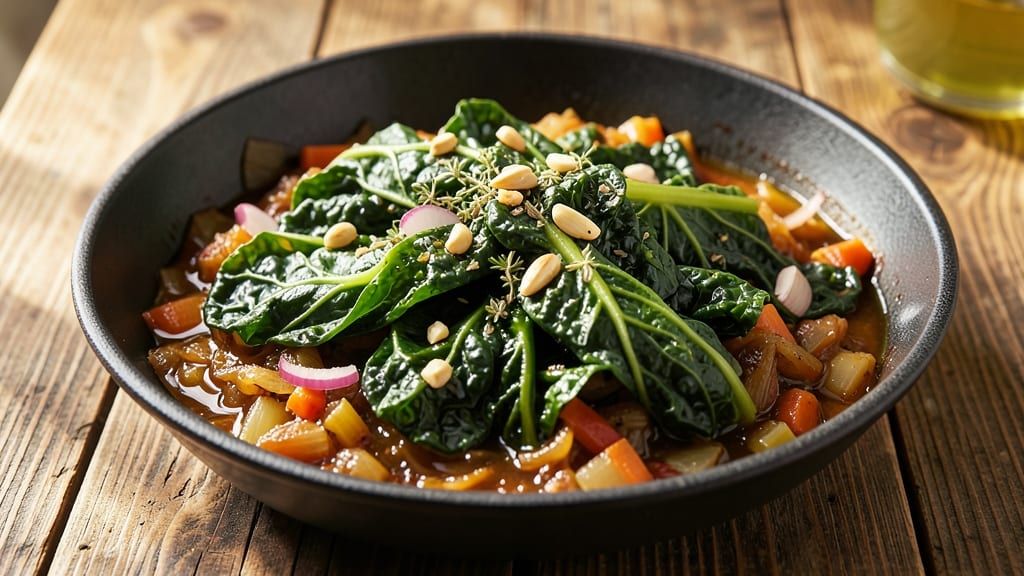
This collard greens recipe without ham hocks delivers restaurant-quality depth using a smoky vinegar braise that transforms tough stems into tender perfection. The secret lies in slow-cooking with aromatic vegetables and a tangy finish that cuts through the greens' natural bitterness while preserving their natural texture—tender stems and tender-crisp leaves.
I developed this method after years of testing vegetarian adaptations, ensuring every bite carries that satisfying smokiness without relying on meat.
What sets this recipe apart is the balance of flavors: deep, caramelized onions and garlic form the foundation, while apple cider vinegar adds bright tang that elevates the dish beyond traditional preparations.
The greens cook down into a rich, velvety consistency that's perfect as a side or even as a hearty main when paired with grains or protein. No ham hocks needed—just precise timing and the right technique to achieve that signature Southern texture.
The process is straightforward but requires patience: chopping the greens efficiently, sautéing the aromatics until deeply flavorful, and simmering until the stems soften while the leaves maintain their structure.
The vinegar braise at the end isn't just for flavor—it tenderizes the greens further while adding that signature tang that makes this dish unforgettable. This is collard greens as they should be: rich, smoky, and full of depth without any meat.
Serve alongside cornbread, roasted chicken, or even as a vegetarian main with black-eyed peas and rice. The recipe scales easily for crowds, and the flavors only improve with time—making it perfect for meal prep or holiday gatherings.
Here's how to achieve that perfect balance of smoky, savory, and tangy in every bite.
Ingredients for collard greens recipe without ham hocks
Nine essential ingredients transform tough collards into restaurant-quality smoky vinegar-braised perfection—no ham hocks needed.
| Ingredient | Amount | Notes |
|---|---|---|
| Collard Greens 🥬 | 1 ½ lb | Center ribs removed, chopped |
| Yellow Onions 🧅 | 1 whole | Yellow or red, sliced |
| Garlic Cloves 🧄 | 6 cloves | Peeled, minced for depth |
| Extra-Virgin Olive Oil 🫒 | ¼ cup | High-quality, fruity |
| Apple Cider Vinegar 🍏 | ½ cup | Braised for tangy finish |
| Vegetable Broth 💧 | 2 cups | Low-sodium preferred |
| Smoked Paprika 🌶️ | 1 tbsp | For authentic smokiness |
| Ground Black Pepper 🌶️ | 1 tsp | Freshly cracked |
| Carrots 🥕 | 2 medium | Peeled, sliced for sweetness |
| Celery Stalks 🥬 | 2 whole | Chopped, for aromatic base |
| Bay Leaves 🍃 | 2 whole | Fresh for subtle flavor |
| Kosher Salt 🧂 | 1 ½ tsp | Diamond Crystal preferred |
| Black-Eyed Peas 🌱 | 1 cup | Canned, drained for protein |
| Lemon Juice 🍋 | 1 tbsp | Brightens at the end |
The collard greens are the star—look for deep green, crisp leaves with no yellowing. Whole Foods or local farmers markets carry the best quality, but any grocery store's fresh produce section will work. The onions and carrots should be firm with no soft spots—organic varieties add extra sweetness. For the smoked paprika, Penzeys or Trader Joe's have excellent options, but any brand labeled 'smoked' will do. The black-eyed peas? Low-sodium canned saves time without sacrificing flavor—just drain and rinse them well.
No smoked paprika? Liquid smoke at half the amount works in a pinch, though it's not identical. Substitute apple cider vinegar with red wine vinegar or balsamic—both add depth but different tang levels. The vegetable broth can be swapped for mushroom broth—it's richer and pairs beautifully. For the carrots and celery, frozen chopped veggies save chopping time and work just as well. Fresh bay leaves are ideal, but dried at one-third the amount gets you close if you're in a hurry.
This dish tastes even better the next day—make extra and store for up to 5 days in the fridge. For freezing, portion into airtight containers with a splash of vinegar to preserve color and flavor. Reheat gently on the stove with a little broth to maintain that velvety texture. The greens will keep their vibrant color and rich flavor for up to 3 months frozen—perfect for holiday meal prep or busy weeknights.
Why You'll Love This Recipe
- No Ham, No Problem: I swear by this version—no fussing with ham hocks, just bright, tangy collards that still pack punch. The vinegar cuts through the greens so well, you’d never miss the smoky depth.
- One-Pot Wonder: Between us, this is my lazy-day hero. Toss everything in one pot, stir occasionally, and walk away. The onions caramelize while you’re doing other things—no babysitting required.
- Leftovers That Shine: Honestly, I make a double batch on Sundays. The flavor deepens overnight, and reheating? Just splash in a little water, warm it through. Tastes like you cooked it fresh.
- Budget-Busting Flavor: Collards and onions are dirt cheap, but this recipe feels like a fancy meal. The olive oil and garlic make it taste elevated—proof you don’t need fancy ingredients for real flavor.
Step-by-step instructions for smoky vinegar-braised collard greens
Transform tough collard greens into tender, flavor-packed perfection using this vinegar-braised technique.
Build the Aromatic Base
Heat the 0.25 cup extra-virgin olive oil in a large Dutch oven over medium heat. Add the sliced 1 whole yellow onion, 2 medium peeled carrots, and 2 whole chopped celery stalks, stirring occasionally for 8-10 minutes until the vegetables soften and begin to caramelize. This sweet, jammy base forms the flavor foundation.
Add the 6 minced garlic cloves, 1 tbsp smoked paprika, and 1 tsp ground black pepper, stirring for 30 seconds until fragrant. The paprika deepens the smokiness while the garlic infuses its pungent aroma. Don't let the garlic burn—watch for golden color rather than darkening. Here's the thing—this step makes all the difference in creating that restaurant-quality depth without ham hocks.
Deglaze and Develop the Vinegar-Braised Sauce
Pour in the 0.5 cup apple cider vinegar and scrape up any browned bits from the bottom of the pot with a wooden spoon. This deglazing captures all those concentrated flavors that would otherwise burn. Let the vinegar simmer for 3-4 minutes until it reduces by about half and becomes syrupy.
Add the 2 cups vegetable broth and 1.5 tsp kosher salt, bringing to a gentle boil. Reduce heat to low and let it simmer for 10 minutes to let the flavors meld. The vinegar's tang will mellow while building complexity. This is where the magic happens—the acidity tenderizes the greens while creating a rich, balanced sauce.
Braise the Collard Greens
Add the 1.5 lb chopped collard greens (center ribs removed) and 1 cup drained black-eyed peas to the pot. Stir gently to distribute the greens evenly. Add the 2 whole bay leaves and bring everything to a gentle simmer. Cover with a tight-fitting lid and cook for 45-50 minutes until the greens are fork-tender.
Check the greens at the 30-minute mark—they should be softening but not completely mushy. If the liquid reduces too much before they're tender, add ¼ cup water to maintain moisture. The greens will continue cooking off the heat, so aim for slightly underdone at this stage. Real talk: this is where patience pays off—rushing leads to tough, chewy greens.
Finish with Bright Acid and Serve
Remove the pot from heat and stir in the 1 tbsp lemon juice. This final acidity brightens the dish and cuts through the richness of the braised greens. Taste and adjust seasoning with additional salt if needed—you want the flavors to be balanced but still vibrant.
Let the collard greens rest for 10 minutes before serving. This resting period allows the flavors to fully meld and the greens to absorb the delicious braising liquid. Serve warm with cornbread or crusty bread to soak up every last bit of that smoky, vinegar-infused goodness. The result is a dish that's rich, tender, and packed with depth—without any ham hocks in sight.
Pro Tips For Making Collard Greens Recipe Without Ham Hocks
- CHOP ONIONS THIN: If your onions taste like they’re fighting for flavor, slice them paper-thin—almost translucent—so they dissolve into sweetness instead of sitting as chewy chunks. I used to cut them in half-moons, and they’d just mock me with their stubborn texture.
- SALT THE GREENS FIRST: Toss the chopped collards with a generous pinch of salt (about 1 teaspoon per pound) and let them wilt for 10 minutes before cooking. This draws out bitterness and softens the leaves—no more chewing through tough stems or tasting like you’re eating a salad of cardboard.
- SAUTÉ GARLIC LOW: Once the onions are golden, pull the pan off the heat before adding raw garlic—just toss it in. Cooking garlic over high heat turns it bitter fast, and you’ll end up with a dish that smells like regret. Let the residual heat toast it gently for 30 seconds max.
- ACID IN STAGES: Add half the apple cider vinegar at the start (with the onions) to brighten them, then save the rest to splash in at the very end. This keeps the greens from getting sour too soon—like a well-timed joke instead of a punchline.
Regional styles of this recipe
Southern Lowcountry Style
The Lowcountry of South Carolina and Georgia takes collard greens to another level by incorporating okra and tomatoes into the braise. I like to add 1 cup diced okra and 1 cup diced Roma tomatoes with the onions and carrots for a slightly slimy, vegetable-forward texture that’s uniquely Southern.
The tomatoes add natural sweetness that balances the vinegar’s tang, while the okra thickens the sauce slightly. Serve with she-crab soup or shrimp and grits for a true Lowcountry feast. 🍅
Texas-Style Smoky Version
In Texas, collard greens often get a smoky chipotle kick that pairs perfectly with barbecue. Swap the smoked paprika for 1-2 chipotle peppers in adobo sauce—blended with 1 tbsp of the sauce—for a slow, smoky heat.
Add 1 tbsp of liquid smoke—just a splash—to deepen the smokiness further. This version works beautifully alongside brisket or smoked sausage, though it’s still vegetarian-friendly. The chipotle’s smoldering heat lingers beautifully in the vinegar braise. 🌶️
Carolina Gold Tradition
North Carolina’s version often includes pepper vinegar—a local specialty made from hot peppers and apple cider vinegar. Substitute the regular apple cider vinegar with ½ cup pepper vinegar—it adds a subtle, fiery backbone that’s characteristic of Carolina cooking.
I also like to stir in 1 tbsp of hot sauce—like Crystal or Tabasco—at the end for an extra kick. This style pairs wonderfully with pulled pork or fried chicken, but it’s just as satisfying on its own.
The pepper vinegar’s heat cuts through the richness of the greens beautifully. 🔥
Creole-Inspired New Orleans
In New Orleans, collard greens often get a Cajun twist with the holy trinity of onions, bell peppers, and celery. Add 1 diced green bell pepper—along with the celery and onions—for a touch of sweetness and crunch.
Boost the spices with ½ tsp cayenne pepper and 1 tsp dried thyme, then finish with a splash of hot sauce before serving. This version is perfect for Mardi Gras gatherings or as a side for gumbo or jambalaya.
The bell pepper adds a fresh, vibrant contrast to the deep, smoky flavors. 🎭
Appalachian Mountain Adaptation
The Appalachian Mountains bring a rustic, hearty approach to collard greens, often including potatoes or cornbread in the same pot. Add 2 diced potatoes—peeled and cubed—along with the collards for a one-pot meal that’s filling and comforting.
The potatoes absorb the smoky, vinegary flavors beautifully, turning this into a complete dish rather than just a side. Serve with apple butter or sautéed apples for a sweet-savory contrast that’s pure Appalachian comfort. 🏔️
Modern Vegetarian Twist
For a contemporary take, I like to add mushrooms and nutritional yeast for a umami-rich depth. Sauté 8 oz sliced cremini mushrooms—along with the onions and carrots—until deeply browned, then proceed with the recipe as written.
Stir in 1 tbsp nutritional yeast—at the end for a cheesy, savory note that mimics the depth of ham hocks. This version is perfect for vegan potlucks or as a side for grilled tofu or tempeh. The mushrooms add a meaty texture that’s surprisingly satisfying. 🍄
Nutrition facts
Frequently asked questions
Can I use frozen collard greens instead of fresh?
Yes, but with a few adjustments! Thaw frozen collards first, then drain well and pat dry thoroughly to prevent excess moisture in your dish. Add them to the pot slightly earlier (around 30 minutes instead of 45 minutes) since they may cook faster. Fresh greens always yield better texture, but frozen works in a pinch.
How do I prevent the greens from turning mushy?
Keep the heat low and steady throughout cooking, and never skip the 10-minute rest before serving. The greens continue cooking off the heat, so aim for slightly underdone at 45 minutes. Stir gently only once or twice during cooking to avoid breaking the leaves. The vinegar braise helps maintain structure while tenderizing.
What's the best way to store leftovers?
Store in an airtight container with a splash of vinegar to preserve color and flavor. Leftovers keep well in the fridge for 5 days or frozen for 3 months. Reheat gently on the stove with a little broth to maintain that velvety texture. The flavors actually improve after resting overnight!
Can I make this recipe in a slow cooker?
Sauté the onions, carrots, celery, and garlic first, then transfer everything to your slow cooker. Add the vinegar, broth, and spices, then cook on low for 6-7 hours or high for 3-4 hours. The greens will absorb all that smoky, tangy flavor beautifully. Just add the black-eyed peas and bay leaves at the end for 30 minutes of cooking time.
Why does my vinegar-braised version taste different?
The apple cider vinegar's acidity tenderizes the greens while adding bright tang that balances the smokiness. If your version tastes too sharp, reduce the vinegar by 2 tablespoons next time. For deeper flavor, let the vinegar simmer longer (up to 5 minutes) to mellow its acidity before adding broth. The key is patience—this braise builds complexity over time!