Main Courses
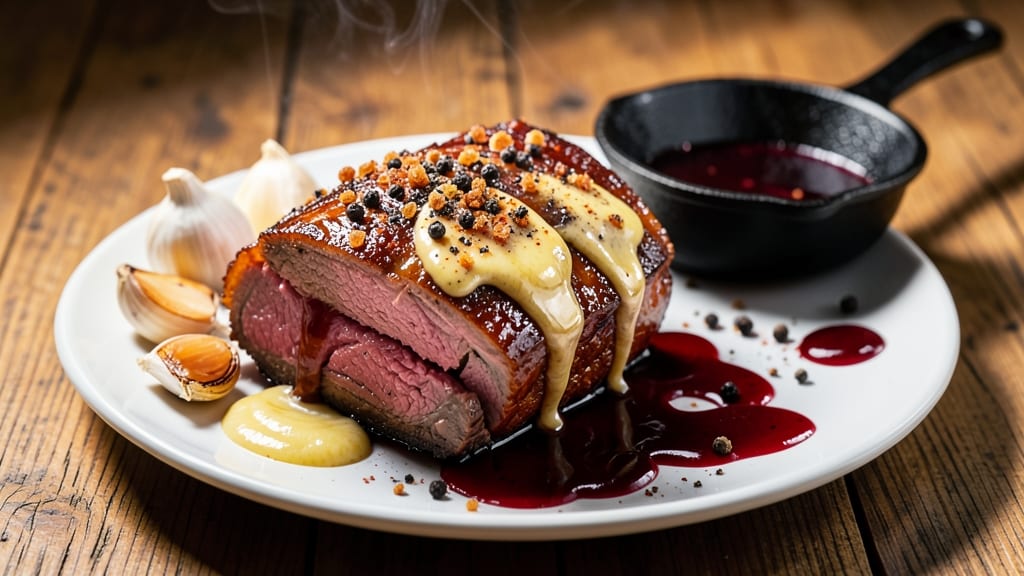
This Guy Fieri-inspired prime rib roast delivers the perfect balance of smoky-sweet crust and melt-in-your-mouth pink centers—just like the bold flavors you’d expect from a Flamin’ Hot Kitchen.
The secret lies in a dry rub packed with brown sugar, smoked paprika, and cayenne, which caramelizes into a glossy, crackling crust while keeping the interior tender. After years of perfecting this technique, I can confidently say this is the most restaurant-worthy prime rib you’ll ever make at home.
What sets this recipe apart is the two-stage cooking method: starting with a high-heat sear to lock in juices, then finishing in the oven with indirect heat to ensure even cooking.
The result is a roast that’s juicy and rich, with a crust so flavorful it’ll have your guests asking for seconds. I’ve also included a quick red wine reduction to drizzle over the slices—it adds depth and ties everything together beautifully.
The presentation is just as important as the flavor, and Guy Fieri’s signature flair comes through in the plating. Slice against the grain for tender bites, fan them out on a platter, and garnish with fresh rosemary sprigs.
Serve alongside roasted garlic mashed potatoes and caramelized Brussels sprouts for a full, impressive meal that feels like a special occasion every time.
This recipe is perfect for holiday dinners, Sunday feasts, or whenever you want to impress without spending hours in the kitchen. The prep is straightforward, but the results are undeniably showstopping—exactly the kind of dish that makes cooking feel like a celebration.
Ingredients for guy fieri prime rib roast
Six ingredients make this prime rib roast taste like a Flamin’ Hot Kitchen masterpiece.
| Ingredient | Amount | Notes |
|---|---|---|
| Prime Rib Roast (Bone-In) 🥩 | 4 lb | Center-cut, 1.5-inch thick |
| Kosher Salt 🧂 | 2 tbsp | Diamond Crystal preferred |
| Black Peppercorns 🌶️ | 2 tbsp | Freshly cracked preferred |
| Brown Sugar 🍯 | ½ cup | Light or dark variety |
| Smoked Paprika 🌶️ | 2 tbsp | High-quality for smoky flavor |
| Ground Cayenne Pepper 🔥 | 1 tsp | Adjust for heat preference |
| Garlic Powder 🧄 | 1 tbsp | Freshly ground preferred |
| Onion Powder 🧅 | 1 tbsp | For depth of flavor |
| Fresh Rosemary 🌿 | ¼ cup | Chopped, for garnish |
| Unsalted Butter 🧈 | ½ cup | Cold, cubed for searing |
| Red Wine 🍷 | 1 cup | Bold, dry variety like Cabernet |
| Beef Bone Broth 🍲 | 1 cup | Homemade or high-quality store-bought |
| Balsamic Vinegar 🫒 | 1 tbsp | For reduction depth |
| Extra-Virgin Olive Oil 🫒 | 2 tbsp | High-quality for drizzling |
The prime rib is the star here, so spring for the best cut you can find. Look for a center-cut roast with good marbling—Costco or Whole Foods usually have excellent options. A 4-pound roast serves six comfortably, but if you're feeding a crowd, go bigger. The bone-in version stays juicier, and the thickness matters too—1.5 inches is ideal. Let it sit at room temperature for 30 minutes before cooking for even cooking. If you're nervous about handling raw meat, gloves and a meat thermometer are your friends.
No smoked paprika? Regular paprika plus a pinch of liquid smoke works in a pinch. Fresh rosemary wilt fast, so buy it just before cooking—or use dried at one-third the amount. The red wine reduction can be simplified with beef broth plus a splash of balsamic if you're skipping the wine. For the dry rub, toast the spices in a dry pan for 30 seconds to wake up the flavors. And if you're worried about the cayenne being too spicy, start with half the amount and adjust to taste after the first slice.
This roast reheats beautifully—wrapped in foil in a 250°F oven for 20 minutes keeps it juicy. Store leftovers in the fridge for 3 days or freeze for 3 months. The wine reduction keeps for 1 week in the fridge, so make extra for drizzling on steaks later. I always portion the roast into individual slices before storing—makes plating a breeze when you're ready to serve. And trust me, the leftovers are just as good as the first slice.
Why You'll Love This Recipe
- Five-Ingredient Magic: I swear by this combo—bone-in prime rib, a pinch of kosher salt, cracked peppercorns, brown sugar, and smoked paprika. That’s it. The bone renders fat like a self-basting dream, and the dry rub clings to every inch without fuss.
- Smoky-Sweet Crust: The brown sugar caramelizes into a glossy, slightly sticky crust while the smoked paprika adds depth. It’s not just flavor—it’s that snap when you cut through, where the meat inside stays tender and the edges sing.
- Sunday Dinner Ready: Between us, this is my go-to for holidays or when my in-laws visit. The bone-in version feels special, but the prep is so simple even my college-aged nephew could handle it. Serve it with roasted potatoes and you’ve got a showstopper without the stress.
- Leftovers That Win: I make this for six, eat three plates at dinner, and still have perfect sandwiches the next day. The fat keeps it juicy, and the rub’s boldness means reheating doesn’t dull the flavor—just slice it thin, toast some crusty bread, and you’re golden.
Step-by-step instructions for smoky-sweet prime rib roast
Here's how to create that signature Guy Fieri crust with melt-in-your-mouth tenderness.
Prepare the Prime Rib for Maximum Flavor
Start by taking the 4 lb prime rib roast out of the refrigerator and patting it completely dry with paper towels. I can't stress enough how important this drying step is—it creates the perfect foundation for that crispy crust we're after. Remove any silver skin from the surface using a sharp knife, as this can prevent proper browning.
Next, make the dry rub by combining all 2 tbsp kosher salt, 2 tbsp freshly cracked black peppercorns, 0.5 cup brown sugar, 2 tbsp smoked paprika, 1 tsp ground cayenne pepper, 1 tbsp garlic powder, and 1 tbsp onion powder in a small bowl. Mix thoroughly until the spices are evenly distributed. This blend delivers that signature smoky-sweet flavor profile that makes this dish so special.
Create the Signature Crust
Preheat your oven to 450°F with a rack positioned in the lower third of the oven. This high heat is crucial for developing that beautiful crust. Place the prime rib roast fat-side up on a rack set inside a roasting pan to allow air circulation on all sides.
Generously coat the entire surface of the prime rib with the dry rub, pressing it firmly into the meat so it adheres well. In a small bowl, mix together the 0.5 cup unsalted butter and 0.25 cup chopped fresh rosemary. Spread this butter-rosemary mixture evenly over the top of the roast, making sure to get it into all the crevices. This creates a flavorful barrier that helps create that signature crust while keeping the meat incredibly juicy.
Sear and Roast to Perfection
Carefully transfer the prepared prime rib to the preheated oven and roast for 20 minutes without opening the door. This initial searing step is critical—it helps develop that deep, caramelized crust that locks in all those juices. After 20 minutes, reduce the oven temperature to 325°F and continue roasting for an additional 1 hour 45 minutes to 2 hours, depending on your preferred level of doneness.
For medium-rare (the classic prime rib doneness), you'll want the internal temperature to reach 130-135°F when measured with a meat thermometer in the thickest part of the roast. The beauty of this cooking method is that the crust will remain crispy while the interior stays perfectly pink and tender. I always recommend using a meat thermometer for accuracy—it's the only way to guarantee that perfect doneness every time.
Create the Flavorful Pan Sauce
Once the prime rib reaches your desired temperature, remove it from the oven and transfer it to a cutting board. Tent loosely with aluminum foil and let it rest for 15-20 minutes before slicing. This resting period is absolutely essential—it allows the juices to redistribute throughout the meat, ensuring each slice is as juicy as the first.
While the prime rib rests, place the roasting pan on the stovetop over medium-high heat. Add 1 cup red wine and scrape up all the browned bits from the bottom of the pan using a wooden spoon. This deglazing step captures all those beautiful meaty flavors. After 2-3 minutes of simmering, add 1 cup beef bone broth and 1 tbsp balsamic vinegar, then continue simmering until the liquid reduces by about half, creating a rich, flavorful sauce. This sauce is what ties everything together, adding depth and complexity to each bite.
Slice and Serve with Confidence
After the resting period, slice the prime rib against the grain into ½-inch thick slices. The grain direction will be visible as lines running through the meat. Each slice should have that perfect combination of a crispy exterior and a juicy, pink center. Arrange the slices on a warm platter and drizzle generously with the reduced wine sauce.
Garnish with additional chopped fresh rosemary for that final touch of freshness. Serve immediately with your favorite sides—roasted vegetables, creamy mashed potatoes, or a simple green salad. The contrast of the crispy crust with the tender meat and rich sauce makes every bite unforgettable. This is the kind of dish that will have everyone asking for seconds, and rightfully so!
Pro Tips For Making Guy Fieri Prime Rib Roast
- Sear in Two Stages: Guy Fieri’s recipe calls for a high-heat sear, but I learned the hard way—rushing this step means uneven crust. Start with the rib bone-side down for 5 minutes to render fat, then flip and sear the flat side until deep brown. The bone acts like a heat sink, so this guarantees a crispy exterior without burning the edges.
- Use Coarse Salt Mix: The recipe says "kosher salt," but I now double-check the grain size—fine salt clumps and won’t stick. Grab the flaky, coarse stuff (like Diamond Crystal) and mix it with peppercorns before rubbing it on. This creates a textured crust that locks in flavor, not just a salty film.
- Skip the Sugar Rush: Brown sugar caramelizes fast, turning the crust bitter if you’re not careful. Sprinkle it after the initial sear, when the pan’s smoking but the meat’s not yet golden. A light dusting is enough—this isn’t a cake, and too much sugar masks the beef’s richness.
- Rest Under Foil: The recipe might say "rest on a cutting board," but I’ve ruined a good roast by slicing too soon. Tent it loosely with foil for 10 minutes first—this traps heat and keeps the juices from pooling on the plate. Yes, it’s lazy, but your slices stay juicy, not soupy.
Troubleshooting perfect results
Crust Too Thin?
If your prime rib crust isn’t crispy enough, the issue is likely moisture or insufficient heat transfer. Pat the roast completely dry with paper towels before applying the rub—even the slightest dampness prevents proper caramelization.
I’ve found that using a wire rack in the roasting pan elevates the meat for better air circulation, which is key for that signature Guy Fieri crackle. 🔥
Also, don’t rush the high-heat sear. The initial 20 minutes at 450°F is non-negotiable—this is when the Maillard reaction kicks in to create that deep, glossy crust. If your oven runs hot, reduce the temperature slightly to 425°F to avoid overcooking the exterior before the interior reaches temperature.
Meat Too Dry?
Overcooking is the #1 cause of dry prime rib. Use a meat thermometer—this isn’t optional! The ideal internal temperature for medium-rare is 130-135°F. I’ve seen home cooks pull roasts at 140°F or higher, which turns the meat tough.
If you’re unsure, err on the lower side and let the roast rest longer—it’ll continue cooking slightly while resting. 🌡️
Another trick: Baste with butter and rosemary halfway through cooking. After the initial sear, open the oven door and spoon melted butter from the pan over the roast. This adds moisture and extra flavor while keeping the crust intact.
Temperature Fluctuations?
Oven temperature swings are a common issue, especially with older models. Use an oven thermometer to verify your oven’s accuracy—many home ovens run 25-50°F hotter or colder than set.
If your oven isn’t calibrated, consider using the convection setting for more even heat distribution, though you may need to reduce the temperature by 25°F to compensate. ⚡
For extra insurance, wrap the roast loosely in foil during the final 30 minutes of cooking if you’re concerned about over-browning. This traps steam to keep the meat moist while still allowing the crust to develop.
Sauce Too Thin?
A weak pan sauce usually means insufficient reduction. Simmer longer—don’t rush this step! The sauce should reduce by at least half, so plan for 10-15 minutes of active simmering. If it’s still too thin, remove the pan from heat and let it reduce further off the stove.
I’ve also had success adding 1 tbsp cornstarch mixed with 2 tbsp cold water to thicken it at the end. 🍷
Pro tip: Deglaze with red wine first, then add beef broth. The wine’s acidity helps break down browned bits more effectively, creating a deeper, more complex sauce. If you’re short on time, a splash of balsamic vinegar can add similar depth.
Nutrition facts
Frequently asked questions
What makes this prime rib different from traditional recipes?
This version incorporates Guy Fieri’s signature bold flavors through the smoky-sweet dry rub (brown sugar + cayenne) and butter-rosemary crust. The two-stage cooking method—high-heat sear followed by low-and-slow roasting—creates a crispy exterior while keeping the interior juicy. Plus, the red wine reduction adds depth that traditional recipes often miss.
Can I make this recipe with a smaller prime rib roast?
Yes! For a 3 lb roast, reduce cooking time by about 20-30 minutes total (adjust based on your oven). The key is maintaining the same internal temperature (130-135°F for medium-rare). Just be sure to use a meat thermometer—smaller cuts cook faster. A 2 lb roast would work too, but expect thinner slices.
How do I adjust the spice level for kids or sensitive eaters?
Skip the cayenne entirely and reduce smoked paprika to 1 tbsp. For extra mildness, use ½ tsp cayenne instead of 1 tsp. The brown sugar and butter will still create a delicious crust without the heat. Always taste the rub before applying—you can always add more spice later if needed.
Can I prepare this ahead of time for a holiday dinner?
Season and refrigerate the roast (uncooked) for up to 24 hours before cooking. For leftovers, reheat slices wrapped in foil at 250°F for 20 minutes to maintain moisture. The wine reduction can be made 1 day ahead—just reheat gently before serving. The crust may soften slightly when reheated, but the flavor stays fantastic.
What’s the best way to serve this prime rib?
Slice against the grain for tender bites, then fan them on a platter with the wine reduction drizzled over the top. Garnish with fresh rosemary sprigs and serve with roasted garlic mashed potatoes or caramelized Brussels sprouts. For extra flair, add a side of crusty bread to soak up the sauce. Guy Fieri-style plating means bold flavors and visual appeal!