
Side Dishes
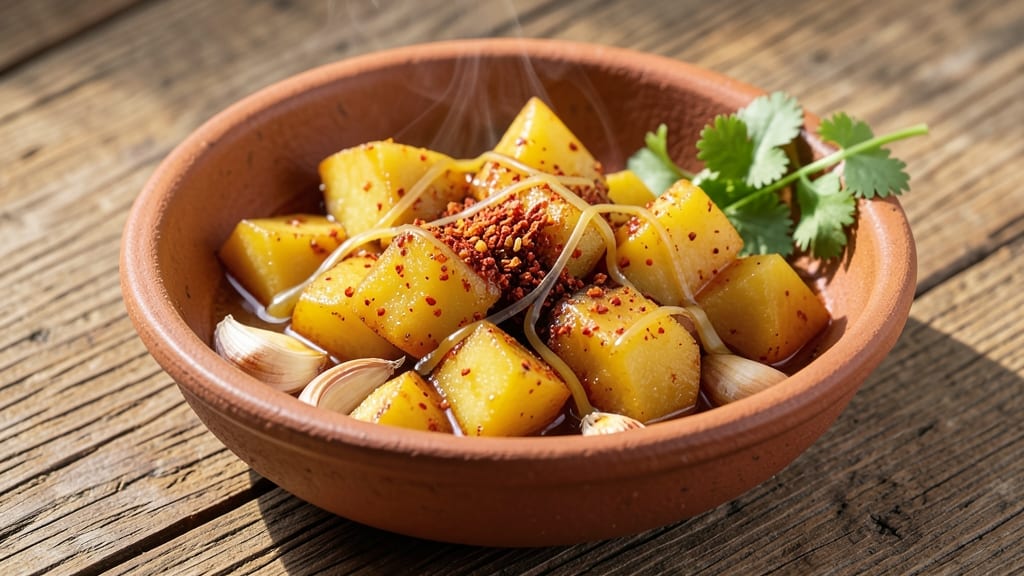
This Nepali potato pickle recipe delivers the bold, tangy crunch that elevates every Nepali meal from ordinary to extraordinary. The fermentation process transforms humble potatoes into a complex, spiced condiment with layers of mustard oil, turmeric, and chili heat that lingers long after the first bite.
I first discovered this recipe during a visit to Kathmandu, where it was served alongside steaming dal and warm roti—an experience that changed how I approach pickles forever.
The secret lies in the balance of fermentation and spices. Mustard oil adds its signature sharpness, while turmeric and garlic create a golden, aromatic base. Unlike quick pickles, this recipe develops deeper flavor over time, with the potatoes becoming tender yet retaining their satisfying bite.
The process is straightforward but requires patience—just 10 minutes of prep followed by 3-5 days of fermentation at room temperature.
What you'll end up with is a vibrant yellow-orange pickle that's both tangy and subtly sweet, with a texture that's crisp at the edges and tender inside. The aroma alone makes any Nepali thali feel complete, while the bold flavors cut through rich curries and fried dishes.
Perfect for serving with dal, roti, or as a standalone snack, this pickle keeps well for months when stored properly.
Whether you're recreating an authentic Nepali meal or simply craving a bold, fermented side dish, this recipe delivers restaurant-quality results at home. The technique is simple but the flavor development transforms it into something truly special—once you try it, you'll never go back to store-bought pickles again.
Ingredients for nepali potato pickle
Fermented potatoes, aromatic spices, and bold mustard oil—this is your Nepali pickle essentials list.
| Ingredient | Amount | Notes |
|---|---|---|
| Yellow Potatoes 🥔 | 2 lbs | Waxy variety preferred for texture |
| Mustard Oil 🫒 | ½ cup | Cold-pressed, unrefined preferred |
| Turmeric Powder 🌿 | 2 tbsp | Freshly ground for vibrant color |
| Red Chili Powder 🌶️ | 2 tbsp | Adjust for heat preference |
| Garlic Cloves 🧄 | 6 cloves | Peeled, crushed for infusion |
| Asafoetida Powder 🌿 | ½ tsp | Optional but traditional |
| Cumin Seeds 🌿 | 1 tbsp | Toasted for deeper flavor |
| Fenugreek Leaves 🌿 | ¼ cup | Fresh, chopped finely |
| Salt 🧂 | 2 tbsp | Non-iodized preferred |
| Lemon Juice 🍋 | ¼ cup | Freshly squeezed |
| Water 💧 | 1 ½ cups | Filtered for clarity |
| Sugar 🍯 | 1 tbsp | Balances tanginess |
The potatoes are the foundation—waxy varieties like Yukon Gold hold up best during fermentation. Whole Foods or local Nepali markets often carry the ideal types, but any yellow-fleshed potato works in a pinch. Mustard oil is non-negotiable here; unrefined, cold-pressed oil from Indian specialty stores delivers that signature sharpness. Look for brands like Kashmir or Patanjali for authentic flavor. The turmeric should be vibrant orange—ground fresh from roots at an Indian grocery ensures maximum potency. Fenugreek leaves add complexity, but if unavailable, dried fenugreek seeds at half the amount work too.
No mustard oil? Sesame oil with a splash of vinegar mimics some of the sharpness, though it won't be identical. Short on fenugreek? Extra cumin seeds or a pinch of asafoetida bridge the flavor gap. The chili powder can be swapped for fresh red chili paste or cayenne, but adjust carefully—heat builds during fermentation. For the garlic, roasted cloves add a smoky depth, though raw works fine. The sugar and lemon juice balance the tanginess; honey can replace sugar if preferred, but it may ferment differently.
This pickle develops best at 70-75°F—a warm kitchen works perfectly. Store in a sterilized glass jar with a tight seal for 3-5 days at room temperature, then refrigerate. The flavor peaks after 2 weeks and lasts 6 months in the fridge. Portion into smaller containers for easy serving—perfect alongside dal, roti, or as a snack with beer. The aroma alone transforms any Nepali meal.
Why You'll Love This Recipe
- No-Fuss Prep: I peel and slice potatoes in 10 minutes—no fancy techniques, just a sharp knife and a cutting board. The real magic? They barely need soaking; a quick rinse and they’re ready for the spiced oil bath.
- Mustard Oil Magic: That first hit of mustard oil is unmatched—sharp, nutty, and just a little bold. When it coats the potatoes with garlic and chili, every bite tastes like a warm hug from your favorite Nepali kitchen.
- Party-Ready Side: Slather it on roti, mix it into dal, or serve it straight with steamed rice. Honestly, I’ve even used it as a dip for veggie platters at gatherings—people clear their plates faster than you can say "more?"
- Shelf-Stable Treasure: Make a big batch—it keeps for weeks in the fridge. I’ll be real: my lazy Sundays involve pulling out this jar and tossing it with eggs or dal. Budget-friendly? Absolutely. Never-boring? Even more so.
Step-by-step instructions for Nepali potato pickle
A traditional Nepali potato pickle delivers complex flavors through fermentation and spice infusion. Here's how to create a tangy, aromatic pickle that balances heat and acidity perfectly.
Prepare and Parboil the Potatoes
Peel the 2 lbs of yellow potatoes and cut them into even ½-inch dice. This size ensures consistent cooking and fermentation. Place them in a pot of cold 1.5 cups water and bring to a boil over medium-high heat. Once boiling, reduce to medium heat and simmer for 10-12 minutes until the potatoes are tender but not mushy—they should hold their shape when pierced with a fork.
Drain the potatoes immediately and rinse them under cold water to stop the cooking process. This parboiling step is crucial—it softens the potatoes enough for fermentation while maintaining their structure. Pat them completely dry with a clean kitchen towel to prevent excess moisture from diluting your spices later.
Toast Spices and Infuse the Oil
In a small dry skillet over low heat, toast the 1 tbsp cumin seeds for 2-3 minutes until they release their aroma and turn a deeper golden color. Immediately transfer them to a bowl to cool. In the same skillet, add the 6 cloves garlic cloves and toast for 30 seconds until fragrant—don't let them brown.
Pour the 0.5 cup mustard oil into a saucepan and heat over low heat. Add the toasted cumin seeds and garlic cloves, then stir in the 0.5 tsp asafoetida powder and 2 tbsp turmeric powder. Cook for 3-4 minutes until the spices release their oils and the mixture smells deeply aromatic. Remove from heat and let cool slightly—this infused oil will carry the pickle's signature flavor.
Mix the Spice Paste and Combine Ingredients
In a large mixing bowl, combine the drained potatoes with the 2 tbsp red chili powder, 2 tbsp salt, 0.25 cup finely chopped fenugreek leaves, and 1 tbsp sugar. Mix thoroughly to coat each potato piece evenly. The sugar may seem unusual, but it balances the acidity during fermentation.
In a separate small bowl, whisk together the 0.25 cup lemon juice and 1.5 cups water. Slowly pour this liquid mixture into the potato-spice blend while stirring continuously. Add the cooled spiced oil in a thin stream, mixing well after each addition. The final texture should be thick but pourable—like a wet paste that clings to the potatoes.
Ferment for 3-5 Days
Transfer the potato mixture to a clean glass jar, pressing down gently to remove air bubbles. Cover the jar loosely with a clean cloth or paper towel secured with a rubber band—this allows airflow for fermentation while keeping contaminants out. Store in a warm, dark place (like a pantry) for 3-5 days, checking daily.
You'll notice the mixture bubbling within 24 hours as fermentation begins. After 3 days, taste a small portion—the pickle should be tangy with developing spice notes. If it needs more tang, add 1 tablespoon lemon juice. For extra heat, sprinkle in 1 teaspoon red chili powder. Continue fermenting until the flavors reach your preferred balance, typically 4-5 days total.
Store and Serve
Once the pickle reaches your desired flavor profile, transfer it to a sterilized airtight jar. It will keep in the refrigerator for up to 3 months, developing deeper complexity over time. The color should be vibrant yellow from the turmeric, with red flecks from the chili powder, and the aroma should be pungent with notes of garlic, fenugreek, and fermented tang.
Serve the pickle as a condiment with steamed rice, dal, or roti. Start with 1-2 tablespoons per serving—its bold flavors are an acquired taste. For best results, let the pickle sit at room temperature for 10 minutes before serving to enhance its aromatic qualities. The texture should be firm yet slightly soft from fermentation, with a sauce that clings to each bite.
Pro Tips For Making Nepali Potato Pickle
- Boil Until Fork-Tender: I learned this the hard way—undercooked potatoes turn to mush in the pickle. Boil your yellow potatoes until they’re just fork-tender, not soft. Test one: if it collapses easily, keep boiling 2-3 more minutes. They’ll hold shape in the oil and stay crispy at the edges.
- Skin On, But Scrubbed: Skip peeling unless you’re desperate for uniformity. The skins add texture and flavor, but scrub them well first—dirt hides in those crevices and ruins the pickle’s shelf life. A damp brush and a quick rinse under cold water does the trick.
- Bloom the Spices: Heat your mustard oil low and slow (140°F/60°C) until it shimmers but doesn’t smoke. Add turmeric and chili powder first—let them bloom for 30 seconds. This deepens their flavor and cuts the raw, bitter edge. Trust me, your taste buds will notice.
- Crush Garlic Coarsely: Minced garlic burns in hot oil and turns bitter. Smash your cloves with the flat side of your knife first, then chop into uneven pieces. They’ll infuse flavor without turning to paste. (Yes, even if you’re impatient like me.)
Regional styles of this nepali potato pickle
Kathmandu Valley Style
In the Kathmandu Valley, this pickle is known as alo ko achar and is a staple in Newari cuisine.
The version I learned from a local family there uses extra fenugreek leaves (up to 0.5 cup) for a deeper umami profile, along with 1 tsp black salt (kala namak) for a subtle sulfurous note.
They ferment it for 5-7 days in clay pots, which adds an earthy mineral quality. The mustard oil is often replaced with mustard oil blended with sesame oil (50/50 ratio) for a smoother texture. 🌿
Terai Region Twist
The Terai plains produce a spicier, oilier version of this pickle, heavily influenced by Indian flavors. Here, 1 tbsp ginger-garlic paste replaces whole garlic cloves, and 1 tsp coriander seeds are toasted with the cumin.
The chili heat is cranked up with 1 tbsp Kashmiri red chili powder (for color) plus 1 tsp cayenne pepper. This version is often served with dal bhat (lentil-rice meals) and pairs especially well with tarkari (mixed vegetable curries). 🌶️
High-Altitude Adaptation
For regions above 5,000 feet (like Pokhara), the fermentation process slows due to cooler air.
Locals compensate by: - Using pre-fermented potato cubes (parboiled and left to sit for 12 hours before spicing) - Adding 1 tsp citric acid to the brine to accelerate tang development - Reducing fermentation time to 2-3 days at room temperature, then finishing in the fridge - The final product has a lighter texture but more pronounced garlic and mustard notes. ❄️
Modern Nepali Fusion
Urban Nepali chefs are putting creative spins on this classic. One popular variation replaces mustard oil with avocado oil, then finishes with smoked paprika for a modern smoky depth. Another trendy version incorporates pickled onions and radishes (chopped and mixed in during the final 24 hours of fermentation).
For a sweet-heat balance, some add 1 tbsp honey during the last day of fermentation. These versions work beautifully as appetizers with craft beer or as toppings for Nepali-style pizzas. 🍺
Dhaka-Inspired Version
While not Nepali, the neighboring Bangladeshi style offers fascinating parallels. Their version uses more turmeric (3 tbsp) for an intense golden color and includes 1 tsp black pepper for warmth. The key difference?
They parboil the potatoes twice—first for 8 minutes, then cool completely, then boil again for 5 minutes before draining. This creates a firmer texture that holds up better in curries. The spices are also toasted with 1 tsp fennel seeds for a licorice note. 🌟
Nutrition facts
Frequently asked questions
Can I use regular potatoes instead of yellow potatoes?
You can try, but waxy yellow potatoes (like Yukon Gold) are ideal—they hold their shape better during fermentation and have a creamier texture. Regular russet potatoes will work in a pinch, but they may turn mushy faster. If using russets, reduce the parboiling time to 8-10 minutes to maintain structure.
What if I don't have mustard oil?
Mustard oil is traditional, but you can substitute with sesame oil or avocado oil for a milder flavor. For authenticity, blend half mustard oil with half sesame oil. Add 1 tsp vinegar to mimic the sharpness, though the final taste won't be identical. The key is balancing the oil's sharpness with the tangy fermentation.
How do I know when the pickle is ready?
Taste it after 3 days—it should be tangy with developing spice notes. The color will shift to vibrant yellow-orange, and you'll smell a pungent garlic-fenugreek aroma. If it's too mild, ferment 1-2 more days. Over-fermented pickle will be overly sour and soft—stop when flavors peak, usually 4-5 days total.
Can I make this pickle without fenugreek leaves?
Yes! If fenugreek leaves are unavailable, use ½ tsp dried fenugreek seeds (toasted and ground) or extra cumin seeds (1.5 tbsp). For umami depth, add 1 tsp soy sauce or ½ tsp asafoetida powder. The flavor won't be identical, but it will still taste complex. Fenugreek leaves add a unique bitterness that's hard to replicate.
Why did my pickle turn gray or moldy?
Gray or moldy spots mean contamination—likely from improper storage or excess moisture. Always use a sterilized jar and cover loosely with a clean cloth (not plastic wrap). If mold appears, discard the batch. To prevent this, ensure potatoes are fully dry before mixing and store in a warm (70-75°F), dark place for fermentation.