
Sauces & Condiments
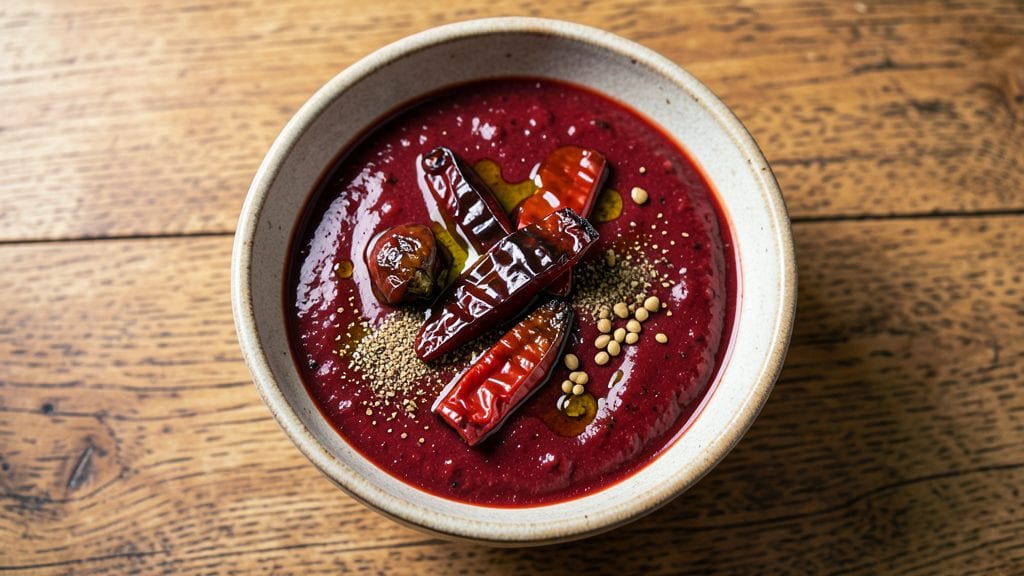
This red pepper chutney recipe transforms simple pantry staples into a bold, spicy-sweet condiment that elevates every dish it touches. The perfect balance of roasted red peppers, aromatic spices, and tangy vinegar creates a versatile sauce that works as a marinade, sandwich spread, or cheese dip.
I developed this recipe after years of testing chutney variations, and it consistently delivers restaurant-quality depth with minimal effort.
The beauty of this chutney lies in its simplicity—just six core ingredients come together through a straightforward process of roasting, blending, and simmering.
Roasting the red peppers deepens their natural sweetness while building smoky complexity, and the spices (cumin, coriander, and mustard seeds) add layers of warmth that linger on the palate. Unlike store-bought versions, this recipe avoids artificial preservatives, making it fresher and more flavorful.
What you'll end up with is a vibrant, slightly thick chutney with a perfect harmony of heat and sweetness—ideal for spreading on sandwiches, drizzling over grilled meats, or pairing with sharp cheeses like goat or blue cheese. The texture is smooth yet clingy, ensuring every bite delivers rich, aromatic flavor.
This chutney also stores beautifully in the refrigerator for up to two weeks, so you can make a batch and use it throughout the week.
Whether you're serving it at a picnic, as a dipping sauce, or as part of a charcuterie board, this red pepper chutney will become a staple in your kitchen. The recipe scales easily, so you can adjust the ingredients to suit your spice tolerance or dietary preferences.
Let's get started on creating this flavor-packed condiment that's sure to impress.
Ingredients for red pepper chutney
Six pantry staples, one bold condiment—this chutney delivers restaurant-quality depth every time.
| Ingredient | Amount | Notes |
|---|---|---|
| Roasted Red Peppers 🍅 | 1 cup | Jarred or homemade, drained well |
| Extra-Virgin Olive Oil 🫒 | ½ cup | High-quality, fruity variety |
| Apple Cider Vinegar 🍎 | ¼ cup | For tangy brightness |
| Ground Cumin 🌿 | 1 tbsp | Toasted for deeper flavor |
| Ground Coriander 🌿 | 1 tbsp | Freshly ground preferred |
| Mustard Seeds 🌶️ | 1 tsp | Yellow or brown, toasted |
| Red Chili Flakes 🔥 | ½ tsp | Adjust for heat preference |
| Honey 🍯 | 2 tbsp | Wildflower for floral notes |
| Salt 🧂 | ½ tsp | Diamond Crystal kosher |
The roasted red peppers are the heart of this chutney, so jarred works fine if you're short on time, but homemade roasted peppers add that smoky depth. Trader Joe's and Whole Foods carry excellent jarred options, but if you're roasting your own, go for vibrant red peppers with no wrinkles or soft spots. The spices—cumin, coriander, and mustard seeds—need to be fresh; Penzeys Spices or bulk bins at natural markets are your best bet for quality. Toast the spices in a dry pan for 30 seconds to wake up their flavors—trust me, it makes a difference. For the honey, local wildflower is ideal, but any good-quality honey will do.
No jarred red peppers? Roast your own—toss halved red bell peppers with olive oil, salt, and roast at 400°F until charred. Short on cumin? Garam masala at half the amount works in a pinch, though it won’t be identical. Mustard seeds too pricey? Skip them entirely—the chutney will still be delicious, just missing a subtle crunch. The apple cider vinegar can be swapped for white vinegar, but the apple adds a nice complexity. If you want extra heat, add cayenne pepper instead of or in addition to the chili flakes. And if you’re watching sugar, reduce the honey to 1 tbsp—it’ll still be sweet but less cloying.
This chutney tastes even better after a day in the fridge as the flavors meld. Store it in an airtight jar for up to 2 weeks—the vinegar acts as a natural preservative. For longer storage, freeze portions in ice cube trays; thaw overnight in the fridge. The texture will thicken slightly over time, so stir in a splash of water if it gets too stiff. It’s perfect for drizzling over grilled meats, spreading on sandwiches, or pairing with sharp cheeses like goat or blue cheese. Make a double batch—you’ll want it on hand for everything.
Why You'll Love This Recipe
- Five-Ingredient Magic: I swear, this chutney is one of those recipes where you almost feel guilty for how simple it is. Roasted red peppers (jarred or homemade) do all the heavy lifting—just blend them with olive oil, vinegar, and those two warm spices, and you’ve got a condiment that tastes like you slaved over it.
- Sweet-Smoky Kick: That balance of roasted peppers’ caramelized depth and apple cider vinegar’s tang? Chef’s kiss. The cumin and coriander add this earthy warmth that makes it taste like a hug—perfect for when you’re craving something rich but still bright.
- Party in a Jar: Between us, this stuff elevates everything: swirl it into hummus, drizzle it on grilled cheese, or serve it as a dip with pita. I’ve even used it as a marinade for chicken—yes, even on a Tuesday night. (It’s that good.)
- Make-Ahead MVP: Honestly, the first batch I made lasted three weeks in my fridge. It doesn’t spoil, it doesn’t separate, and honestly? The flavors get even better as it sits. Plus, you’re using pantry staples—no last-minute grocery runs needed.
Instructions for red pepper chutney recipe
Here's how to blend these pantry staples into a vibrant, spicy-sweet chutney that adds depth to everything from sandwiches to grilled meats.
Toast the Spices for Maximum Flavor
Heat a dry skillet over medium heat and add the 1 teaspoon mustard seeds. Toast them for 1-2 minutes until they begin to pop and smell nutty—this releases their aromatic oils. Immediately transfer them to a small bowl and set aside to cool slightly.
In the same skillet, add the 1 tablespoon ground cumin and 1 tablespoon ground coriander. Toast for 30 seconds until fragrant, stirring constantly to prevent burning. Remove from heat and let the spices cool for 2 minutes—this prevents them from releasing bitterness into the chutney.
Blend Roasted Red Peppers and Vinegar
Transfer the 1 cup roasted red peppers (drained well) to a food processor or high-powered blender. Add the 0.25 cup apple cider vinegar and pulse until completely smooth, scraping down the sides as needed. The mixture should be silky with no visible chunks—this ensures a velvety texture in the finished chutney.
Add the toasted spices to the processor along with the 0.5 teaspoon red chili flakes and 0.5 teaspoon salt. Pulse again until fully incorporated, then drizzle in the 0.5 cup extra-virgin olive oil while blending continuously. The oil should emulsify with the pepper mixture, creating a thick, vibrant base.
Sweeten and Adjust for Perfect Balance
With the processor running, slowly add the 2 tablespoons honey through the feed tube. This gradual incorporation prevents the honey from clumping and ensures even distribution. Blend until the mixture is completely smooth and glossy, with a thick, spreadable consistency—similar to hummus but with a brighter acidity.
Taste and adjust the balance: if it needs more heat, add a pinch more chili flakes; if it's too sharp, add another teaspoon of honey. The chutney should harmonize sweet, tangy, and spicy notes with a rich, peppery depth. Let it sit at room temperature for 10 minutes to allow flavors to meld fully.
Store and Use for Maximum Freshness
Transfer the chutney to a clean, airtight jar and refrigerate for at least 2 hours before using—this gives flavors time to develop and the texture to set properly. When ready to use, give it a quick stir to redistribute any separated oil. This chutney keeps in the refrigerator for up to 2 weeks, or you can preserve it in the freezer for up to 3 months.
Use it as a sandwich spread, dip for pita chips, or drizzle over grilled chicken and fish. The vibrant red color and complex flavors make it a showstopper—every bite delivers that perfect balance of sweet, tangy, and spicy heat that keeps people coming back for more.
Pro Tips For Making Red Pepper Chutney
- Blend in Stages: Don’t dump everything into the blender at once—start with just the roasted peppers, cumin, and coriander until smooth, then slowly add vinegar and olive oil. I learned this the hard way after making a chunky mess that required extra straining, and it actually helps the spices disperse better before the acid cuts in.
- Skin Off, Seeds Out: Roasted red peppers lose their bitter edge when you remove the skins and seeds—take the 30 seconds to scrape them off before blending. I used to skip this, and the texture always felt gummy; now it’s silky every time.
- Vinegar First, Not Last: Add the apple cider vinegar to the warm (not hot) oil first, then blend it into the pepper mix. This keeps the acid from curdling the olive oil later, which I’ve seen happen when people toss it in at the end.
- Toast the Spices: Dry-toast the ground cumin and coriander in a small pan for 30 seconds before blending—just until fragrant. It deepens their flavor way more than just sprinkling them in raw, and it takes almost no time.
Essential equipment for red pepper chutney
Food Processor Essentials
For this chutney, a high-powered food processor or blender is non-negotiable—it ensures a silky-smooth texture without any graininess. I use my Ninja BN601 because it handles oils and vinegar beautifully, but any 3-cup capacity processor will work.
If you're using a blender, opt for a countertop model like the Osterizer—its powerful motor emulsifies the oil perfectly. Avoid hand blenders; they struggle with thick mixtures like this. 💫
Skillet for Spice Toasting
A stainless steel skillet (like my All-Clad) is ideal for toasting the spices—it distributes heat evenly and prevents burning. If you don’t have one, a non-stick pan works too, but watch closely to avoid scorching.
The key is medium heat and constant stirring. For extra flavor, I like toasting the spices directly over a gas flame—it adds a subtle smokiness that can’t be replicated on electric stoves.
Measuring Tools
Precision matters here, especially with spices and vinegar. I rely on a stainless steel measuring set (like the OXO Good Grips) for accuracy—spooning ground spices directly from the jar leads to inconsistent results.
For the honey and olive oil, use a liquid measuring cup with a pour spout to avoid spills. A small offset spatula helps scrape every last drop from the jar into the processor.
Storage Containers
An airtight glass jar (like Ball Mason jars) is perfect for storing your chutney—glass preserves flavor better than plastic and won’t absorb odors. For portion control, I use small glass jars (about 4 oz capacity) so I can grab just what I need without opening a large container.
If freezing, silicone ice cube trays work great for single-serving portions—just thaw overnight in the fridge.
Optional: Immersion Blender
If you don’t have a food processor, an immersion blender (like the Ninja MagiMix) is a great alternative. It lets you blend directly in the pot, eliminating transfer steps.
For this recipe, blend the roasted peppers and vinegar in a medium saucepan, then gradually add the oil while blending. The immersion blender also works well for adjusting consistency later if the chutney thickens too much over time.
Nutrition facts
Frequently asked questions
Can I make this chutney without a food processor?
Yes! Use an immersion blender in a medium saucepan instead. Start by blending the roasted red peppers and vinegar, then gradually add the oil while blending continuously. For a smoother texture, strain through a fine-mesh sieve afterward.
How do I adjust the spice level?
Start with the 0.5 teaspoon red chili flakes as written. For milder heat, reduce to 0.25 teaspoon or omit entirely. For extra kick, add 0.25 teaspoon cayenne pepper or fresh red pepper flakes. Always taste before storing—you can tweak it later by mixing in more honey or vinegar.
What are the best ways to use this chutney?
This versatile condiment works as a sandwich spread, dip for pita chips or veggies, marinade for grilled meats, or drizzle over roasted potatoes. It pairs especially well with sharp cheeses like goat cheese, blue cheese, or even halloumi. Try it on breakfast toast with scrambled eggs for a sweet-spicy twist!
Why did my chutney separate after refrigerating?
This is normal—the oil and vinegar may separate slightly when cold. Simply stir vigorously before using, or blend briefly with an immersion blender to re-emulsify. For prevention, store in a glass jar (not plastic) and avoid shaking it vigorously before refrigerating. The texture will return to normal once at room temperature.
Can I substitute jarred roasted red peppers?
Jarred peppers work perfectly—they're already roasted and peeled for convenience. Look for brands with no added oils or preservatives. For extra depth, drain well and pat dry with a paper towel before using. If you prefer homemade, roast whole red bell peppers at 400°F until charred, then peel and chop.