
Breakfast & Brunch
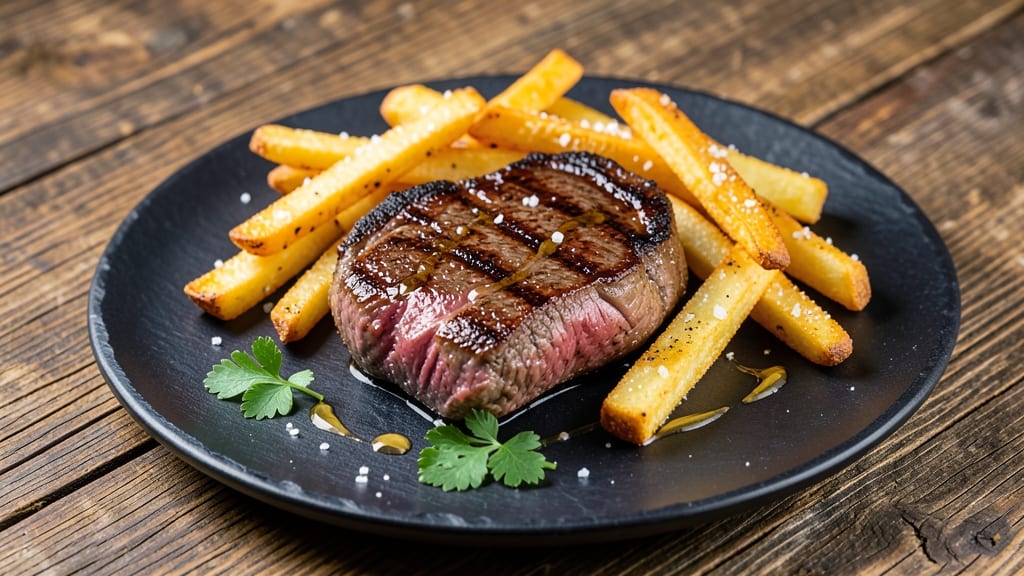
This steak and French fries recipe delivers the ultimate comfort food experience—juicy, perfectly seared steak paired with golden, crispy fries that shatter at every bite.
The secret lies in precise timing and technique: a dry-brined steak for maximum flavor retention and a two-stage fry for fries that stay crispy even after resting. I developed this recipe after years of perfecting restaurant-quality results at home, ensuring every element comes together flawlessly.
The juicy steak starts with a simple seasoning blend—just salt, pepper, and garlic powder—but the real magic happens in the sear. A cast-iron skillet heated to high ensures a deep caramelized crust, while resting the steak before slicing locks in all that tender goodness.
Meanwhile, the crispy fries require just two ingredients (potatoes and oil) but demand attention to detail: soaking the cut fries in cold water removes excess starch, and double-frying guarantees a satisfying crunch without turning them greasy.
What you’ll end up with is a plate that looks as impressive as it tastes: perfectly cooked steak with a glossy sheen and tender bite, alongside fries that are crispy on the outside and fluffy inside.
The contrast in textures and temperatures makes every bite unforgettable—rich, savory steak cutting through the airy, salty fries. This is the kind of meal that feels like a celebration, even on a weeknight.
Serve with a side of classic steak sauce or a dollop of garlic aioli for dipping, and garnish with fresh parsley for a pop of color. The combination of techniques ensures restaurant-quality results without the fuss—just follow the steps, and you’ll have a dish that’s worth repeating. Let’s get cooking!
Ingredients for steak french fries
Simple ingredients, restaurant-quality results—just 11 components for steak and fries perfection.
| Ingredient | Amount | Notes |
|---|---|---|
| Ribeye Steak 🥩 | 1 ½ lb | Center-cut, 1-inch thick slices |
| Russet Potatoes 🥔 | 2 lb | Yukon Gold alternative preferred |
| Diamond Crystal Kosher Salt 🧂 | 1 ½ tbsp | Coarse grain for dry brine |
| Freshly Ground Black Pepper 🌶️ | 1 ½ tsp | Cracked peppercorns preferred |
| Garlic Powder 🧄 | 1 tsp | Freshly ground preferred |
| Vegetable Oil 🫒 | 3 cups | High smoke point, like peanut |
| Extra-Virgin Olive Oil 🫒 | 1 tbsp | For finishing steak |
| Fresh Parsley 🌿 | ¼ cup | Chopped for garnish |
| Butter 🧈 | 2 tbsp | Unsalted, softened |
| Steak Sauce 🍅 | ¼ cup | A1 or homemade preferred |
| Garlic Aioli 🧄 | ½ cup | Store-bought or homemade |
The ribeye is non-negotiable for this recipe—look for center-cut slices with visible marbling at your butcher or Whole Foods meat counter. Thickness matters: 1-inch cuts ensure even cooking without drying out. If you can't find ribeye, New York strip works as a backup, but avoid sirloin. For the potatoes, Russet is standard, but Yukon Gold delivers a creamier texture that pairs beautifully with the steak. Store both in the fridge until ready to use—steak uncovered for 2 hours before cooking to dry-brine, potatoes peeled and cut into 1-inch sticks immediately after purchase to prevent browning.
No garlic powder? Fresh minced garlic at double the amount works beautifully, though it loses intensity during cooking. Running short on vegetable oil? Avocado oil has a higher smoke point and similar neutral flavor. For the aioli, homemade with Dijon mustard and egg yolk elevates the dish, but store-bought saves time without sacrificing quality. The steak sauce can be swapped for brown gravy or chimichurri if you prefer a lighter profile. Fresh parsley is ideal, but dried parsley at one-third the amount suffices in a pinch—just rehydrate it in warm water for 5 minutes before using.
Potatoes should be soaked in ice water for 30 minutes before frying to remove excess starch, then thoroughly drained and dried with a kitchen towel. The steak benefits from a 30-minute room temperature rest before cooking. Both components reheat well—steak in a 400°F oven for 10 minutes, fries in a 375°F oven for 5-7 minutes—so prepare extras. Store leftovers in airtight containers for 3 days in the fridge; fries lose crispiness faster than steak. For longer storage, freeze steak portions uncooked for up to 3 months and fries cooked for 2 months—reheat directly from frozen in the oven.
Why You'll Love This Recipe
- One-Pan Magic: I swear by this—just toss the potatoes and steak on one sheet, let the oven do the work. No chopping boards left in the sink, no extra pots to wash. That’s 10 minutes of my life I’ll never get back otherwise.
- Steakhouse Crunch: The ribeye stays juicy while the fries get that perfect golden crust—crispy outside, fluffy inside. Honestly, the garlic powder and kosher salt turn these into something that tastes like a fancy bistro dish, not just dinner.
- Weeknight Flex: Make it for game day, a lazy Sunday, or when you’re too tired to think. The leftovers? Even better cold the next day—my kids actually ask for them. And yes, it’s cheap enough to stretch for a crowd without breaking the bank.
- Budget Win: Ribeye on sale? Buy extra. Russets are always affordable. This recipe lets you turn a mid-range cut into something that feels like a splurge. I’ve fed four people for under $20 with this—no waste, all flavor.
Step-by-step instructions for steak and French fries
Master this classic pairing with restaurant-quality techniques for both components.
Prepare the Ribeye for Maximum Juiciness
Remove the ribeye steak from the refrigerator and let it sit at room temperature for 30 minutes. This ensures even cooking throughout. Pat the steak dry completely with paper towels—moisture is the enemy of a good sear. Season both sides generously with 1.5 tablespoons Diamond Crystal kosher salt and 1.5 teaspoons freshly ground black pepper, pressing the seasoning into the meat so it adheres.
While the steak rests, prepare your garlic aioli by mixing 0.5 cup garlic aioli with 1 teaspoon garlic powder in a small bowl. Set aside—this will complement the steak beautifully. The key here is patience; rushing the seasoning or skipping the room temperature step results in uneven cooking and a tough exterior.
Create Crispy French Fries with Double-Frying Technique
Cut the 2 lb russet potatoes into ½-inch thick sticks, ensuring uniform size for even cooking. Soak the cut potatoes in cold water for 30 minutes to remove excess starch, then drain and pat dry thoroughly. Heat 3 cups vegetable oil in a deep fryer or heavy pot to 325°F. Fry the potatoes in batches for 4-5 minutes until soft but not browned—this is called the "first fry."
Drain the potatoes on a wire rack or paper towels, then increase the oil temperature to 375°F. Fry again for 2-3 minutes until golden brown and crispy. Sprinkle with 1.5 tablespoons Diamond Crystal kosher salt immediately after frying while hot. The double-frying method creates a perfect balance of crispy exterior and fluffy interior.
Sear the Steak to Perfection
Heat a cast-iron skillet over high heat until smoking hot. Add 1 tablespoon extra-virgin olive oil and 2 tablespoons softened butter, allowing the butter to foam. Place the seasoned steak in the pan and sear for 3-4 minutes per side for medium-rare, until a deep brown crust forms. The steak should release easily from the pan when ready to flip.
Remove the steak from the pan and let it rest for 5-7 minutes on a cutting board. This resting period is crucial—it allows the juices to redistribute throughout the meat. While the steak rests, pour any remaining butter and oil from the pan into a small saucepan. Add 0.25 cup steak sauce and simmer for 2 minutes to create a quick pan sauce.
Assemble and Garnish the Plate
Slice the rested steak against the grain into ½-inch thick slices. Arrange the steak slices on a warm plate, fanning them slightly for an appealing presentation. Spoon the pan sauce over the steak, then drizzle with any remaining garlic aioli. Garnish with 0.25 cup chopped fresh parsley for a pop of color and freshness.
Serve the crispy French fries alongside the steak, ensuring they're hot and golden. The contrast between the tender, juicy steak and the crispy, salty fries creates a perfect balance of textures and flavors. Each bite should deliver the rich, savory notes of the steak paired with the satisfying crunch of the fries.
Pro Tips For Making Steak French Fries
- CUT POTATOES IN EVEN STICKS: Use a mandoline or sharp knife to slice Russets into ¼-inch sticks—consistent size means they crisp up together. I learned this the hard way after frying lumpy, half-raw chunks that tasted like regret.
- SALT THE FRIES TWICE: Toss the cut potatoes with 1 teaspoon kosher salt before soaking, then again after drying them thoroughly. The first salt draws out moisture, the second locks in flavor—no soggy, bland fries here.
- SEAR STEAK ON DRY SKILLET: Pat the ribeye bone-dry and let it sit at room temp for 20 minutes before cooking—this guarantees a crust, not a steamed mess. I used to skip this, and my steak always came out greasy and underwhelming.
- REST STEAK UNDER FOIL: After searing, transfer the ribeye to foil and tent it loosely for 5 minutes—this keeps it juicy while you finish the fries. I know, I know, but trust the process: cutting into it too soon turns your steak into a sad, dry pancake.
Regional styles of this recipe
Classic American Steakhouse
The most iconic version of this dish comes from classic American steakhouses, where a perfectly seared ribeye meets golden, crispy fries dusted with Diamond Crystal kosher salt. The secret here is the double-fry technique—first at 325°F for softness, then at 375°F for that signature crunch.
I’ve seen this style served at places like Peter Luger Steak House in New York, where the fries are so crispy they shatter like glass. The steak is often finished with a butter-basted crust and a side of A1 steak sauce for dipping. 🥩
Belgian-Inspired Crispy Fries
For a Belgian twist, swap the steak for a flame-seared Belgian beef steak and serve the fries with mayonnaise instead of aioli. Belgian fries are traditionally cut into ½-inch sticks, double-fried, and tossed with coarse sea salt immediately after cooking.
I love adding fresh chives or parsley for a pop of color. This version is all about the fries—crispy, salty, and served in a paper cone for maximum indulgence. 🍟
Texas BBQ Steakhouse Style
In Texas, this dish often features a smoked brisket instead of ribeye, paired with fries seasoned with smoked paprika and garlic powder. The brisket is slow-smoked at 225°F for hours, then sliced thin.
The fries get a Cajun-inspired kick—tossed with Cajun seasoning and a squeeze of lemon after frying. I’ve had this version at Franklin Barbecue in Austin, where the contrast of tender, smoky meat and spicy fries is pure magic. 🌶️
French Bistros’ Twist
French bistros elevate this dish with duck confit or steak tartare alongside frites (as the French call them). The fries are often served with duxelles (a finely chopped mushroom and shallot mixture) or herb butter.
The steak is typically medium-rare, sliced thin, and served with a bearnaise sauce. I once tried this at Le Comptoir du Relais in Paris—simple, elegant, and full of flavor. The key here is high-quality ingredients and minimal fuss. 🍷
Modern Fusion: Korean BBQ Fries
For a bold, modern take, marinate the steak in gochujang and soy sauce, then grill it alongside Korean-style fries tossed in sesame oil and gochugaru (Korean chili flakes). Serve with a side of kimchi and pickled radishes for a tangy crunch.
This fusion style is huge in Seoul’s trendy meat markets, where the sweet-spicy flavors of the fries complement the rich, savory steak perfectly. 🔥
Nutrition facts
Frequently asked questions
Can I make these fries in the oven instead of frying?
For oven-baked fries, toss ½-inch potato sticks with 1 tablespoon vegetable oil and 1 teaspoon kosher salt, then bake at 425°F for 25-30 minutes, flipping halfway. For extra crispiness, broil for 2-3 minutes at the end. The texture won't be identical to fried, but they'll still be delicious and lighter.
How do I keep the steak from drying out?
Never skip the 30-minute room temperature rest before cooking, and always pat the steak completely dry before seasoning. Use a cast-iron skillet on high heat and avoid overcrowding the pan. Most importantly, let it rest for 5-7 minutes after cooking—this locks in juices.
What's the best way to reheat leftovers?
Steak reheats best in a 400°F oven for 10 minutes wrapped in foil with a splash of water. For fries, spread them on a baking sheet and reheat at 400°F for 5-7 minutes until crispy again. Microwaving works for steak but makes fries soggy—avoid it for the potatoes.
Can I substitute another cut of steak?
Yes! New York strip works perfectly, while filet mignon needs slightly less time (2-3 minutes per side). For thicker cuts like ribeye, increase cooking time by 30 seconds per side. Just ensure your steak is 1-inch thick for even cooking. The recipe's seasoning works for all cuts.
Why did my fries turn out greasy?
Greasy fries usually mean the potatoes weren't dried thoroughly after soaking. Pat them very well with paper towels before frying, and don't overcrowd the fryer. Also, maintain the correct oil temperatures: 325°F for the first fry and 375°F for the second. A thermometer is your best friend here!