
Side Dishes
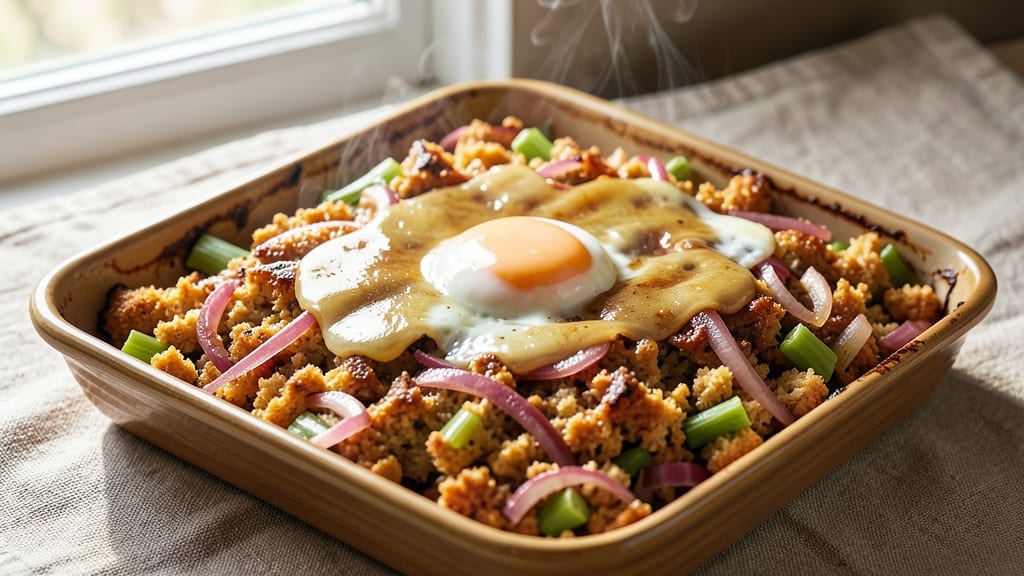
Aunt Jemima corn bread dressing recipe delivers the soul-warming comfort of Southern tradition in every bite—creamy, crumbly, and packed with buttery cornmeal richness. This isn’t just stuffing; it’s the heart of holiday tables, where golden-brown crumbs soak up savory broth and melt into tender perfection. I’ve perfected this recipe over years of Thanksgiving gatherings, ensuring it stays moist without turning mushy or dry.
The secret lies in the balance: crisp corn bread crumbs hold their shape while absorbing flavorful broth, and just the right amount of melted butter keeps everything luscious. Sage, onion, and celery form the aromatic base, while a touch of egg binds it all together—no soggy disappointment here.
This dressing is the kind that disappears first at dinner, leaving guests begging for seconds.
What makes this version special is its versatility—use it as a stuffing for turkey or roasted chicken, or serve it alongside as a standalone side. The texture is irresistibly crumbly on the outside yet creamy and moist inside, thanks to a precise baking method that ensures even cooking.
It’s the classic comfort dish your family will crave year after year.
Ready in just 45 minutes, this recipe requires minimal effort but delivers restaurant-quality results. Whether you’re hosting a holiday feast or a weeknight dinner, this dressing will elevate your meal with its rich, buttery depth. Let’s get started—your table is about to smell like Thanksgiving.
Ingredients for aunt jemima corn bread dressing
Buttery corn bread crumbs meet savory broth and aromatic herbs for this classic Southern dressing.
| Ingredient | Amount | Notes |
|---|---|---|
| Aunt Jemima Corn Bread Mix 🍞 | 1 box | Prepared according to package |
| Unsalted Butter 🧈 | ½ cup | Melted, full-fat for richness |
| Chicken Broth 🍲 | 2 cups | Low-sodium preferred, homemade or store-bought |
| Large Egg 🥚 | 1 whole | Room temperature for best binding |
| Yellow Onion 🧅 | 1 whole | Medium size, finely diced |
| Celery Stalks 🥬 | 2 whole | Stringless, finely chopped |
| Fresh Sage Leaves 🌿 | ¼ cup | Chopped, or 1 tbsp dried |
| Garlic Cloves 🧄 | 2 cloves | Minced, or 1 tsp garlic powder |
| Diamond Crystal Kosher Salt 🧂 | ½ tsp | Fine grain preferred |
| Freshly Ground Black Pepper 🌶️ | ¼ tsp | Freshly cracked for best flavor |
The corn bread mix is the star here—Aunt Jemima’s works perfectly, but any good-quality boxed mix will do. Costco or Walmart usually have it on sale in bulk, which is worth grabbing if you’re making this for a crowd. The butter needs to be full-fat (none of that low-fat nonsense)—it’s what gives that rich, creamy texture. For the sage, fresh is best, but dried works in a pinch. Just remember: dried herbs are more potent, so use about a third of what you’d use fresh. The onion and celery should be finely chopped—almost like a paste—so they melt into the dressing instead of staying in chunks. Trader Joe’s sells pre-chopped mirepoix mixes if you’re short on time.
No chicken broth? Vegetable broth works too, though it’ll have a slightly different flavor. The egg can be substituted with 1 tbsp Dijon mustard if you’re vegan, but it won’t bind quite as well. Running low on fresh sage? Thyme or rosemary can step in, but they’ll change the flavor profile a bit. If you’re using garlic powder instead of fresh, toast it in a dry pan for 30 seconds first to deepen the flavor. The kosher salt is key here—it dissolves better than table salt, so don’t skip it. And for the love of all things Southern, don’t use pre-shredded cheese—it’s full of anti-caking agents that ruin texture.
This dressing tastes even better the next day—make it ahead and refrigerate if you can. It keeps for 4-5 days in the fridge, covered tightly. For leftovers, reheat in the microwave in 30-second bursts, stirring between each, until warmed through. If you’re prepping for a crowd, double the recipe—it’s worth it. The dressing freezes beautifully too, though the texture gets slightly denser after thawing. Portion it into greased ramekins before freezing for easy reheating later.
Why You'll Love This Recipe
- One-Bowl Wonder: I swear by this recipe when I’m too tired to measure multiple dry ingredients. Just mix the boxed corn bread with broth, egg, and butter—no sifting, no fuss—then bake. The box does half the work, and honestly? That’s a win.
- Golden Crisp Magic: The butter melts into the corn bread mix while it bakes, creating that perfect crispy crust you crave. Add a diced onion, and you’ve got sweet, caramelized pockets of flavor cutting through the richness—like a hug in bread form.
- Holiday Table Star: This dressing is my go-to for Thanksgiving, but I also make it for Christmas dinners and even summer potlucks. The rich, savory notes pair with just about anything, and it’s the kind of dish that disappears faster than you can say “seconds?”
- Budget-Friendly Feast: A box of corn bread mix and a few pantry staples stretch to feed six for under $5. Leftovers reheat beautifully—just pop them in the oven with a splash of broth to keep them moist. My college-student self would’ve wept over this.
Instructions for Aunt Jemima corn bread dressing recipe
This classic dressing delivers that perfect balance of buttery cornmeal richness and savory herb depth every time.
Prepare the Corn Bread Base
First, prepare the 1 box Aunt Jemima Corn Bread Mix exactly according to the package instructions. I like to use a 9x9-inch baking dish for this recipe—it gives you the right proportions for a moist, tender dressing. Whisk together the dry mix with the 2 cups Chicken Broth and 0.5 cup Unsalted Butter (melted) until completely smooth. The mixture should be thick but pourable, like pancake batter.
Here's the thing—don't skip checking the temperature of your broth. If it's straight from the fridge, warm it slightly first. Cold broth will make your dressing gummy instead of light and fluffy. You'll know it's ready when it's just warm to the touch, not hot. Pour the batter into your prepared baking dish and spread it evenly with a spatula.
Sauté the Vegetable Base
While the corn bread base bakes, heat 0.5 cup Unsalted Butter in a large skillet over medium heat. Add the 1 whole Yellow Onion (finely diced) and 2 whole Celery Stalks (finely chopped) and cook for 5-6 minutes until the vegetables soften and the onion becomes translucent. This is where the flavor foundation happens—don't rush it.
Add the 2 cloves Garlic Cloves (minced) and cook for another 30 seconds until fragrant. Then stir in the 0.25 cup Fresh Sage Leaves (chopped) and cook for 1 minute just until the sage releases its aroma. Remove from heat and set aside—this vegetable mixture will add that classic Thanksgiving depth to your dressing.
Bake the Corn Bread Layer
Bake the corn bread base at 375°F for 18-20 minutes until the edges are golden and the center springs back when gently pressed. You'll see the top develop a beautiful golden crust, but don't let it brown too much or it'll dry out. When it's done, remove from the oven and let it cool for 5 minutes—this prevents cracking when you cut it.
While it cools, preheat your oven to 350°F. This lower temperature is perfect for gently reheating the dressing without drying it out. Cut the baked corn bread into ½-inch cubes and spread them evenly over the bottom of your baking dish. This layer will soak up all that delicious vegetable mixture and create that signature texture.
Combine and Bake to Perfection
In a medium bowl, whisk together the 1 whole Large Egg, 0.5 tsp Diamond Crystal Kosher Salt, and 0.25 tsp Freshly Ground Black Pepper until smooth. Pour this mixture evenly over the corn bread cubes in the baking dish. Then spread the sautéed vegetable mixture over the top, pressing down gently to help it absorb.
Bake at 350°F for 25-30 minutes until the top is golden and the dressing is heated through. You'll know it's ready when it smells like pure comfort and the edges are lightly browned. The egg mixture will bind everything together while the butter and broth create that signature moist texture. Let it rest for 10 minutes before serving—this lets all the flavors meld together.
Serve Warm and Enjoy
Transfer the dressing to a serving dish and let it sit for 5 minutes before serving. The texture should be moist but not soggy, with tender corn bread cubes throughout. Each bite should deliver that perfect combination of buttery cornmeal richness and savory herb depth that makes this dressing a classic.
This dressing pairs beautifully with roasted turkey, mashed potatoes, or even as a side for holiday meals. The secret to its success is that balance—enough corn bread for texture, enough vegetables for flavor, and just the right amount of butter to keep it moist. Serve warm and enjoy that classic comfort you've been craving.
Pro Tips For Making Aunt Jemima Corn Bread Dressing
- Melt Butter Slowly: If you dump cold butter into the hot pan, you’ll end up with greasy streaks instead of even distribution. Cut the butter into small cubes first, then let it melt gradually over medium heat while you sauté the onions—this way, every bite gets that rich, buttery flavor without turning into a soggy mess.
- Sauté Onions to Gold: I used to rush this step, but crispy onions make all the difference. Cook them until they’re soft but still have a little bite—about 8-10 minutes on medium heat. If they start to brown too fast, pull them out early; you can always add a splash of broth later to deglaze.
- Whisk Egg and Broth: Don’t just toss the egg into the mix—whisk it first with the warm broth until it’s fully combined. This prevents lumpy dressing and ensures the egg distributes evenly. I learned this the hard way when I ended up with a weird, eggy pocket in the middle of my casserole.
- Bake Until Set: The recipe might say "bake until golden," but I’ve found the real test is when the center is just set—no jiggle, no wobble. Overbaking dries it out, but underbaking leaves it gummy. If you’re unsure, poke it with a fork; if it comes out clean, it’s done. (Yes, even if it’s not brown yet.)
Essential equipment for aunt jemima corn bread dressing
Must-Have Baking Dish
For this recipe, a 9x9-inch baking dish is your best friend—I use CorningWare because it distributes heat evenly and prevents sticking. The dish needs to be at least 2 inches deep to accommodate all layers without overflowing.
If you don’t have one, a glass Pyrex dish works too, but avoid metal pans—they can dry out the dressing faster. 🧑🍳
Mixing Bowls
You’ll need two medium-sized mixing bowls—one for whisking the egg and seasonings, and another for combining the sautéed vegetables. I recommend stainless steel bowls because they’re durable and easy to clean.
A whisk with a long handle (like the OXO Good Grips) helps prevent splatters when mixing the egg. For measuring, a liquid measuring cup ensures accuracy with the broth and melted butter.
Sautéing Skillet
A 10-inch cast iron skillet is ideal for sautéing the onion, celery, and garlic because it retains heat well and creates a flavorful crust on the vegetables. If you don’t have cast iron, a heavy-bottomed stainless steel skillet (like All-Clad) works just as well.
Avoid nonstick—it can’t handle the high heat needed to develop those deep, caramelized flavors. A wooden spoon is perfect for stirring without scratching the pan.
Knives and Cutting Board
Invest in a sharp chef’s knife (I love the Mercer Culinary Genesis) for dicing the onion and celery—it makes the job faster and safer. A cutting board with a juice groove (like John Boos Maple) keeps your workspace clean.
For mincing garlic, a garlic press saves time, but a knife works too if you prefer the texture. Don’t forget a small offset spatula to help spread the corn bread batter evenly in the dish.
Measuring Tools
Precision matters here! Use a dry measuring cup for the corn bread mix and a liquid measuring cup for the broth and melted butter. For the egg, a small ramekin or liquid measuring cup ensures accuracy.
A microplane is handy for zesting garlic if you’re using fresh, but minced cloves work fine too. A fine-mesh strainer comes in handy if you want to remove any herb stems from the sage.
Optional Upgrades
For extra convenience, a hand mixer (like the KitchenAid KSM150PSER) speeds up whisking the egg mixture, but a whisk works just as well. If you’re making this ahead, greaseproof parchment paper helps with storage and reheating.
And for serving, a large ceramic dish keeps the dressing warm and looks beautiful on the table. Trust me, these small tools make all the difference! 💡
Nutrition facts
Frequently asked questions
Can I make this dressing without corn bread mix?
Use 2 cups cornmeal mixed with 2 cups all-purpose flour and 1 teaspoon baking powder instead. For extra moisture, add ½ cup melted butter to the dry mix before combining with broth. The texture will be slightly denser but still delicious.
Why does my dressing turn out dry?
Overbaking is the most common cause. Remove it from the oven when the top is just golden and the edges are set—it'll continue cooking as it rests. For extra moisture, stir in 2 tablespoons extra broth or 1 tablespoon melted butter before serving. Covering it with foil for the last 5 minutes of baking also helps retain moisture.
Can I make this ahead of time?
This dressing tastes even better the next day! Prepare it up to 2 days ahead and refrigerate in an airtight container. Reheat covered in a 350°F oven for 15-20 minutes or until warmed through. For leftovers, microwave in 30-second bursts, stirring between each, to prevent drying out.
What's the best way to reheat cold dressing?
For restaurant-quality results, transfer to an oven-safe dish and cover loosely with foil. Heat at 325°F for 15-20 minutes until warmed through. The foil traps steam while allowing the top to crisp slightly. If using the microwave, stir every 30 seconds to distribute heat evenly—this prevents dry spots.
Can I substitute vegetable broth for chicken broth?
Yes! Vegetable broth works perfectly and adds a slightly different flavor profile. For best results, use a low-sodium variety to avoid over-salting. If you're vegetarian, this substitution makes the recipe fully plant-based. The texture and moisture levels remain identical, though the savory depth will be more herb-forward than meaty.