Main Courses
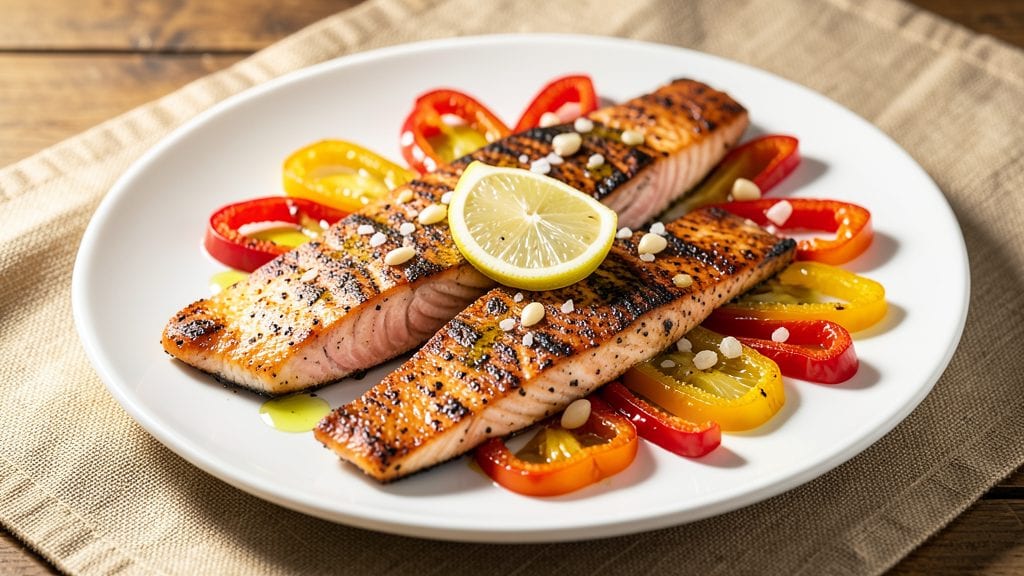
This baked salmon with bell peppers recipe transforms a simple weeknight dinner into a Mediterranean-inspired feast that requires just one pan and minimal effort. The combination of tender salmon fillets and vibrant bell peppers creates a visually stunning dish that’s packed with flavor and nutrients.
I developed this recipe after realizing how often fresh seafood and vegetables get overlooked for convenience—until now.
The key to this dish lies in the balance of ingredients and precise baking technique. Fresh salmon fillets are seasoned with Mediterranean herbs and lemon, while colorful bell peppers add sweetness and texture. Baked at the right temperature, the salmon stays moist while the peppers caramelize into tender perfection.
This method ensures restaurant-quality results without the fuss, making it ideal for both weeknight dinners and special occasions.
What you’ll end up with is a plate that’s as beautiful as it is delicious—golden salmon with crisp edges, vibrant bell peppers glistening with olive oil, and a bright lemon-herb finish.
The dish pairs effortlessly with a side of quinoa, roasted potatoes, or a simple green salad to round out the meal. It’s a complete, balanced dish that highlights the freshness of each ingredient while keeping preparation simple.
Whether you’re cooking for two or a small gathering, this recipe scales perfectly while maintaining its elegance. The one-pan approach minimizes cleanup, and the flavors only get better as they meld together in the oven. Ready to create a Mediterranean-inspired dinner that feels like a vacation in every bite?
Ingredients for baked salmon with bell peppers
Fresh salmon and vibrant bell peppers create a Mediterranean-inspired dish that's elegant yet effortless.
| Ingredient | Amount | Notes |
|---|---|---|
| Wild-Caught Salmon Fillets 🐟 | 2 whole | Skin-on, center-cut, 6-8 oz each |
| Red Bell Peppers 🍅 | 2 whole | Medium-sized, sliced into strips |
| Yellow Bell Peppers 🍊 | 1 whole | Medium-sized, sliced into strips |
| Extra-Virgin Olive Oil 🫒 | ¼ cup | Lightly fruity, cold-pressed |
| Fresh Lemon Juice 🍋 | 2 tbsp | From 1 medium lemon |
| Garlic Cloves 🧄 | 4 cloves | Minced, fresh preferred |
| Fresh Dill 🌿 | ¼ cup | Chopped, stems removed |
| Fresh Oregano 🍃 | ¼ cup | Chopped, Mediterranean variety |
| Diamond Crystal Kosher Salt 🧂 | 1 ½ tsp | Fine grain, sea salt alternative |
| Freshly Ground Black Pepper 🌶️ | ½ tsp | From pepper grinder |
| Zest of 1 Lemon 🍋 | 1 tbsp | Bright, aromatic zest |
| Canned Crushed Tomatoes 🍅 | ½ cup | San Marzano preferred |
| Red Wine Vinegar 🍷 | 1 tbsp | Dry, aged variety |
The salmon selection is critical for this recipe. Opt for wild-caught fillets with visible pink hues and firm texture—Whole Foods or Trader Joe's carry excellent options. Look for center-cut pieces with skin intact to prevent curling during baking. The bell peppers should be bright and firm, with no soft spots. For the olive oil, California Avocado Ranch or Colavita brands provide the perfect balance of fruitiness without overpowering the delicate salmon flavor. Fresh herbs are non-negotiable here; Mediterranean oregano from Penzeys adds depth, while fresh dill from your local market ensures bright, vibrant notes. The garlic should be plump and firm, not sprouting or overly pungent.
Substitutions can be made thoughtfully without sacrificing quality. Rainbow trout fillets work beautifully as a substitute for salmon, though cooking time may vary slightly. If bell peppers are unavailable, zucchini or asparagus can add texture, though they won't provide the same sweetness. For the olive oil, avocado oil maintains a neutral profile, though it lacks the fruity complexity. Dried oregano can replace fresh at one-third the amount, but fresh is preferred for its aromatic punch. The crushed tomatoes can be omitted entirely if you prefer a more herb-forward dish, though they add a subtle acidity that balances the richness of the salmon. When selecting canned tomatoes, San Marzano is the gold standard, but any high-quality brand will suffice.
Proper storage extends the life of these ingredients while maintaining their quality. The salmon should be used within 2 days of purchase and stored on ice if not using immediately. Bell peppers keep well in the crisper drawer for up to 2 weeks, while fresh herbs should be wrapped in damp paper towels and stored in a sealed container for 5-7 days. The olive oil and vinegar can be kept at room temperature in a dark cabinet for up to 6 months. Once the dish is prepared, leftovers should be refrigerated in an airtight container for up to 3 days, though the flavors are best enjoyed fresh. For meal prep, portion the salmon and peppers separately to maintain texture and prevent sogginess.
Why You'll Love This Recipe
- One-Pan Magic: I swear by this trick—just toss everything on a sheet pan, drizzle with olive oil, and let the oven do the work. No pots, no pans, no stress.
- Bright & Fresh Bite: That zingy lemon juice and sweet bell peppers cut through the salmon’s richness like a summer breeze. Honestly, it’s the kind of dish that makes you forget how healthy it is.
- Lunchbox Hero: Between us, this is my go-to for meal prep—salmon stays moist, peppers hold their crunch, and it’s packed in containers by Tuesday. My kids eat it cold, at room temp, or reheated. (Yes, even on a Tuesday night.)
- Budget-Friendly Luxury: Wild-caught salmon feels fancy, but the bell peppers stretch it into a full meal. I’ll be real: it’s the kind of dinner that makes you feel like you splurged, without the splurge.
Step-by-step instructions for baked salmon with bell peppers
A Mediterranean-inspired one-pan meal where salmon and bell peppers marry in a vibrant, herb-infused embrace.
Prepare the Salmon and Vegetables
Begin by preheating your oven to 400°F. Pat the two whole wild-caught salmon fillets dry with paper towels—this ensures a crispy skin later. Season both sides generously with 1.5 teaspoons of diamond crystal kosher salt and 0.5 teaspoon of freshly ground black pepper. Place them on a parchment-lined baking sheet, skin-side down, and set aside.
Next, slice the two whole red bell peppers and one whole yellow bell pepper into ½-inch thick strips. Remove the seeds and membranes for cleaner cuts. In a medium bowl, combine the sliced bell peppers with 0.25 cup of chopped fresh dill, 0.25 cup of chopped fresh oregano, 4 minced garlic cloves, and 1 tablespoon of zest of 1 lemon. Drizzle with 0.25 cup of extra-virgin olive oil and toss gently to coat. This herbaceous blend will infuse the salmon with bright Mediterranean flavors.
Assemble the One-Pan Feast
Arrange the herb-coated bell pepper strips in an even layer around the salmon fillets on the baking sheet, leaving space for the peppers to soften without overcrowding. Spoon 0.5 cup of canned crushed tomatoes over the peppers, followed by 2 tablespoons of fresh lemon juice and 1 tablespoon of red wine vinegar. This acidulated tomato mixture will create a glossy, tangy glaze that complements the salmon’s richness.
Gently press down on the salmon fillets to ensure they maintain contact with the peppers and sauce during baking. This step guarantees even cooking and maximum flavor transfer. The peppers should nestle closely around the salmon, creating a visually appealing and cohesive dish.
Bake to Perfect Doneness
Transfer the baking sheet to the preheated oven and bake for 12-15 minutes, or until the salmon reaches an internal temperature of 145°F. The bell peppers should soften slightly but retain their vibrant color, while the salmon skin will turn a beautiful golden brown. Avoid overbaking—salmon continues to cook slightly after removal from the oven.
To check for doneness, gently lift one of the salmon fillets with a spatula. The flesh should flake easily with a fork and appear opaque throughout. If the peppers aren’t tender enough, return the dish to the oven for an additional 2-3 minutes. The sauce should reduce slightly, creating a sticky, flavorful glaze that clings to both the salmon and peppers.
Rest and Serve with Confidence
Remove the baking sheet from the oven and let the salmon rest for 3-5 minutes before serving. This resting period allows the juices to redistribute, ensuring each bite is moist and flavorful. Use a spatula to carefully transfer the salmon and peppers to a serving platter, arranging them with the sauce evenly distributed.
Garnish with an additional sprinkle of chopped fresh dill and a final drizzle of extra-virgin olive oil for a touch of elegance. Serve immediately with crusty bread or a simple arugula salad to soak up the remaining sauce. The combination of tender salmon, caramelized peppers, and bright herbs creates a harmonious Mediterranean masterpiece in every bite.
Pro Tips For Making Baked Salmon With Bell Peppers
- Preheat That Pan: Slap a cold salmon fillet into a 400°F (200°C) oven without prepping the pan, and you’ll end up with a sad, uneven cook. Instead, heat your baking sheet or dish for 5 minutes first—this guarantees the salmon hits the oil and peppers with a hot start, sealing those juices and giving you that perfect crust in 12-15 minutes.
- Cut Peppers Like a Pro: I used to slice bell peppers haphazardly, and they’d turn to mush under the salmon. Instead, cut them into ½-inch strips lengthwise—thicker than usual—and blanch them in boiling water for 30 seconds first. Drain, pat dry, and they’ll hold their shape while soaking up all that olive oil and lemon.
- Salt the Salmon Twice: Wild-caught salmon is leaner and more delicate than farmed, so it needs extra love. Season it generously with flaky salt right after patting it dry, then again 5 minutes before baking. The first salting draws out moisture (good for crispiness), and the second locks in flavor—trust me, your taste buds will notice.
- Bake Peppers First: Toss the bell peppers in olive oil and lemon juice, then roast them alone for 8-10 minutes at 400°F (200°C) before adding the salmon. They’ll soften perfectly and caramelize slightly, while the salmon gets a head start on the heat. Yes, it’s an extra step, but the flavor balance is worth it—no more raw pepper edges.
Essential equipment for this recipe
Oven Essentials
Your oven is the star of this recipe, so ensure it’s calibrated for accuracy. I use a Thermoworks Oven Thermometer to verify my oven reaches 400°F—many ovens run 25°F hotter or cooler than set.
For even heat distribution, place your baking sheet on the middle rack, where temperatures are most consistent. If your oven has hot spots, rotate the pan halfway through baking for uniform doneness. 🌡️
Baking Sheet Must-Haves
A heavy-duty stainless steel baking sheet (like All-Clad Stainless Steel) conducts heat evenly and prevents warping. Line it with parchment paper for easy cleanup and to prevent sticking—just avoid overcrowding the pan, as this traps steam and steams instead of browning the salmon.
For extra crispiness, I recommend a half-sheet pan (13x18 inches) to give ingredients room to breathe.
Precision Tools
An instant-read meat thermometer (I swear by ThermoWorks Smoke) is non-negotiable for salmon—it should hit 145°F internal temperature at the thickest part. A sharp chef’s knife (like Wüsthof Classic) ensures clean cuts for bell peppers, while a microplane gives you perfect lemon zest.
For tossing the peppers, a wooden spoon prevents scratching nonstick surfaces.
Optional Upgrades
For a restaurant-quality finish, invest in a silicon baking mat (like OXO Good Grips)—it crisps salmon skin beautifully without sticking. A small whisk helps emulsify the olive oil and lemon juice for a glossy sauce.
If you love Mediterranean flavors, a mortar and pestle lets you crush garlic cloves for deeper flavor infusion. These tools elevate the dish without being essential.
Budget-Friendly Swaps
No need to break the bank! A basic aluminum baking sheet works fine, and a digital thermometer (like ThermometerWorks Dot) is a game-changer for under $20. Use a paring knife for peppers and a zester (or microplane) for lemon zest.
A spatula from your existing kitchen tools handles tossing just as well as a wooden spoon. The key is focus on technique, not expensive gadgets. 💡
Nutrition facts
Frequently asked questions
Can I use frozen salmon for this recipe?
Fresh salmon yields the best texture, but you can use frozen fillets if thawed properly. Place frozen salmon in the refrigerator overnight or use the cold water thaw method (never microwave). Pat completely dry before seasoning to prevent steam from making the skin soggy. The cooking time remains the same, but monitor closely to avoid overcooking.
What if I don't have red wine vinegar?
Substitute with 1 tablespoon of lemon juice or ½ teaspoon of white wine vinegar for the same bright acidity. The dish will still shine—just reduce any additional lemon juice by 1 tablespoon to balance flavors. The vinegar primarily enhances the tomato sauce, so the salmon and peppers won't suffer.
How do I prevent the salmon skin from sticking?
Pat the salmon fillets extra dry with paper towels before seasoning, and place them skin-side down on a well-oiled baking sheet. For crispy skin, avoid moving the pan while baking. If sticking occurs, gently slide a thin metal spatula between the salmon and sheet once it's cooked—don't force it before baking.
Can I make this recipe ahead of time?
Prep all ingredients (chop peppers, mix sauce) up to 24 hours ahead and store separately in the fridge. Assemble the dish just before baking for best texture. Leftovers keep for 3 days refrigerated or 3 months frozen—reheat gently in a 350°F oven for 10-12 minutes to maintain moisture.
What's the best way to pair this dish?
Serve with crusty Mediterranean bread to soak up the sauce, or pair with couscous and a simple arugula salad> with lemon vinaigrette. For a heartier meal, add roasted fingerling potatoes> or a side of warm pita>. The bright flavors complement anything with a touch of acidity or earthiness.