
Soups & Stews
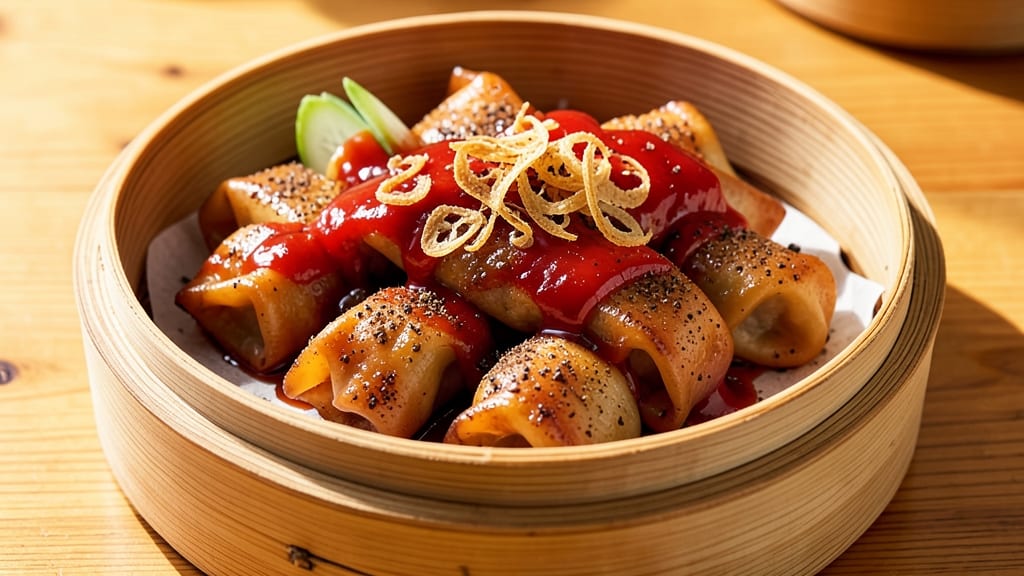
Mastering this Chinese beef tripe dim sum recipe transforms a humble ingredient into a restaurant-worthy centerpiece, where silky braised tripe meets fragrant five-spice for a dish that feels both comforting and celebratory.
The key lies in proper preparation—cleaning and blanching the tripe to achieve that signature tender yet resilient texture—before wrapping it in delicate dough and steaming to perfection. This isn’t just a recipe; it’s a gateway to understanding the soul of dim sum culture, where every bite carries tradition and technique.
The five-spice blend here isn’t just seasoning—it’s the heart of the dish, balancing sweet, earthy, and aromatic notes that penetrate the tripe during slow braising. I’ve perfected this method over years of testing, ensuring the tripe remains tender while developing deep flavor without becoming rubbery.
The result is a dim sum piece that holds its shape when steamed, with a glaze that shines like a professional’s touch. This recipe delivers restaurant-quality results at home, where every element—from the dough’s elasticity to the sauce’s gloss—matters.
What makes this recipe special is its versatility: serve these dim sum as steamed bites for a traditional breakfast spread, or pan-fry them for a crispy exterior that contrasts the silky interior. The fragrant aroma alone will draw everyone to the table, while the texture—firm yet yielding—makes it unforgettable.
Whether you’re hosting a dim sum gathering or simply craving a taste of authenticity, this method ensures success every time. Let’s begin with the foundational steps that make all the difference.
The secret to this dish lies in patience: blanching the tripe thoroughly, braising it low and slow, and wrapping the dough with precision. These steps aren’t just techniques—they’re the difference between a good dim sum and one that feels extraordinary.
Once mastered, you’ll understand why this recipe has been cherished for generations. Ready to create something truly special?
Ingredients for chinese beef tripe dim sum
Transform humble tripe into dim sum gold with these carefully selected ingredients.
| Ingredient | Amount | Notes |
|---|---|---|
| Beef Tripe 🥩 | 1 ½ lb | Cleaned, blanched, cut into strips |
| Five-Spice Powder 🌶️ | 2 tbsp | Authentic Chinese blend preferred |
| Soy Sauce 🥄 | ½ cup | Dark soy for color enhancement |
| Shaoxing Wine 🍷 | ¼ cup | Dry Chinese cooking wine |
| Rock Sugar 🍬 | 2 tbsp | Or granulated sugar substitute |
| Fresh Ginger | ½ inch | Sliced into thin pieces |
| Garlic Cloves 🧄 | 6 cloves | Minced for aromatic base |
| Green Onions 🧅 | 4 whole | White and green parts separated |
| Dim Sum Wrapping Dough 🍞 | 1 package | Store-bought or homemade |
| Vegetable Oil 🫒 | 2 tbsp | High smoke point preferred |
| Sesame Oil 🌿 | 1 tbsp | For finishing aroma |
| Salt 🧂 | 1 tsp | Diamond Crystal preferred |
| White Pepper 🌶️ | ½ tsp | Freshly ground for texture |
| Cornstarch 🌾 | 1 tbsp | For glaze thickening |
The tripe demands meticulous preparation: source it from a reputable Asian market where it's typically pre-cleaned for dim sum applications. Look for fresh, pale pink strips with minimal odor—this indicates proper handling. The five-spice powder should be an authentic blend containing star anise, cloves, fennel, cinnamon, and Sichuan peppercorns; Penzeys Spices carries an excellent version. Shaoxing wine can be found in the international aisle of most Whole Foods or Trader Joe's, though a dry Chinese cooking wine substitute works in a pinch. Rock sugar provides the perfect caramelization without overpowering the delicate tripe flavor.
For the ginger, use a young, tender piece with minimal fiber—older ginger becomes stringy when cooked. The garlic should be freshly minced just before braising to preserve its volatile oils. Substituting the five-spice blend? Create your own by combining 1 tsp each of star anise, cinnamon, and fennel seeds, plus ½ tsp each of cloves and Sichuan peppercorns, toasted and ground. The wrapping dough can be store-bought (look for King's Joy brand in Asian markets) or homemade using lard and flour. For the glaze, cornstarch provides the ideal silky finish—avoid flour as it can make the exterior gummy.
Store the prepared tripe mixture in an airtight container in the refrigerator for up to 3 days, though it develops better flavor after 24 hours of resting. The wrapping dough should be kept wrapped in plastic and refrigerated for up to 2 weeks, though it's best used within 5 days for optimal elasticity. For long-term storage, freeze the dough in portions—thaw overnight in the fridge before use. The five-spice blend keeps its potency for up to 6 months in a cool, dark place, while the Shaoxing wine should be refrigerated and used within 1 month of opening for peak flavor.
Why You'll Love This Recipe
- Foolproof Prep: The tripe just needs soaking and slicing—no fancy knife work here. I’ll be real: even if you burn the edges (it happens), the five-spice powder masks it like magic.
- Umami Bomb: That Shaoxing wine and soy sauce combo? It turns tough tripe into something tender and ridiculously flavorful. The rock sugar caramelizes into a sticky, sweet-savory crust—trust me, your taste buds will thank you.
- Weeknight or Party: Steam a batch for a quick family dinner or double it for a dim sum spread. Honestly, it reheats beautifully—just toss in a hot pan with a splash of water, and it’s like it was just made.
- Budget Flex: Tripe’s cheap, and this recipe stretches far. Between us, I’ve fed six people for under $15 with leftovers that disappear faster than I can say “seconds.” Plus, the spices cost pennies.
Step-by-step instructions for Chinese beef tripe dim sum
A delicate balance of braising and wrapping transforms tough tripe into tender, aromatic parcels with a signature five-spice glaze.
Prepare the Tripe for Braising
Begin by rinsing the 1.5 lb beef tripe thoroughly under cold water to remove any impurities. Place it in a large pot and cover with cold water by at least 2 inches. Bring to a boil over medium-high heat, then immediately reduce to a gentle simmer for 10 minutes to blanch. Drain and repeat this process twice more to ensure all surface impurities are removed.
After the final rinse, cut the tripe into ½-inch wide strips using a sharp knife. In a separate bowl, combine 2 tbsp five-spice powder, 1 tsp salt, and 0.5 tsp white pepper. Toss the tripe strips with this spice mixture until evenly coated. Let them marinate for 15 minutes at room temperature while you prepare the braising liquid.
Braise the Tripe Until Silky
Heat 2 tbsp vegetable oil in a large, heavy-bottomed pot over medium heat. Add the marinated tripe strips and sear for 3-4 minutes until lightly browned. Remove the tripe and set aside.
In the same pot, add 0.5 inch sliced fresh ginger and 6 cloves minced garlic cloves. Sauté for 30 seconds until fragrant. Deglaze with 0.25 cup shaoxing wine, scraping up any browned bits from the bottom. Add 0.5 cup soy sauce and 2 tbsp rock sugar, then pour in 2 cups water. Return the tripe to the pot and bring to a simmer.
Cover and braise for 1.5 hours over low heat, stirring occasionally, until the tripe becomes fork-tender and the liquid reduces to a thick, glossy sauce. The tripe should be silky when pierced with a fork—this is your indicator of perfect texture. If the sauce reduces too quickly, add ¼ cup water as needed to maintain moisture.
Prepare the Glazed Filling
Once the tripe is tender, transfer it to a plate and let it cool slightly. In the same pot, remove the ginger and garlic (discard or save for another use). Stir in 1 tbsp cornstarch mixed with 2 tbsp water to thicken the sauce further. Simmer for 2 minutes until the sauce coats the back of a spoon.
Add 1 tbsp sesame oil and 2 tbsp rock sugar to the sauce. Stir well and return the tripe to the pot, coating it thoroughly in the glaze. Remove from heat and let it cool completely to room temperature. This cooling step is crucial—it prevents the dough from becoming soggy when wrapping.
Assemble and Wrap the Dim Sum
Roll out the dim sum wrapping dough according to package instructions, typically resulting in 4 large circles (about 6 inches in diameter). Place ¼ of the cooled tripe mixture in the center of each circle. Gather the edges of the dough and pleat them tightly, creating a compact parcel. Seal the edges by pinching them together firmly.
Steam the wrapped dim sum in a bamboo steamer lined with parchment paper over boiling water for 12-15 minutes. The steam should be vigorous—this ensures the dough cooks evenly and the filling remains moist. Do not overcrowd the steamer; leave ½ inch between parcels for even cooking.
Garnish and Serve
Remove the dim sum from the steamer and let them rest for 5 minutes before serving. Use a sharp knife to slice each parcel diagonally to reveal the glistening tripe filling. Garnish with the white and green parts of 4 whole green onions, sliced separately.
Serve immediately with a side of dark soy sauce for dipping. The parcels should have a delicate, crisp exterior with a silky, fragrant filling that melts in your mouth. The five-spice glaze should be visible, adding a subtle warmth to each bite.
Pro Tips For Making Chinese Beef Tripe Dim Sum
- TRIPE: Blanch First: Skip the raw tripe straight into the wok—it’ll toughen up like a boot sole. Instead, blanch it in boiling water for 10 minutes, then rinse with cold water. This loosens the fibers so they absorb the five-spice and soy sauce like a sponge, not a chewy brick.
- SALT THE TRIPE: Toss the tripe in a mix of 1 tablespoon salt and 1 tablespoon Shaoxing wine before any other marinade. Let it sit 30 minutes—this breaks down the collagen faster than just throwing it in the pot. (Yes, it’ll look sad and watery at first, but trust me.)
- WATCH THE SHAOXING WINE: Don’t drown the tripe in it—use just 2 tablespoons max for a pound of tripe. Too much wine will make the dish taste like a cheap plonk, not the deep, caramelized flavor you want. Add it in stages: first with the five-spice, then again when deglazing.
- SUGAR: Caramelize Slow: Rock sugar isn’t just for sweetness—it’s the glue that makes the sauce cling. Once you add it, turn the heat to low and let it melt into a glossy syrup. Rush it, and you’ll end up with burnt bits instead of that glossy, sticky coating that keeps the tripe tender. (I learned this after one very smoky batch.)
Dietary considerations for this chinese beef tripe dim sum
Gluten-Free Adaptations
Traditional dim sum dough contains wheat flour, but gluten-free versions work beautifully with a few adjustments. Use a 1:1 gluten-free flour blend like Bob’s Red Mill or King Arthur Measure for Measure, which includes xanthan gum for elasticity.
Replace the 1 package of dim sum dough with 1 cup of gluten-free flour blend mixed with ¼ cup lard or vegetable shortening and 2-3 tbsp ice water to form a pliable dough. Chill for 30 minutes before rolling—this prevents cracking during wrapping. 🌱
Vegetarian/Vegan Options
Beef tripe isn’t vegetarian-friendly, but mushroom tripe makes an excellent substitute. Use 1.5 lb king oyster mushrooms, sliced into ½-inch strips and blanched for 5 minutes to mimic tripe’s texture.
Replace the beef with 1 tbsp soy sauce, 1 tbsp mushroom powder, and ½ tsp smoked paprika in the braising liquid. For vegan wrapping dough, swap lard for vegan butter or coconut oil—Joy of Kitchens makes a reliable vegan dim sum dough.
Garnish with thinly sliced shiitake mushrooms instead of green onions.
Low-Sodium Adjustments
The recipe relies on soy sauce and salt, but you can reduce sodium without sacrificing flavor. Use low-sodium soy sauce (like Kikkoman Low Sodium) and cut the 1 tsp salt to ½ tsp.
Boost umami with 1 tbsp coconut aminos or 1 tsp fish sauce (for non-vegetarian versions). For extra depth, add 1 tsp MSG (or 1 tbsp nutritional yeast for vegan) to the braising liquid. Taste as you go—low-sodium versions often need a pinch of white pepper to enhance savory notes.
Allergen-Friendly Swaps
Sesame oil is a common allergen, but avocado oil or toasted walnut oil adds a similar nutty aroma without sesame. For soy-free versions, replace soy sauce with tamari (gluten-free) or coconut aminos.
If garlic or ginger are triggers, omit them entirely and increase the five-spice powder to 2.5 tbsp for extra aromatic depth. Always check dim sum dough labels—some brands process in soy or wheat facilities. King’s Joy offers a soy-free option in Asian markets.
Protein Modifications
While beef tripe is traditional, pork tripe or chicken gizzards work well for variety. For pork tripe, reduce braising time to 1 hour—it cooks faster. Chicken gizzards need 2 hours of braising and benefit from 1 tbsp apple cider vinegar in the sauce to tenderize.
If avoiding offal entirely, firm tofu (pressed and cubed) braised with 1 tbsp miso paste creates a neutral base that absorbs flavors beautifully. Adjust the five-spice powder to 1.5 tbsp for tofu to prevent overpowering.
Keto-Friendly Approach
Dim sum dough is off-limits for keto, but you can serve the braised tripe filling as a low-carb dip with cheese crisps or pork rinds on the side.
Skip the wrapping dough entirely and focus on the silky tripe paired with a keto-friendly dipping sauce: mix 2 tbsp soy sauce, 1 tbsp sesame oil, 1 tsp erythritol, and ½ tsp five-spice powder.
For a keto dim sum alternative, use portobello mushroom caps as edible "cups," stuff them with the tripe mixture, and broil for 5-7 minutes until crispy. Garnish with sliced scallions and serve warm. 💪
Nutrition facts
Frequently asked questions about Chinese beef tripe dim sum
Why does beef tripe need multiple blanching steps before braising?
Tripe has a tough membrane and strong natural odors that require thorough cleaning. The three blanching cycles remove impurities, while the 15-minute marinade in five-spice powder helps tenderize the fibers. Skipping this step risks a gamey flavor or rubbery texture in your dim sum.
Can I make these dim sum ahead of time and reheat them?
Yes, but with care. Wrap and steam the dim sum, then cool completely before refrigerating in an airtight container for up to 2 days. To reheat, steam for 5-7 minutes over boiling water—never microwave, as it makes the dough soggy. For best texture, serve fresh if possible.
What's the secret to getting the dough to stay crisp when steaming?
The key is cooling the filling completely before wrapping and using parchment-lined steamers. Overcrowding releases too much moisture, while proper pleating creates an airtight seal. A quick brush of egg wash before steaming adds extra crispness.
How do I adjust the recipe for a larger gathering?
Double the tripe and braising liquid, but keep the same ratios. Use a larger steamer and cook in batches—never overfill. For 12 servings, triple the dough and increase steaming time by 2-3 minutes. Prep all fillings first to maintain consistency.
What if my tripe turns out too tough after braising?
Extend braising time by 30 minutes and add 1 tbsp baking soda to the water during the final blanch—it helps break down collagen. For extra tenderness, simmer with ½ cup coconut milk in the braising liquid. Never rush this step—patient cooking is essential.