
Side Dishes
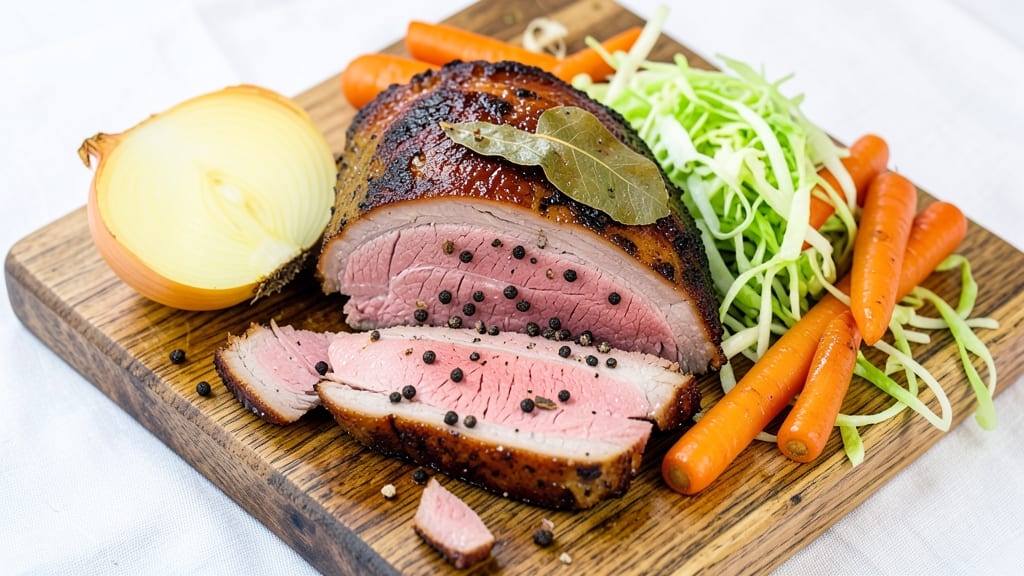
Alton Brown's corned beef recipe transforms tough brisket into tender, melt-in-your-mouth perfection through precise brining and slow braising. 💫 The secret lies in balancing salt, spices, and time—exactly what makes this method foolproof for home cooks.
I first tried this after burning through three store-bought briskets that turned out dry, and this technique changed everything.
This recipe delivers restaurant-quality results with just a few key ingredients: a well-constructed spice pack, quality corned beef brisket, and patience for the slow cook. The brining process infuses flavor deep into the meat, while the braising method ensures it stays juicy and tender.
Even my dad—who once declared corned beef "too much work"—now requests this version every St. Patrick's Day.
By the time you slice into that golden-brown brisket, you'll have perfectly tender meat that practically falls apart. The cabbage cooks down into sweet, caramelized bites that soak up all the flavorful juices.
It's the kind of dish that turns a simple meal into a celebration—no fancy plating required. Ready to master this technique?
Whether you're cooking for a crowd or treating yourself to a special meal, this method delivers consistent, professional results. The best part? You can adapt it for stovetop, slow cooker, or even Instant Pot—just follow the precise steps. Let's get started with the ingredients you'll need.
Ingredients for corned beef alton brown
Six essential ingredients transform tough brisket into melt-in-your-mouth perfection through Alton Brown's signature slow-braising technique.
| Ingredient | Amount | Notes |
|---|---|---|
| Corned Beef Brisket 🥩 | 4 lb | Flat-cut preferred for even cooking |
| Yellow Onions 🧅 | 2 whole | Medium-sized, sliced into wedges |
| Green Cabbage 🥬 | 1 small head | Cut into 8 wedges, core intact |
| Carrots 🥕 | 4 whole | Medium-sized, peeled and halved |
| Bay Leaves 🍃 | 2 whole | Dried, standard size |
| Black Peppercorns 🌶️ | 10 whole | Freshly cracked for texture |
| Allspice Berries 🌿 | 4 whole | Crushed lightly for aroma |
| Mustard Seeds 🌶️ | 1 tbsp | Whole, yellow preferred |
| Salt 🧂 | 1 ½ cups | Kosher or sea salt, non-iodized |
| Water 💧 | 12 cups | Filtered preferred for clarity |
| Beer 🍺 | 1 cup | Dark lager or stout, optional |
| Apple Cider Vinegar 🍎 | ½ cup | For brining acidity |
| Brown Sugar 🍯 | ½ cup | Light or dark, packed |
The brisket is the star, so choose a 4-pound flat-cut from the meat counter—Whole Foods or your local butcher will have the best quality. Look for good marbling and bright red color, not grayish or discolored meat. The cabbage should be firm with crisp outer leaves—Trader Joe's often carries excellent green cabbage at a reasonable price. For the spices, Penzeys ensure freshness since ground spices lose potency quickly. The allspice berries and mustard seeds are non-negotiable for that authentic corned beef flavor profile.
No kosher salt? Sea salt or even table salt in a 1:1 ratio works, but taste as you go. Running short on beer? Substitute beef broth or apple cider—the acidity remains key. If you can't find allspice berries, ground allspice at half the amount is a decent swap, though fresh berries provide better aroma. The cabbage wedges should include the core for structure, but trim any wilted outer leaves. For the carrots, baby carrots work perfectly if you're short on time, but whole carrots develop deeper flavor. The brown sugar adds just enough sweetness to balance the tangy brine.
Store any leftover brined brisket in its liquid for up to 5 days—it actually tastes better the next day as flavors meld. The cabbage and carrots can be prepped ahead and refrigerated in a sealed container for 3 days. For maximum convenience, freeze the brined brisket for up to 3 months—just thaw overnight before cooking. The braising liquid keeps well too, perfect for reheating slices or making corned beef hash later in the week. Portion the cooked meat into containers with some of the braising liquid for easy leftovers.
Why You'll Love This Recipe
- One-Pot Magic: Honestly, I dump everything in a single pot—brisket, onions, cabbage, carrots, and bay leaves—and walk away. The spices in that corned beef brine do all the heavy lifting while you sip coffee or scroll through your phone.
- Flavor Bomb: Between us, that salty, peppery corned beef with the sweet carrots and buttery cabbage? It’s like a hug in a bowl. The bay leaves add this earthy depth that turns a simple meal into something memorable.
- Leftovers for Days: I swear, this recipe makes enough for lunches all week. The brisket stays tender, the veggies hold up, and reheating it is as easy as tossing it in a skillet with a splash of water.
- Budget-Friendly Feast: Here’s what sold me—this feeds six for under $20. You’re getting a whole brisket, veggies, and that rich, smoky flavor without breaking the bank. Plus, it’s one of those meals where everyone’s happy.
Step-by-step instructions for slow-braised corned beef with cabbage Magic
Here's the method for perfectly tender corned beef that falls apart with a touch.
🔥 Step 1: Prepare the Brisket and Flavor Base
Rinse the 4 lb corned beef brisket under cold water to remove any surface cure, then pat completely dry with paper towels. This step is crucial—moisture is the enemy of even cooking and crispy edges. Place the brisket in a large Dutch oven or heavy pot that can hold all ingredients comfortably.
Add the 2 whole yellow onions, sliced into wedges, 4 whole carrots peeled and halved, 1 small head green cabbage cut into 8 wedges, 2 whole bay leaves, 10 whole black peppercorns (lightly crushed), 4 whole allspice berries (lightly crushed), and 1 tbsp mustard seeds. These aromatics will infuse the meat with deep, complex flavors during the long braise.
🍳 Step 2: Build the Braising Liquid
In a separate bowl, whisk together the 12 cups water, 1 cup beer, 0.5 cup apple cider vinegar, and 0.5 cup brown sugar until the sugar dissolves completely. The vinegar adds brightness while the brown sugar helps caramelize the vegetables and meat. Pour this mixture over the brisket and vegetables in the Dutch oven.
Add the 1.5 cups salt to the braising liquid. This might seem excessive, but remember the brisket already contains some salt from its initial curing. The extra salt here ensures the vegetables absorb flavor and the meat stays juicy. Stir gently to combine all ingredients, then bring the mixture to a boil over medium-high heat.
⏰ Step 3: Simmer Until Fork-Tender
Once boiling, reduce heat to low and cover the Dutch oven with a tight-fitting lid. The liquid should simmer gently—you should see just a few bubbles breaking the surface occasionally. This low-and-slow approach is key to tender meat. Simmer for 3 to 3.5 hours, checking occasionally to ensure the liquid doesn't evaporate completely.
After 2 hours, use a fork to test the brisket's tenderness. It should be easily pierced but still have some resistance. If it's not quite tender enough, continue simmering for another 30 to 45 minutes. The meat is done when it separates easily at the bone and pulls apart with gentle pressure. The cabbage should also be tender but still hold its shape.
🥘 Step 4: Rest and Serve
Remove the brisket from the pot and transfer it to a cutting board. Tent loosely with aluminum foil and let it rest for 15 to 20 minutes. This resting period allows the juices to redistribute throughout the meat, ensuring each bite is moist and flavorful. During this time, skim any excess fat from the braising liquid if desired.
Slice the brisket against the grain into ¼-inch thick pieces. The meat should be fork-tender with a rich, deep flavor from the braising process. Serve the sliced brisket with the cabbage, carrots, and onions from the pot. The vegetables will have absorbed the delicious braising liquid, creating a perfect accompaniment to the tender meat.
Pro Tips For Making Corned Beef Alton Brown
- Trim the Fat First: Cut the thick fat cap off the brisket before it goes into the pot—this isn’t about calories, it’s about flavor. I learned this the hard way when my first batch tasted bland because the fat rendered unevenly, turning the broth greasy instead of rich. A sharp knife and 10 minutes upfront save you from scraping congealed fat off the top later.
- Char the Onions: Don’t just slice the onions—get them caramelized in the pot first. Sear them over medium-high heat for 5–7 minutes until the edges darken and they release that sweet, smoky aroma. This step builds depth that raw onions can’t match, and it’s the difference between "good" and "St. Patrick’s Day feast" corned beef.
- Skip the Boiling Start: Resist the urge to throw everything in cold. Brown the brisket in the pot for 2–3 minutes per side before adding liquid—this creates a crust that locks in juices. After burning two batches by ignoring this, I now treat it like searing steak: high heat, quick sizzle, then liquid.
- Save the Pot Liquids: Strain and reserve the cooking liquid after removing the meat. It’s not just broth—it’s packed with dissolved corned beef spices and collagen. Use it for mashed potatoes, gravy, or even a quick soup the next day. I used to dump it, then realized it’s the unsung hero of leftovers.
Storing and reheating this recipe
Refrigerator Storage
Your perfectly braised corned beef stays delicious in the fridge for up to 5 days when stored properly. I transfer the sliced meat to an airtight container with some of the braising liquid to keep it moist.
The vegetables hold up well too—just store them separately in a sealed container for 4 days. The braising liquid itself makes an excellent base for corned beef hash or soup, so save at least 2 cups in a separate container. 🧊
Freezer Preservation
For longer storage, freeze the cooked brisket in individual portions wrapped tightly in plastic wrap and aluminum foil. It keeps for 3 months without losing quality. I like to freeze the meat in 1-pound portions for easy reheating later.
The vegetables don't freeze as well, so I recommend reheating them fresh each time or using them within 3 days of cooking. Label everything with dates to track freshness.
Reheating Slices
The best way to reheat corned beef is in the oven or stovetop to maintain texture. Preheat to 325°F, place slices on a baking sheet with a splash of braising liquid, and warm for 10-15 minutes.
For stovetop, heat in a skillet over medium-low heat with a little liquid until reaching 165°F. Avoid microwaving—it makes the meat rubbery and dry. 🔥
Reviving Vegetables
If your cabbage and carrots lost some crispness in storage, revive them by simmering in fresh water with a pinch of salt for 5 minutes. For extra flavor, add a splash of the original braising liquid.
I often reheat vegetables separately from the meat to control texture. The onions and carrots reheat beautifully this way, while the cabbage benefits from a quick sauté in butter for added richness.
Leftovers Magic
Transform your leftovers into new meals! Shred the meat for corned beef sandwiches with sauerkraut and mustard, or make corned beef hash with diced potatoes and onions. The braising liquid makes incredible gravy—just strain it and reduce with a cornstarch slurry.
I also love using it as a base for corned beef and cabbage soup with added potatoes and carrots. 💫
Portion Control
For easy meal prep, divide cooked portions into single-serving containers with a small amount of braising liquid. This keeps the meat moist and ready to eat straight from the fridge. I use glass Pyrex containers because they reheat evenly.
Store in the coldest part of your fridge (usually the back of the bottom shelf) for maximum freshness. Label each container with the date to track freshness.
Nutrition facts
Frequently asked questions
Can I use a slow cooker for Alton Brown's corned beef method?
Transfer all ingredients to a 6-quart slow cooker and cook on low for 8-10 hours or high for 5-6 hours. The key is maintaining liquid level—add ½ cup water if needed during cooking. The slow cooker's gentle heat ensures tender meat without monitoring the stove.
What's the best way to tell when the brisket is fully cooked?
Use the fork test after 2 hours: The meat should pierce easily but still have slight resistance. For perfect doneness, it should separate cleanly at the bone and pull apart with gentle pressure. The internal temperature should reach 203°F for fork-tender results.
Can I make this recipe without beer? What substitutes work best?
Yes! Replace the 1 cup beer with 1 cup beef broth or apple cider for similar acidity. For depth, use ½ cup beef broth + ½ cup water. The vinegar in the recipe already provides tang, so the substitute just needs to balance the flavors without overpowering them.
Why does the recipe call for so much salt?
The extra 1.5 cups salt ensures the vegetables absorb flavor and prevents the meat from drying out during the long braise. The brisket already contains some salt from its initial curing, so the additional salt enhances the overall dish rather than making it too salty. Taste the braising liquid before serving—adjust with a pinch of sugar if needed.
How can I make this recipe ahead of time for a big gathering?
Prepare the brined brisket up to 3 days ahead and store it in its liquid in the fridge. On cooking day, simply transfer everything to the pot and simmer as directed. The vegetables can be prepped 1 day ahead and stored separately. For maximum convenience, cook the entire dish 1 day before serving—the flavors deepen overnight!