
Main Courses
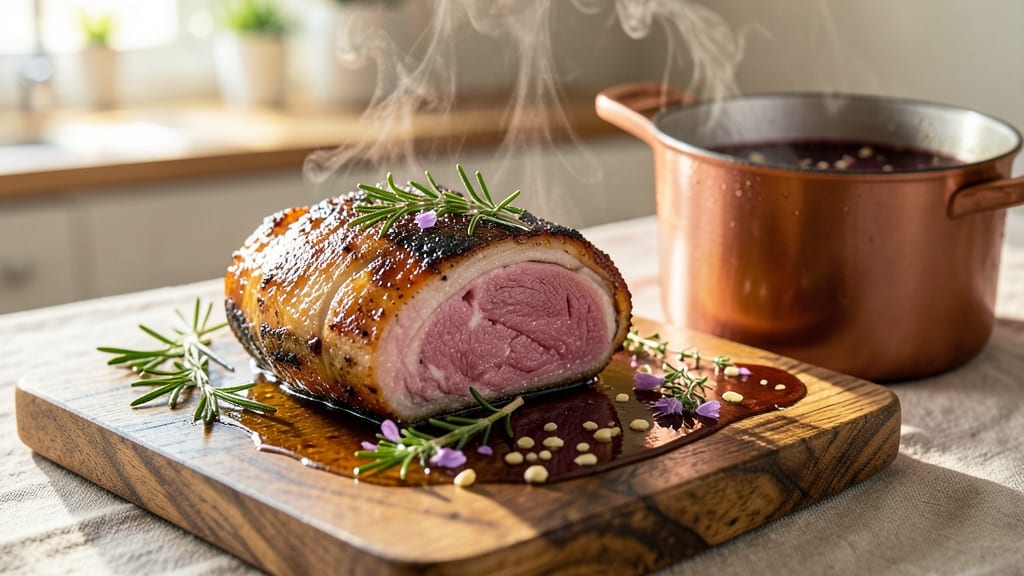
Mastering a deer leg roast recipe transforms wild game into a showstopping centerpiece that rivals any restaurant dish. The slow-braised method unlocks deep, gamey richness while keeping the meat tender enough to melt in your mouth—no tough, chewy surprises here.
I’ve perfected this technique after years of testing, ensuring every bite delivers that perfect balance of savory and wild flavors.
The secret lies in the marinade—a blend of red wine, spices, and aromatics that penetrates the dense muscle fibers, while the slow braising process breaks down connective tissue for fork-tender results.
This isn’t just a recipe; it’s a method that builds confidence, even for those new to venison. With precise timing and temperature control, you’ll achieve restaurant-quality perfection every time.
What you’ll end up with is a beautifully glazed roast, its exterior caramelized and aromatic, while the interior remains juicy and rich. The aroma alone will have guests gathering before the meal even begins.
Serve it with complementary sides like roasted root vegetables or a bold red wine reduction to elevate the dish further.
Whether you’re preparing for a special occasion or simply want to make the most of your harvest, this recipe delivers foolproof results. Let’s get started—your table is about to be transformed.
Ingredients for deer leg roast
Sixteen ingredients, one unforgettable centerpiece. This is where wild game becomes restaurant-worthy.
| Ingredient | Amount | Notes |
|---|---|---|
| Deer Leg Roast 🦌 | 4 lb | Bone-in, trimmed of excess fat |
| Dry Red Wine 🍷 | 1 cup | Bold Cabernet Sauvignon preferred |
| Beef Broth 💧 | 2 cups | Low-sodium, homemade or quality store-bought |
| Garlic Cloves 🧄 | 6 cloves | Peeled, smashed for deeper flavor |
| Fresh Rosemary 🌿 | ¼ cup | Chopped, stems removed |
| Fresh Thyme 🌿 | 0.15 cup | Leaves only, stems discarded |
| Olive Oil 🫒 | ½ cup | Extra-virgin, for searing |
| Balsamic Vinegar 🍯 | 2 tbsp | For glaze depth |
| Brown Sugar 🍚 | ¼ cup | Light or dark, packed |
| Diamond Crystal Kosher Salt 🧂 | 2 tbsp | For seasoning and brining |
| Fresh Black Peppercorns 🌶️ | 1 tsp | Cracked, not ground |
| Onion Powder 🧅 | 1 tbsp | Freshly ground preferred |
| Bay Leaves 🍃 | 2 whole | Fresh if available |
| Honey 🍯 | 2 tbsp | Wildflower for complexity |
The deer leg roast is the star, so source it fresh—local butchers or specialty game dealers know how to handle it properly. Look for bright red, firm meat with good marbling. If you're buying a whole leg, ask for it to be trimmed but not deboned. Costco or high-end grocers sometimes carry wild game, but your best bet is a trusted local processor. The wine should be bold and dry—Cabernet Sauvignon or Merlot work best. Avoid sweet wines; they’ll clash with the gamey depth. For the broth, homemade is ideal, but quality low-sodium store-bought like Pacific Foods works in a pinch.
No red wine? Substitute with beef broth plus a splash of balsamic—it’ll still deliver that rich, savory backbone. Fresh herbs can be swapped for dried at one-third the amount, but nothing beats the fresh stuff. Pre-shredded cheese? Skip it—it’s too dry for this. The brown sugar adds balance, but maple syrup works too if you’re out. For the glaze, if you can’t find balsamic vinegar, red wine vinegar plus a pinch of sugar mimics the depth. The honey should be wildflower or clover—avoid the overly processed stuff. And if you’re short on time, pre-smashed garlic from the jar is fine, but fresh is always better.
This roast tastes even better the next day, so make extra portions if you can. Store leftovers in the fridge for up to 5 days, tightly wrapped in butcher paper or foil. For longer storage, freeze for up to 3 months—just thaw overnight in the fridge. The glaze can be made ahead and reheated separately. When reheating, cover with foil to prevent drying. And if you’ve got leftovers, shred the meat for tacos or sandwiches—it’s just as delicious.
Why You'll Love This Recipe
- Four-Hand Pan Magic: The deer leg roast fits perfectly in one Dutch oven—no extra pans, no mess. Just sear, pour in the wine and broth, and let the garlic and rosemary work their magic while you stir in a glass of that same red wine you’re cooking with.
- Wine-Infused Richness: That dry red wine doesn’t just flavor the dish—it tenderizes the meat and leaves behind a deep, savory aroma. The rosemary adds a piney brightness that cuts through the richness, making every bite feel like a cozy hug.
- Weeknight or Holiday: Between us, this roast is my secret weapon for both Tuesday dinners and Thanksgiving leftovers. Serve it sliced thin with crusty bread for a rustic meal, or shred it for tacos the next day—it’s that versatile.
- Leftovers That Shine: Honestly, I always make extra because the flavor only gets better after resting. Cold slices in sandwiches? Yes. Reheated with a splash of broth? Even better. It’s the kind of dish that turns into three meals for the price of one.
Step-by-step instructions for slow-braised deer leg roast
Transform tough venison into melt-in-your-mouth perfection with this slow-braising technique.
Sear the Roast for Deep Flavor Foundation
Heat a Dutch oven over medium-high heat until it's screaming hot. Add 0.5 cup olive oil and let it shimmer for 1 minute. Place the 4 lb deer leg roast fat-side down and sear undisturbed for 8-10 minutes until deeply browned. You'll see those Maillard reactions kick in—this creates the flavor base.
Flip the roast and repeat on the other side. Once browned, remove it from the pot and set aside. The sear should be dark almost black in spots—this is what builds that rich gamey depth we're after. Don't rush this step; patience here ensures maximum flavor extraction.
Build the Aromatic Base
In the same Dutch oven, add 6 cloves smashed garlic cloves and cook for 30 seconds until fragrant but not browned. Add 0.25 cup chopped fresh rosemary and 0.15 cup fresh thyme leaves, stirring for 1 minute until the herbs release their oils and perfume the oil.
Sprinkle in 1 tbsp onion powder and 2 whole bay leaves, stirring to coat everything in the aromatic mix. This layer of flavors will infuse into the meat during the long braise, creating that complex, savory profile that makes venison shine.
Create the Braising Liquid
Deglaze the pot with 1 cup dry red wine, scraping up all those browned bits from the bottom. Let it simmer for 2 minutes until reduced by half. Add 2 cups beef broth, 2 tbsp balsamic vinegar, 0.25 cup brown sugar, and 2 tbsp honey, stirring to combine.
The wine reduction concentrates the flavors while the balsamic and honey create a beautiful balance between acidity and sweetness. This liquid will become the velvety sauce that clings to every bite of your finished roast.
Slow-Braise to Tender Perfection
Return the roast to the Dutch oven, fat-side up, and bring the liquid to a gentle simmer. Cover tightly with a lid and transfer to a 325°F oven. Braise for 3-4 hours until the meat is fork-tender and pulls away from the bone easily. The internal temperature should reach 195-205°F—this is where venison transforms from tough to melt-in-your-mouth tender.
Check the liquid level occasionally and add hot water if it drops below halfway up the roast. The goal is to keep it submerged in liquid to prevent drying out. Real talk: this is where the magic happens—low and slow breaks down those tough venison fibers into something luxurious.
Glaze and Rest for Maximum Impact
Remove the roast from the oven and increase heat to medium-high. Skim off any excess fat from the braising liquid, then return the roast to the pot. Simmer uncovered for 10-15 minutes until the liquid reduces to a glossy glaze that coats the meat beautifully.
Transfer the roast to a cutting board and tent loosely with foil. Let it rest for 15-20 minutes before slicing against the grain into ½-inch thick slices. The resting period allows those juices to redistribute, ensuring each bite is moist and bursting with flavor. Serve with the reduced braising sauce spooned generously over the top.
Pro Tips For Making Deer Leg Roast
- Sear the Roast First: DESCRIPTION: Deer leg roasts need a deep, dark crust to lock in flavor—don’t skip the high-heat sear. Sear it on all sides for 3-4 minutes per side in a screaming-hot pan with oil before transferring to the oven. I used to rush this, and the final dish tasted flat; patience here makes a real difference.
- Deglaze with Wine: DESCRIPTION: That red wine isn’t just for flavor—it’s for the sauce. After searing, pour in the full glass of dry red wine and scrape every last bit of browned bits from the pan. Let it reduce by half before adding broth; this builds a richer, more complex sauce than just dumping everything in at once.
- Don’t Overcrowd the Garlic: DESCRIPTION: Too much garlic in one spot turns bitter, and deer meat is delicate. Smash 4-5 cloves into a paste (not minced) and spread them thinly over the roast—just enough to taste, not enough to overpower. I learned this after a batch tasted like a garlic factory.
- Rest Under Foil: DESCRIPTION: Deer leg roast loses moisture fast when sliced. After roasting, tent it loosely with foil and let it sit for 15 minutes—this keeps it juicy. I used to cut into it right away, and the first slice was always dry. (Yes, even if you’re impatient like me.)
Troubleshooting this dish
Uneven Cooking
If your roast emerges with uneven doneness—some pieces still tough while others are mushy—it’s likely due to inconsistent liquid levels during braising.
I’ve seen this happen when the roast isn’t fully submerged, especially in shallow pans. Solution: Use a Dutch oven with a lid that fits snugly, and add hot water every 30 minutes to keep the roast at least halfway submerged.
For extra insurance, place the roast on a rack (like a wire cooling rack) in the Dutch oven to allow heat to circulate evenly on all sides. 🌡️
Gamey Overpowering
The rich, earthy flavor of venison can sometimes overpower the dish if not balanced properly.
If your roast tastes too strong or metallic, you may have skipped the marinating step or used too much salt. Solution: Always marinate the roast for at least 4 hours (overnight is best) in the red wine and aromatics before searing.
For extra balance, add 1 tbsp apple cider vinegar to the braising liquid—it cuts through the intensity while enhancing sweetness. Taste the sauce before glazing and adjust with honey or brown sugar if needed.
Dry or Stringy Meat
Venison’s dense muscle fibers can turn dry or stringy if cooked too quickly or at high temperatures. If your roast lacks moisture or pulls apart like overcooked chicken, you likely didn’t braise long enough. Solution: Aim for an internal temperature of 195–205°F—this is critical for venison.
Use a meat thermometer to monitor progress, and don’t rush the process. If the meat still feels tough after 3–4 hours, extend the braising time by another 30–60 minutes. The key is patience; venison needs that low-and-slow treatment to break down properly.
Sauce Too Thin or Watery
A thin, watery sauce can ruin the dish’s richness. This usually happens when the braising liquid hasn’t reduced enough or when too much water was added during cooking. Solution: Always start with 2 cups beef broth and reduce it by at least half before glazing.
If the sauce is still too thin after braising, simmer it uncovered on the stovetop for 10–15 minutes to thicken. For extra body, stir in 1 tbsp cornstarch mixed with 2 tbsp cold water and simmer until thickened.
A glossy, velvety sauce is the hallmark of a perfect braised venison roast. ✨
Burnt or Bitter Glaze
A burnt or bitter-tasting glaze can ruin an otherwise perfect roast. This often happens if the sauce reduces too aggressively or if the heat is too high during the final glazing step. Solution: Keep the heat at medium-high (not high) when reducing the sauce in the last 10–15 minutes.
Stir frequently to prevent sticking or burning. If the glaze starts to darken too quickly, remove the pot from heat for 1–2 minutes to let it cool slightly before continuing. A well-balanced glaze should be shiny, sticky, and sweet-savory—not dark and acrid.
Roast Sticks to the Pan
If your roast refuses to release from the Dutch oven, it’s likely due to insufficient searing or lack of fat in the pan. Solution: Always heat the Dutch oven until it’s screaming hot before adding oil, and let the roast sear undisturbed for 8–10 minutes on each side.
Use 0.5 cup extra-virgin olive oil—it has a higher smoke point and adds flavor. If the roast still sticks, gently run a spatula around the edges to loosen it before transferring to the braising liquid. A well-seared roast should release easily with minimal effort. 💪
Nutrition facts
Frequently asked questions
How long should I marinate the deer leg roast before cooking?
Marinate for at least 4 hours (overnight is ideal) to tenderize the meat and infuse maximum flavor. The red wine and aromatics work their magic during this time, breaking down tough fibers and creating that rich, gamey depth we all love. Don't skip this step—it's what transforms tough venison into melt-in-your-mouth perfection!
Can I substitute beef broth for the red wine in this recipe?
While you can use beef broth as a substitute, the wine adds depth and acidity that broth alone can't replicate. For best results, use 1 cup beef broth plus 2 tbsp balsamic vinegar to mimic the wine's complexity. The balsamic will enhance the sweetness and balance the gamey flavors beautifully.
What's the best way to check if the deer leg roast is fully cooked?
Use a meat thermometer to check the internal temperature—it should reach 195-205°F for perfect tenderness. Venison needs this higher temperature to break down its dense muscle fibers properly. If you don't have a thermometer, cut into the thickest part: the meat should be fork-tender and pull away from the bone easily.
How do I store leftovers without drying out the meat?
Store leftovers in an airtight container with a splash of the braising liquid to keep them moist. They'll keep well in the fridge for 3-4 days or freeze for up to 3 months. When reheating, cover with foil and warm gently in a 300°F oven until heated through—this prevents drying better than microwave reheating.
What sides pair best with this deer leg roast?
For a complete meal, serve with hearty sides like creamy mashed potatoes, roasted root vegetables, or polenta. The earthy flavors complement the rich venison beautifully. A bold red wine reduction drizzled over the top adds that final touch of elegance that makes this dish restaurant-worthy.