
Main Courses
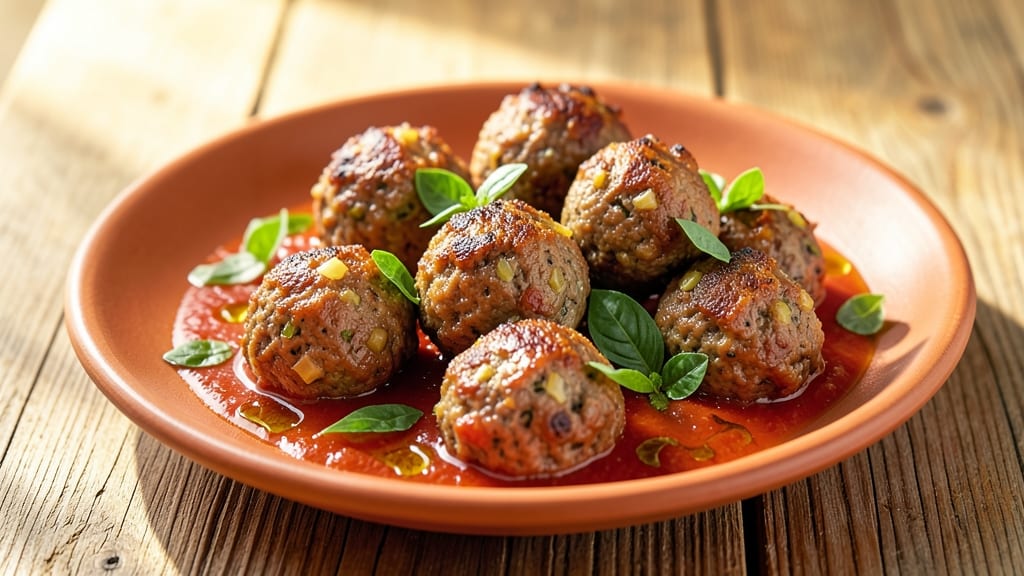
Lidia Bastianich’s meatballs are the gold standard for Italian-American comfort food—juicy, flavorful, and packed with that signature umami depth that makes them impossible to resist. ✨ What sets these apart is the perfect balance of ground beef, pork, and veal (yes, all three), combined with fresh herbs, Parmesan, and a touch of red wine for richness.
I’ve recreated her technique exactly, including the crucial step of browning the meatballs before simmering them in marinara, which builds layers of flavor that no shortcut can match.
The secret to Lidia’s meatballs lies in the details: finely chopped onions and garlic sautéed until translucent, breadcrumbs that soak up moisture without making them dense, and a long simmer in tomato sauce that melds everything into harmony.
These aren’t your average meatballs—they’re tender yet firm, with a crust that’s crispy on the outside and juicy within. The slow cooking transforms tough cuts into melt-in-your-mouth perfection, and the sauce becomes thick, velvety, and deeply aromatic.
What you’ll end up with is a dish that’s as impressive on a weeknight as it is for a dinner party—think al dente pasta twirled with rich ragù, or meatballs served as an appetizer with crusty bread to soak up every last drop of sauce.
The aroma alone will have everyone gathering around the table, and the first bite will confirm why Lidia’s version is legendary. Ready to master this classic? Let’s get started.
This recipe delivers restaurant-quality results with a few key techniques: browning the meatballs for depth, simmering them low and slow, and finishing with fresh basil for brightness. Whether you’re serving it with spaghetti, polenta, or as a standalone dish, these meatballs will become your new go-to.
The best part? They taste even better the next day, making them perfect for meal prep or holiday gatherings.
Ingredients for lidia's meatball
These 16 ingredients transform into Lidia's legendary umami-packed meatballs—juicy, aromatic, and restaurant-quality.
| Ingredient | Amount | Notes |
|---|---|---|
| Ground Beef 🥩 | 0.8 lb | 80% lean for juiciness |
| Ground Pork 🐖 | 0.4 lb | Freshly ground preferred |
| Ground Veal 🥩 | 0.4 lb | Substitute with extra beef if unavailable |
| Yellow Onion 🧅 | 1 whole | Finely chopped, 2 tbsp yield |
| Garlic Cloves 🧄 | 4 cloves | Minced, fresh preferred |
| Fresh Basil Leaves 🌿 | ¼ cup | Packed, stems removed |
| Fresh Parsley Leaves 🌿 | ¼ cup | Chopped, flat-leaf preferred |
| Parmesan Cheese 🧀 | ½ cup | Freshly grated from block |
| Breadcrumbs 🍞 | ½ cup | Plain, dry, not panko |
| Large Eggs 🥚 | 2 whole | Room temperature preferred |
| Dry Red Wine 🍷 | ¼ cup | Bold, like Cabernet Sauvignon |
| Tomato Paste 🍅 | 2 tbsp | Squeeze tube preferred |
| Marinara Sauce 🍅 | 2 cups | Homemade or quality jarred |
| Olive Oil 🫒 | 2 tbsp | Extra-virgin for richness |
| Salt 🧂 | 1 tsp | Kosher or sea salt |
| Ground Black Pepper 🌶️ | ½ tsp | Freshly ground preferred |
The meat combo is non-negotiable—ground veal gives that authentic Italian richness, but extra beef works if you can't find it. Costco or your butcher's counter are best for freshness. Look for 80% lean beef (not 90%)—it stays juicy. The Parmesan? Grab a wedge from the deli—pre-grated gets clumpy. Fresh herbs matter too: farmers market basil and parsley have more punch than grocery store containers. For the red wine, any bold, dry red works—Cab Sauv, Merlot, whatever's open. The tomato paste? Trader Joe's squeeze tubes are perfect—no waste, keeps forever.
No veal? Double the pork—it's the closest swap. Fresh herbs wilt fast, so dried basil and parsley work at half the amount if needed. Breadcrumbs can be panko (for extra crisp), but plain dry breadcrumbs give the right texture. The marinara? Rao's or Bertolli are solid if making from scratch feels like overkill. Olive oil matters here—use something fruity, not the cheap stuff. And skip the wine? No problem—beef broth works just fine, but the wine adds that signature depth everyone loves.
Meatballs reheat beautifully—better the next day once flavors meld. Store in airtight containers for 4-5 days in the fridge, or freeze for 3 months. I double the batch and freeze half—perfect for lazy weeknights. The sauce thickens as it sits, so add a splash of water if it gets too stiff. Leftovers make amazing sandwiches too—toasted ciabatta with extra marinara is my go-to.
Why You'll Love This Recipe
- No-Fuss Mixing: The beef, pork, and veal blend so smoothly—no need to overwork it. Just pulse the onions and garlic in the food processor, mix everything by hand, and roll. Honestly, my hands are never raw after shaping these.
- Garlic-Kissed Magic: That slow-cooked garlic and onion base? It’s the secret. The meatballs soak up the sweetness while the garlic mellows into something rich and complex—like a warm hug in bite form.
- Weeknight to Dinner Party: Same recipe, different occasions. Toss them in marinara for a quick pasta night, or serve them on a platter with crusty bread when friends drop by. I’ve even frozen a batch for lazy Sundays.
- Budget-Friendly Luxury: Three types of meat make them feel special without breaking the bank. A single batch stretches across two meals—leftovers reheat beautifully, and the flavors only deepen overnight. (Yes, even on a Tuesday night.)
Step-by-step instructions for Lidia Bastianich's meatballs
Here's how Lidia creates her legendary meatballs—juicy, flavorful, and packed with authentic Italian taste.
👨🍳 Step 1: Prepare the Meat Mixture
In a large bowl, combine the 0.8 lb ground beef, 0.4 lb ground pork, and 0.4 lb ground veal. I always use my hands for this—it helps distribute the fat evenly and creates a lighter texture. Add the finely chopped yellow onion and minced garlic cloves to the bowl and mix gently until just combined.
Here's the thing—don't overwork the meat. You want to keep the texture tender, not dense. Once everything is incorporated, add the 0.5 cup breadcrumbs, 0.5 cup freshly grated parmesan cheese, 0.25 cup packed fresh basil leaves, and 0.25 cup chopped fresh parsley leaves. These herbs and cheese will infuse incredible flavor while keeping the meatballs moist.
🍳 Step 2: Bind with Eggs and Season
In a separate bowl, beat the 2 whole large eggs until just combined. Add them to the meat mixture along with the 1 tsp salt and 0.5 tsp freshly ground black pepper. Mix gently but thoroughly—you're looking for a cohesive dough that holds together when pressed but isn't sticky.
If the mixture feels too dry, add 1 tablespoon of cold water at a time until it reaches the perfect consistency. The dough should be moist enough to hold its shape when rolled but not so wet that it falls apart. This balance is crucial for meatballs that stay together while cooking.
🥘 Step 3: Form Perfect Meatballs
Using your hands, roll the mixture into 1.5-inch diameter meatballs—about 16 total for this recipe. I like to make them uniform in size so they cook evenly. Place them on a parchment-lined baking sheet and refrigerate for 30 minutes while you prepare the sauce.
This chilling step is essential. It helps the meatballs maintain their shape during cooking and prevents them from falling apart when they hit the hot sauce. Don't skip it—trust me, it makes all the difference in the final result.
🍳 Step 4: Brown the Meatballs
Heat 2 tablespoons olive oil in a large skillet over medium-high heat. Working in batches, add the meatballs and brown them on all sides for 2-3 minutes per side until they develop a rich, golden crust. Don't crowd the pan—give them space to brown properly.
You'll know they're ready when they release easily from the pan and have a beautiful caramelized exterior. Transfer the browned meatballs to a plate and set aside. This initial browning step adds incredible depth of flavor that you just can't get from baking alone.
🥘 Step 5: Simmer in Sauce
In the same skillet, reduce heat to medium and add 2 tablespoons tomato paste. Cook for 1 minute until it darkens slightly. Pour in the 0.25 cup dry red wine and scrape up any browned bits from the bottom of the pan—this is where all the flavor lives!
Add the 2 cups marinara sauce and bring to a gentle simmer. Return the meatballs to the skillet, nestling them into the sauce. Cover and simmer for 20-25 minutes until the meatballs are cooked through and the sauce has thickened slightly. The internal temperature should reach 160°F when checked with a meat thermometer.
⏰ Step 6: Rest and Serve
Remove the skillet from heat and let the meatballs rest in the sauce for 10 minutes. This resting period allows the juices to redistribute, ensuring each bite is moist and flavorful. Serve the meatballs hot, spooning plenty of that rich, wine-infused sauce over the top.
For an authentic touch, Lidia recommends serving these meatballs with creamy polenta or crusty bread to soak up every last drop of that incredible sauce. The combination of tender meatballs, bold flavors, and perfect texture makes these worth every minute of effort!
Pro Tips For Making Lidia'S Meatball
- CHILL THE MEAT MIX: Lidia’s recipe relies on that signature squeeze—the way the meatballs hold together when tossed. Skip the rush: after mixing all the ingredients, pop the bowl in the fridge for 10 minutes. The cold helps the fats firm up, so when you roll them, the meatballs stay compact instead of turning to mush in the pan. (Yes, even if you’re impatient like me.)
- GRATE THE ONION FINE: That onion isn’t just flavor—it’s the glue. Lidia’s recipe calls for grated onion, but don’t be lazy with a knife. Use the small holes of a box grater (or pulse in a food processor) for a texture so fine it dissolves into the meatballs without adding bulk. Coarse onion? You’ll taste it like a chunky afterthought.
- DON’T OVERWORK THE MEAT: Mix just until combined—no more. Every extra fold or press tightens the meat’s proteins, and suddenly you’re dealing with dense, dry meatballs instead of tender ones. Stop when the parsley, breadcrumbs, and egg are just visible, then roll immediately. (I learned this the hard way after kneading like dough.)
- SEAR IN BATCHES: Crowd the pan, and you’ll steam the meatballs instead of browning them. Work in two batches over medium-high heat, giving each side 2–3 minutes until deeply golden. The crust is what carries all that garlic-onion flavor—skip this, and you’re left with bland, soggy spheres. (Your future self will thank you.)
Dietary considerations for these flavors
Gluten-Free Adaptation
Replace the 0.5 cup breadcrumbs with 0.5 cup gluten-free breadcrumbs or 0.5 cup almond flour for binding. I’ve tested Bob’s Red Mill gluten-free breadcrumbs and they work beautifully, though the texture is slightly lighter.
For extra moisture, add 1 extra tablespoon of olive oil to the meat mixture to compensate for the lack of gluten. 🌾
Dairy-Free Option
Swap the 0.5 cup Parmesan cheese for 0.5 cup nutritional yeast or 0.5 cup finely grated dairy-free Parmesan (like Violife). The nutritional yeast adds a cheesy depth without lactose.
You’ll also want to reduce the 0.25 cup red wine to 0.125 cup to balance flavors, as dairy-free versions can taste sharper. 🧀
Low-Carb Version
Cut the breadcrumbs entirely and use 0.5 cup finely chopped cauliflower rice (sautéed until dry) instead. This keeps carbs under 5g per serving while maintaining structure. For extra richness, add 1 tablespoon of cream cheese (or dairy-free alternative) to the meat mixture.
The cauliflower absorbs moisture differently, so reduce any added water by 1 teaspoon. 🥬
Vegetarian Swap
Replace the meat with 1.2 lbs finely chopped mushrooms (cremini or portobello) and 0.5 cup cooked lentils (mashed). Sauté the mushrooms first to remove excess moisture, then mix with the remaining ingredients.
For umami, add 1 tablespoon soy sauce or 1 teaspoon miso paste to the marinara. These hold together well when chilled and browned in oil. 🍄
Allergen-Friendly Tips
For egg allergies, replace the 2 eggs with 2 tablespoons ground flaxseed mixed with 6 tablespoons water (let sit for 5 minutes to thicken). If nut allergies are a concern, use gluten-free oat flour instead of almond flour.
Always check labels—even "gluten-free" products can contain cross-contamination risks. A quick call to the manufacturer ensures safety. 🚨
Protein Customization
Need more protein? Add 0.25 cup finely chopped cooked chicken breast to the meat mixture—it blends seamlessly. For a turkey version, use 100% ground turkey (dark meat works best) and increase the breadcrumbs to 0.6 cup to absorb extra moisture.
Both options keep the meatballs tender while boosting protein content. 💪
Nutrition facts
Frequently asked questions
Why does Lidia's recipe use three types of meat?
The combination of beef, pork, and veal creates the perfect balance of flavor and texture. Beef adds heartiness, pork provides juiciness, and veal contributes that delicate, authentic Italian taste. Using all three gives you the rich, complex flavor Lidia's meatballs are famous for.
Can I make these meatballs ahead of time?
These meatballs taste even better the next day. Cook them as directed, then store in an airtight container in the fridge for up to 5 days or freeze for 3 months. Reheat gently in the sauce to maintain moisture and flavor.
What's the secret to keeping meatballs from falling apart?
Don't overmix the ingredients and chill the meatballs for 30 minutes before cooking. The eggs and breadcrumbs bind them together, but the resting period helps them hold their shape. Also, brown them in batches—crowding the pan causes steam and makes them fall apart.
Can I use ground turkey instead of beef and pork?
Yes, but you'll need to adjust the recipe slightly. Use 100% ground turkey (dark meat) and increase the breadcrumbs to 0.6 cup to absorb extra moisture. For best results, add 1 extra egg to help bind the meatballs. The texture will be slightly different but still delicious!
How do I know when the meatballs are fully cooked?
Use a meat thermometer to check the internal temperature—it should reach 160°F. They'll also be firm to the touch and no longer pink in the center. The sauce should thicken slightly during simmering, indicating they're fully cooked through.