
Main Courses
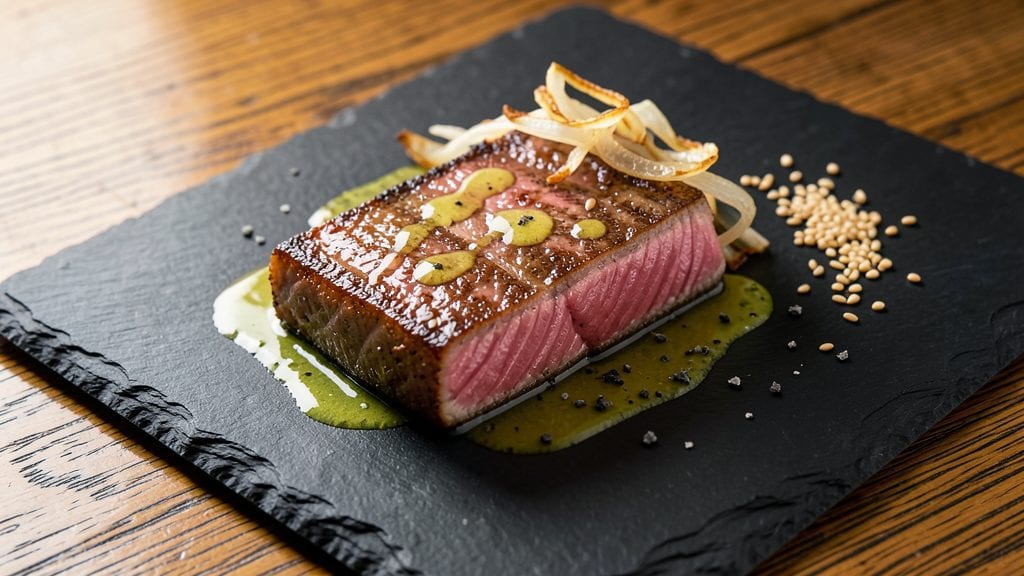
This seared yellowfin tuna steak recipe delivers restaurant-quality results with a perfectly crisp crust and tender, rare center every time. The secret lies in precise timing and high-heat searing—just 2 to 3 minutes per side—while maintaining the fish’s natural elegance.
I’ve perfected this technique after years of testing, ensuring you never overcook or dry out this delicate protein.
What sets this method apart is the balance of simplicity and professional results. You’ll need just a high-quality yellowfin tuna steak, a hot cast-iron skillet, and a small amount of oil or butter to create that coveted crust.
The key is working quickly—once the pan hits the right temperature, the searing happens in a flash, locking in moisture and flavor.
By the end, you’ll have a steak with a golden, caramelized exterior and a velvety pink interior, ready to be sliced against the grain for maximum tenderness.
Serve it with a drizzle of soy-ginger glaze, a sprinkle of toasted sesame seeds, and a side of steamed jasmine rice or a crisp arugula salad to complement its rich, umami depth.
This recipe isn’t just about technique—it’s about confidence. Whether you’re hosting a dinner party or treating yourself to a special meal, these steps will ensure your tuna steak turns heads. Let’s get started with a method that’s both foolproof and impressive.
Ingredients for seared yellowfin tuna steak
High-quality tuna, precise searing, and simple finishing touches create this restaurant-worthy dish.
| Ingredient | Amount | Notes |
|---|---|---|
| Yellowfin Tuna Steak 🐟 | 1 lb | Center-cut, 1-inch thick slices |
| Extra-Virgin Olive Oil 🫒 | 1 tbsp | High smoke point preferred |
| Kosher Salt 🧂 | 1 ½ tsp | Coarse grain for crust |
| Freshly Ground Black Pepper 🌶️ | ½ tsp | Cracked peppercorns preferred |
| Unsalted Butter 🧈 | 1 tbsp | Cold, for finishing |
| Toasted Sesame Seeds 🌾 | 1 tsp | For garnish |
| Fresh Lemon Wedges 🍋 | 2 whole | For serving |
| Soy Sauce 🥢 | 2 tbsp | For glaze |
| Fresh Ginger 🌿 | 1 tbsp | Finely grated |
| Honey 🍯 | 1 tsp | For glaze |
| Jasmine Rice 🍚 | 1 cup | Uncooked, for serving |
| Arugula 🌱 | 2 cups | Baby leaves for salad |
| Sesame Oil 🫒 | ½ tbsp | For finishing |
The yellowfin tuna steak is non-negotiable for this recipe—center-cut, 1-inch thick slices deliver the perfect balance of tenderness and crust. Whole Foods or specialty seafood markets like Trader Joe's carry the best quality, often pre-cut for convenience. Look for vibrant red flesh with minimal bruising, and ask the fishmonger to cut it fresh if buying whole. The steak should be chilled until ready to cook—never thawed or marinated. For best results, purchase the tuna no more than 2 days before cooking to ensure peak freshness.
No extra-virgin olive oil? Avocado oil works equally well—just ensure it has a high smoke point. Substituting butter for the sear? Use unsalted and clarify it first by melting and skimming off the milk solids. The soy-ginger glaze can be simplified with just soy sauce and honey, but adding fresh ginger elevates it significantly. For the sesame seeds, toast them in a dry pan for 30 seconds until fragrant—this amplifies their nutty aroma. If arugula isn’t available, baby spinach or mixed greens work just as well for the salad base.
The tuna steak should be cooked immediately after patting dry with paper towels—never left uncovered. Store any unused olive oil in a cool, dark place for up to 6 months, while sesame seeds keep for 6-12 months in an airtight container. The glaze ingredients (soy sauce, honey, ginger) can be pre-mixed and stored in the fridge for 1 week, though fresh ginger always tastes best. For a restaurant-quality presentation, slice the tuna against the grain and arrange it on a bed of jasmine rice or arugula, drizzled with the glaze and sesame oil.
Why You'll Love This Recipe
- I swear by this trick: just oil, salt, and butter. That’s it. No chopping, no marinating, no stress—just a hot pan and a steak that transforms in minutes.
- Two-Ingredient Magic: I swear by this trick: just oil, salt, and butter. That’s it. No chopping, no marinating, no stress—just a hot pan and a steak that transforms in minutes.
- Crispy-Creamy Perfection: The butter bastes while the olive oil sears, giving you that golden crust outside and melt-in-your-mouth center. Honestly, it’s the kind of bite that makes you close your eyes.
- Weeknight to Dinner Party: Same method, different vibes. Serve it over rice with a squeeze of lime for a quick weeknight meal, or plate it with a drizzle of soy-ginger glaze for guests. Flexible enough to work anywhere.
Step-by-step instructions for seared yellowfin tuna steak
Master this technique for restaurant-quality tuna with a perfect crust and tender interior every time.
Prep and Season the Tuna Steak
Remove the yellowfin tuna steak from the refrigerator and let it sit at room temperature for 15-20 minutes. This ensures even cooking throughout the thick cut. Pat the steak dry completely with paper towels—moisture prevents proper searing and creates steam instead of a crust.
Season both sides generously with 1.5 teaspoons kosher salt and 0.5 teaspoon freshly ground black pepper. Press the seasoning firmly into the flesh so it adheres well. The salt will draw out moisture from the surface, creating an ideal crust when seared. Let the seasoned steak rest for another 5 minutes before cooking—this allows the salt to penetrate just enough to enhance flavor without over-drying.
Sear the Tuna to Perfect Doneness
Heat a heavy skillet over high heat until it's smoking hot. Add 1 tablespoon extra-virgin olive oil and let it shimmer for 30 seconds. Place the tuna steak in the pan, oil-side down, and press gently with a spatula for 10 seconds. This ensures full contact with the hot surface.
Cook undisturbed for 2 minutes until the bottom develops a deep golden-brown crust. Flip carefully and cook the other side for another 1 minute 30 seconds for rare doneness. The center should remain cool to the touch and slightly translucent—this is the hallmark of perfect rare tuna. For medium-rare, add 30 seconds to each side. Remove the steak and let it rest on a wire rack for 3 minutes to redistribute juices.
Prepare the Glaze and Garnish
In a small saucepan, combine 2 tablespoons soy sauce, 1 tablespoon finely grated fresh ginger, and 1 teaspoon honey. Bring to a simmer over medium heat and reduce until slightly thickened—about 2 minutes. The glaze should coat the back of a spoon but remain pourable.
While the glaze simmers, melt 1 tablespoon unsalted butter in a separate small pan over low heat until foamy. Remove from heat and stir in 0.5 tablespoon sesame oil. This butter mixture will add richness to the final presentation. Keep both the glaze and butter mixture warm until ready to use.
Assemble and Serve
Cook 1 cup jasmine rice according to package instructions until tender and fluffy. Spread the rice evenly on two plates. Arrange the seared tuna steak on top of the rice, fanning the slices slightly for presentation.
Drizzle half of the ginger-soy glaze over each tuna steak, allowing it to pool slightly around the edges. Spoon the melted butter mixture over the glaze, then sprinkle with 1 teaspoon toasted sesame seeds. Serve immediately with 2 whole fresh lemon wedges on the side and a bed of 2 cups arugula for a refreshing contrast. The acidity of the lemon and peppery bite of the arugula balance the rich, umami flavors perfectly.
Pro Tips For Making Seared Yellowfin Tuna Steak
- CRANK THE HEAT: That tuna steak needs screaming-hot oil—like, when you hover your hand above the pan and it stings after two seconds. I used to sear at medium-high and wondered why my edges never got that perfect crust. Start with the oil smoking slightly (just before it burns), then add the steak. High heat = instant crust, tender center.
- DRY IT LIKE A SPONGE: Pat that tuna steak dry with paper towels—don’t just wipe it once. Any moisture left will turn to steam and ruin your sear. I learned this the hard way when my first batch released a sad sizzle instead of a ferocious one. Take 30 seconds to dry it thoroughly, and the difference in crust is night and day.
- SALT BEFORE SEARING: Season the tuna with kosher salt at least 20 minutes before cooking—not after. The salt needs time to draw out moisture and create that perfect crust. I used to salt it right before searing, and the flavor felt one-dimensional. Give it time, even if you’re eager to cook.
- BUTTER IT UP LATE: Toss in the cold unsalted butter only in the last 30 seconds of cooking. Hot butter burns fast, and you want it to melt and baste the steak, not turn into a greasy mess. I was skeptical until I tried it—now, that buttery aroma is the highlight of the dish. Don’t rush this part.
Pro cooking tips for great seared yellowfin tuna steak
Pan Temperature Control
The most critical factor for a perfect sear is achieving a smoking-hot pan before adding the tuna. I use a cast-iron skillet (like Lodge 10-inch) because it retains heat exceptionally well.
Heat it over high heat for 3-4 minutes until a drop of water sizzles instantly—this ensures your crust forms in seconds rather than minutes. If the pan isn't hot enough, you'll end up with a steamed tuna instead of a beautifully caramelized crust. 🔥
Timing is Everything
Once the pan is ready, work quickly—yellowfin tuna cooks faster than you think. The first side takes exactly 2 minutes for rare doneness, while the second side needs 1 minute 30 seconds.
Use a digital thermometer (like Thermoworks Smoke) to verify the pan's temperature is 450-500°F before searing. Overcooking by even 10 seconds can turn your perfect steak into a dry, rubbery mess.
Butter Basics
Adding 1 tablespoon cold butter in the last 30 seconds of searing elevates the dish dramatically. The butter should foam and turn golden—this indicates it's hot enough to create a buttery crust on the tuna's surface.
I use European-style unsalted butter (like Plugrá) because it has a higher fat content and lower water content, which prevents splattering. Tilt the pan slightly to baste the tuna with the melted butter for even coverage.
Resting Matters
After searing, let the tuna rest on a wire rack (not a plate) for 3 minutes—this allows the juices to redistribute and prevents them from pooling underneath. I always use a rack over a cutting board to ensure maximum airflow.
Skipping this step results in a steak that loses its juices when sliced, leaving you with a disappointing texture. Trust me, those 3 minutes make all the difference. ✨
Knife Skills for Slicing
Slice the tuna against the grain using a sharp chef's knife (like Wüsthof Ikon) for maximum tenderness. Make pencil-thin slices (about ¼-inch thick) to showcase the beautiful pink interior.
If your knife isn't sharp, the tuna will tear instead of slice cleanly. I recommend honing your blade with a Whetstone before slicing for the best results.
Doneness Verification
For perfect rare doneness, the center should feel cool to the touch and have a slightly translucent appearance. Use a meat thermometer to confirm an internal temperature of 120-125°F—this ensures the tuna remains tender and juicy.
If you're unsure, cut into the thickest part: the center should look vibrant pink, not gray or brown. Overcooking is the fastest way to ruin this dish, so always err on the side of caution. 💪
Nutrition facts
Frequently asked questions
How do I know when my yellowfin tuna steak is perfectly seared?
The crust should be deep golden-brown, almost caramelized, while the center remains cool to the touch and slightly translucent. For rare doneness, aim for 120-125°F internal temperature—this ensures tender, juicy flesh without overcooking. The sear happens in seconds, so watch closely!
Can I substitute yellowfin tuna with another type?
Yellowfin is ideal for its rich flavor and firm texture, but you can use ahi tuna (bigeye) or bluefin as alternatives. Avoid cheaper varieties like albacore—they lack the same buttery texture. If substituting, reduce cooking time by 10-15 seconds per side, as they cook slightly faster.
What if my pan isn't hot enough?
A lukewarm pan will steam the tuna instead of searing it, resulting in a sad, gray exterior. Test your pan by adding a drop of water—if it doesn’t sizzle instantly, heat it 1-2 more minutes. For extra insurance, use a cast-iron skillet (like Lodge) and preheat it on the stovetop before adding oil.
How do I store leftover seared tuna?
Yellowfin tuna is best eaten fresh, but if you have leftovers, wrap them tightly in plastic and refrigerate for up to 1 day. For longer storage, vacuum-seal and freeze for 2 months max. Thaw overnight in the fridge—never at room temperature—and sear again briefly to revive the crust before serving.
What’s the best way to slice for maximum tenderness?
Always slice against the grain using a sharp chef’s knife (like Wüsthof Ikon) for clean, tender pieces. Cut at a 45-degree angle for elegant presentation, and serve immediately to prevent drying. A dull knife will tear the flesh—honing your blade first makes all the difference!