
Breakfast & Brunch
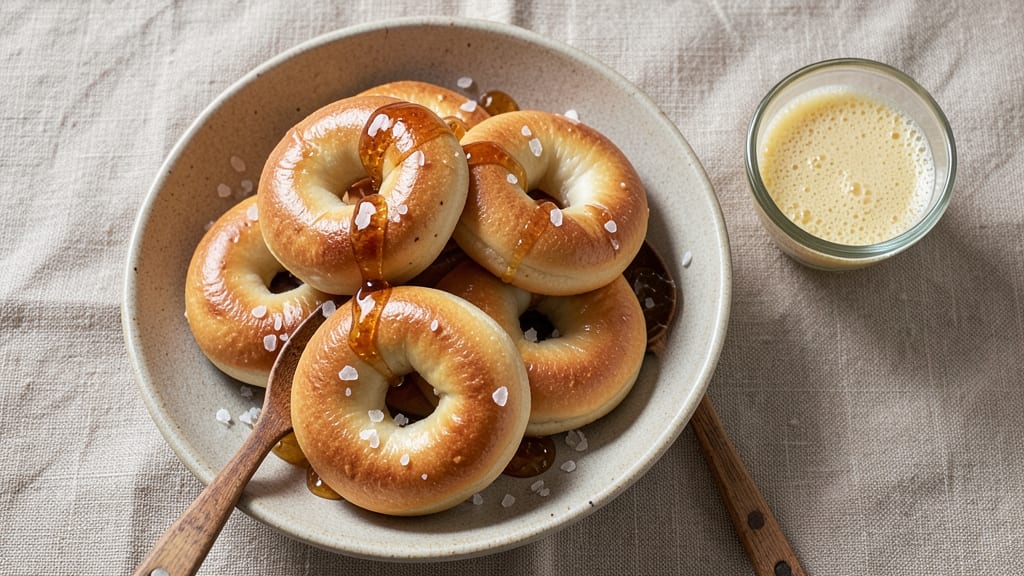
This soft bagels recipe delivers doughnut-like pillowy texture without a machine—just simple ingredients and precise technique. Standing on a step stool in my grandmother’s kitchen in Sicily, I learned how hydration and resting times transform ordinary dough into cloud-soft bagels.
The secret lies in balancing yeast, kneading just enough, and boiling them properly before baking.
What makes these bagels truly special is their velvety interior and crisp edges, achieved through a 30-minute rest before boiling and a 375°F oven for even baking. Unlike dense store-bought bagels, these rise beautifully and stay fresh for days when wrapped in a clean towel.
The dough is forgiving, but timing is everything—don’t rush the proofing.
By the time you pull them from the oven, you’ll have bagels that are soft enough to sink your teeth into yet sturdy enough to hold cream cheese or smoked salmon.
The aroma alone—warm, yeasty, and slightly caramelized—will have everyone at the table asking for seconds. Top with sesame seeds or poppy seeds for that classic touch.
Perfect for weekend breakfasts, brunch spreads, or meal prep. Once you master this method, you’ll never buy bagels again. Let’s get started with the dough—this is where the magic begins.
Ingredients for soft bagels
Six simple ingredients transform into pillowy bagels with doughnut-like texture—no machine needed.
| Ingredient | Amount | Notes |
|---|---|---|
| All-Purpose Flour 🌾 | 5 cups | Unbleached, high-protein preferred |
| Active Dry Yeast 🍞 | 2 ¼ tsp | Fresh yeast at half the amount |
| Granulated Sugar 🍚 | ½ cup | Feeds yeast for activation |
| Unsalted Butter 🧈 | ½ cup | Cold, cubed for easier mixing |
| Large Eggs 🥚 | 1 whole | Room temperature for even mixing |
| Warm Water 💧 | 1 ½ cups | 110°F to activate yeast |
| Diamond Crystal Kosher Salt 🧂 | 1 ½ tsp | Adjust to taste after kneading |
| Sesame Seeds 🌻 | ¼ cup | For classic topping (optional) |
| Poppy Seeds 🌼 | ¼ cup | For topping variation (optional) |
| Baking Soda 🧪 | 1 tsp | For boiling water |
| Honey 🍯 | 1 tbsp | Enhances sweetness and browning |
The flour is non-negotiable here. King Arthur or Caputo Tipo 00 give that signature chew, but high-protein all-purpose works in a pinch. I always measure flour by weight (500g) for accuracy, but if you’re using cups, spoon it into the measuring cup and level it off—don’t scoop. The yeast? Fresh yeast from the refrigerated section is more potent—use half the amount if you go that route. Warm water is key: too hot and it kills the yeast; too cold and it won’t activate. Aim for 110°F—just warm to the touch. Most grocery stores sell instant-read thermometers for under $10, and it’s worth it for this recipe alone.
No sesame or poppy seeds? Everything bagel seasoning or even plain old coarse salt work for topping. The butter should be cold when you mix it in—cut it into small cubes and let it sit at room temp for 10 minutes before adding. Short on time? Melted butter works, but the dough won’t be quite as tender. The honey adds depth to the flavor and helps with browning—don’t skip it. For the boiling water, baking soda is essential—it raises the pH and prevents the bagels from turning gray. If you’re making these for a crowd, double the batch, but keep the dough balls small (about 3 oz each) so they cook evenly.
Freshly made bagels keep their softness for 3 days when wrapped in a clean kitchen towel. For longer storage, freeze them unbaked on a tray, then transfer to a bag—bake straight from frozen by adding 5-7 minutes to the baking time. The dough can be refrigerated for up to 24 hours before shaping, but let it sit at room temp for 30 minutes before boiling to ensure even proofing. Pro tip: Boil the bagels in batches—overcrowding lowers the water temp, and they won’t rise properly. Trust me, your future self will thank you for this step.
Why You'll Love This Recipe
- No-Knead Magic: I swear by this dough—just mix, let it rise, and shape. No stand mixer, no overworking, just a bowl and patience. The butter and egg make it so tender, it practically melts in your mouth.
- Buttery Richness: That little splash of butter and egg yolk? It transforms plain flour into something luxurious. Honestly, the first bite feels like a breakfast treat, even for lunch.
- Weeknight Flexibility: Freeze half the dough for lazy mornings or pop them straight from the fridge into boiling water. Works for weekend brunch, quick snacks, or even a picnic—just toast and go.
- Budget Breakfast: Uses pantry staples (flour, yeast, sugar) and stretches for days. My kids ask for these twice a week, and I always have extras ready. Cheap, filling, and no guilt.
Step-by-step instructions for soft bagels recipe
Here's how to craft pillowy, doughnut-like bagels with a tender crumb and chewy exterior—no machine required.
Activate the Yeast for Maximum Rise
In a small bowl, combine the 1.5 cups warm water (about 110°F), 0.5 cup granulated sugar, and 2.25 teaspoons active dry yeast. Stir gently and let sit for 5-10 minutes until frothy. You'll see bubbles forming and the mixture expanding—this confirms your yeast is alive and ready to work. If it doesn't bubble, your yeast is likely dead, and you'll need to start over.
While waiting, dissolve 1 teaspoon baking soda in 1 cup boiling water in a separate bowl. This alkaline solution will create that signature bagel chew and golden-brown crust. Let it cool to room temperature before using—hot water will kill the yeast in your dough.
Mix and Knead the Dough to Develop Gluten
In a stand mixer fitted with the dough hook attachment, combine the 5 cups all-purpose flour and 1.5 teaspoons diamond crystal kosher salt. Mix on low speed until combined, then add the yeast mixture and 1 whole large egg (room temperature). Mix for 2 minutes on low until a shaggy dough forms.
Add the 0.5 cup cold unsalted butter, cut into cubes, and mix until fully incorporated. Increase speed to medium and knead for 8-10 minutes until the dough is smooth, elastic, and pulls away from the sides of the bowl. The dough should be slightly tacky but not sticky—add a few tablespoons of flour if needed. This kneading step is crucial for developing the gluten network that gives bagels their signature chewy texture.
First Rise for Light, Airy Texture
Shape the dough into a ball, place it in a lightly oiled bowl, and cover with a damp towel. Let it rise in a warm place (like the top of your oven with the light on) for 1.5 to 2 hours, or until doubled in size. The dough should feel springy when pressed gently—if it springs back slowly, it needs more time. Overproofing will result in dense bagels, so keep an eye on it.
While the dough rises, prepare your boiling water for shaping. In a large pot, bring 4 quarts water to a rolling boil. Add 1 tablespoon honey to the boiling water—this enhances browning and adds subtle sweetness. Keep this pot ready for the next step, as the timing will be tight.
Shape and Boil for Signature Bagel Texture
Punch down the risen dough and divide it into 6 equal pieces (about 3 ounces each). Roll each piece into a ball, then use your thumb to poke a hole in the center. Gently stretch the dough outward to form a 2-inch diameter ring, keeping the walls even in thickness. If the dough resists, let it rest for 5 minutes—don't force it.
Working in batches, carefully lower 2 bagels at a time into the boiling water. They'll float to the surface immediately—this is normal. Boil for 30 seconds per side, turning with a slotted spoon, until the dough is firm and opaque. Remove with a slotted spoon and place on a wire rack. The boiling step sets the chewy exterior and prepares the bagels for baking.
Bake to Golden Perfection and Top
Preheat your oven to 425°F. Brush the boiled bagels lightly with water (this helps with browning) and sprinkle generously with either 0.25 cup sesame seeds or 0.25 cup poppy seeds—whichever you prefer. Bake for 15-20 minutes until deeply golden brown and crisp. The internal temperature should reach 190°F when checked with an instant-read thermometer.
Let the bagels cool on a wire rack for 10 minutes before serving. The exterior should be crisp and slightly chewy, while the interior remains soft and pillowy—almost like a cross between a bagel and a doughnut. Store in an airtight container for up to 3 days, or freeze for longer storage. Toast them before eating for the ultimate texture contrast.
Pro Tips For Making Soft Bagels
- Boil Water First: I learned this the hard way—cold water in your pot will make your bagels sink like rocks. Get that water roaring (200°F or higher) before dropping them in, and they’ll puff up properly. No one wants dense, soggy bagels.
- Whisk the Yeast: Skip dissolving the yeast in warm water, and you’re asking for trouble. Mix it with the sugar first, let it foam for 5 minutes, then add to the flour. This guarantees it’s active and won’t leave you with flat, flavorless dough.
- Shape Tightly: Loose bagels? They’ll fall apart when boiling. Roll the dough into a 12-inch rope, then twist it into a circle and pinch the seam shut—no gaps. A little tension now means a chewy, intact bagel later.
- Skip the Butter Shortcut: I know, it’s tempting to toss in softened butter at the end. But mix it into the dough early—it’ll distribute evenly and make the bagels actually soft, not greasy. Yes, it’s an extra step, but it’s worth it.
Creative variations of soft bagels
Sweet & Spicy Variations
For a breakfast twist, add 1 tbsp cinnamon and ½ tsp nutmeg to the dough for a cinnamon-raisin bagel. Top with 1 tbsp brown sugar and ½ cup raisins before boiling.
After baking, brush with a glaze of ½ cup powdered sugar mixed with 1 tbsp milk for a doughnut-like finish. 🍯
Craving heat? Mix 1 tbsp gochujang (Korean chili paste) into the boiling water for a spicy kick. After baking, top with 1 tbsp melted butter and 1 tsp flaky sea salt. The contrast of crispy, spicy, and salty is pure magic.
Everything Bagel Twist
Skip the sesame or poppy seeds and replace with 1 tbsp everything bagel seasoning (I love Trader Joe’s blend). For extra flavor, add 1 tbsp garlic powder and 1 tsp onion powder to the dough. The aromatic herbs elevate the classic flavor profile without overpowering the soft texture.
Savory Cheese Bagels
Fold ½ cup shredded cheddar or feta crumbles into the dough after kneading. After boiling, sprinkle with 1 tbsp smoked paprika before baking. The cheese melts slightly during baking, creating pockets of gooey goodness. These are perfect for brunch with a side of spicy mustard or whipped cream cheese.
Jalapeño Cheddar Fusion
Add 2 sliced jalapeños (seeds removed for mild heat) and ½ cup sharp cheddar to the dough. After boiling, top with 1 tbsp crushed red pepper flakes and bake until golden. The heat and cheese create a perfect balance—great for those who love a little kick with their bagels. 🌶️
Honey & Walnut Breakfast Bagels
For a sweet morning treat, fold ½ cup chopped walnuts and ¼ cup honey into the dough. After boiling, brush with an extra 1 tbsp honey and bake as directed. The walnuts add crunch, while the honey caramelizes for a delicious breakfast or snack option.
Nutrition facts
Frequently asked questions
Why do your soft bagels have a doughnut-like texture?
The secret lies in the high hydration dough (thanks to the butter and egg) combined with a short boil in alkaline water. The boiling step creates that signature chewy exterior while keeping the interior pillowy, almost like a cross between a bagel and a doughnut. The 30-minute rest before boiling also helps develop that tender crumb.
Can I make these bagels without a stand mixer?
By hand, knead the dough on a lightly floured surface for 10-12 minutes until smooth and elastic. Use the windowpane test: stretch a piece of dough thin enough to see light through it. The dough should resist tearing but still be pliable. Just be ready for a bit more arm work than with a mixer.
What's the best way to store homemade soft bagels?
Wrap them in a clean kitchen towel and store in an airtight container at room temperature for 3 days. For longer storage, freeze unbaked bagels on a tray, then transfer to a bag—bake straight from frozen by adding 5-7 minutes to the baking time. The towel keeps them soft longer than plastic.
Why did my bagels turn out dense instead of soft?
Most likely, your dough overproofed (rose too long) or didn't develop enough gluten during kneading. Check the yeast first—it should bubble vigorously in 5-10 minutes. Also, ensure you boiled them in batches (never overcrowd the pot) and baked at 425°F until golden. If the dough was sticky after kneading, you didn't develop enough gluten.
Can I make these bagels with whole wheat flour?
You can substitute 2 cups whole wheat flour for all-purpose, but expect a denser texture. For better results, replace 1 cup all-purpose with whole wheat and add 1 extra tablespoon oil to maintain tenderness. Whole wheat absorbs more liquid, so the dough may need 5 extra minutes kneading to develop gluten properly.